AT least 16.99 million Nigerians are projected to face acute hunger by January 2027, according to the latest projections by the Famine Early Warning Systems Network (FEWS NET), indicating that the country’s food crisis remains a major humanitarian concern despite expected seasonal relief from harvest activities.

The figures are contained in FEWS NET’s Food Assistance Outlook Brief for July 2026, obtained by News Point Nigeria, which provides the latest assessment of the worsening hunger situation across conflict-affected and climate-vulnerable countries, including Nigeria.

Read also: I Never Purchased Governorship Nomination Form, Says Ogun 2027 PDP Aspirant
FEWS NET, a United States Government-funded early warning organisation, projected that the number of Nigerians requiring urgent food assistance would fall between 16.0 million and 16.99 million by January 2027, compared with the current estimate of 20.0 million to 20.99 million people in July 2026.

However, despite the expected decline, the projected figure remains higher than the number recorded in January last year and above Nigeria’s five-year historical average, suggesting that the country’s hunger burden continues to worsen over time.
The report ranked Nigeria fourth globally among countries with the highest number of people facing hunger, behind Sudan, Pakistan and the Democratic Republic of Congo (DRC), while remaining ahead of Yemen and Afghanistan.


Nigeria was also listed among only four countries expected to contribute more than 10 per cent each of the estimated 145 million to 155 million people projected to require food assistance across the 30 countries monitored by FEWS NET by January 2027. The other countries are Sudan, Pakistan and the Democratic Republic of Congo.
The latest projection is part of FEWS NET’s periodic hunger outlook reports published over the past two decades to provide early warnings to governments, humanitarian agencies and international organisations about emerging food emergencies.
According to the report, Nigeria’s worsening food situation is largely driven by conflict, livelihood disruptions, restrictions on farming activities and declining household income, particularly across northern parts of the country.

Although the main harvest season expected to be completed in December is projected to provide some relief, FEWS NET warned that the impact would be limited because many conflict-affected households remain unable to cultivate their farms.
“Despite the completion of the main harvest in December, staple food prices are expected to remain high as production and supply disruptions coincide with high market reliance among conflict-affected households who are unable to cultivate,” the report stated.
The organisation added that communities most affected by insecurity in the North-East, especially those cut off by conflict and movement restrictions, are expected to remain in the “Emergency” phase of hunger.


Emergency represents the fourth of five hunger severity levels under the internationally recognised Integrated Food Security Phase Classification (IPC) system and comes immediately before famine.
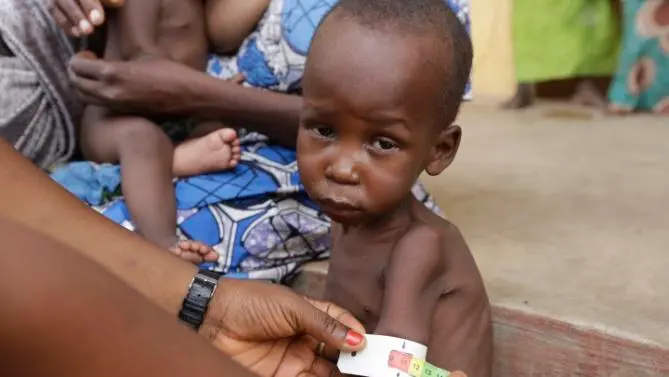
Under the IPC classification, Emergency means households are experiencing significant food consumption shortages, reflected in high levels of malnutrition and increasing deaths, or are only able to survive by selling critical assets such as farmland, livestock and other resources needed for future livelihoods.
A breakdown of the figures showed that Nigeria’s projected hungry population of between 16.0 million and 16.99 million represents between five and 10 per cent of the country’s total population, according to FEWS NET’s classification categories.
Read also: Opposition May Pick Consensus Candidate Days To 2027 Election, Lukman Says
The projected figure is significantly lower than the July 2026 estimate of between 20.0 million and 20.99 million people, a seasonal decline the organisation attributed largely to the December harvest.
However, when compared with January 2026 figures and Nigeria’s five-year average, the projection remains classified as “Higher”, meaning the country’s hunger situation is worsening despite the expected reduction from the mid-year peak.
FEWS NET identified the major drivers of Nigeria’s food crisis as conflict, economic hardship and adverse weather conditions — the same challenges affecting several other countries with severe hunger situations, including Sudan and Pakistan.
Globally, the report showed that Nigeria currently has the second-highest number of people requiring food assistance in July 2026, with between 20 million and 20.99 million people affected.
Sudan currently ranks first with between 22 million and 22.99 million people facing food assistance needs, while Pakistan follows Nigeria with between 12 million and 12.99 million people.
By January 2027, however, Pakistan is projected to overtake Nigeria, with its hunger population expected to rise sharply from about 12 million to as high as 17.99 million, pushing Nigeria down to the fourth position globally.
FEWS NET projected that between 145 million and 155 million people — representing roughly 10 per cent of the population across all countries monitored by the organisation — will require urgent food assistance by January 2027.
On a global scale, South Sudan was identified as the country with the highest proportion of its population requiring food aid, with between 50 and 55 per cent of citizens expected to need assistance.
Sudan follows with between 40 and 45 per cent, Yemen with 35 to 40 per cent, and Somalia with 30 to 35 per cent of their populations projected to face severe food needs.
The report identified Sudan, Pakistan, Nigeria and the Democratic Republic of Congo as countries carrying the largest absolute hunger burdens globally, while Yemen and Afghanistan were listed among the next group of major contributors to the worldwide food assistance crisis.
FEWS NET also warned that five countries are at risk of sliding into full-blown famine — the most severe hunger classification, characterised by extreme food shortages, starvation and deaths linked to severe malnutrition.
The countries identified include Sudan, South Sudan, Somalia, Mali and neighbouring Chad, which is currently hosting refugees fleeing the Sudan conflict.
Explaining its methodology, FEWS NET said its population-in-need estimates include all people already experiencing Crisis-level hunger or worse, classified as IPC Phase 3 and above, as well as those who would fall into that category without continued humanitarian assistance.
Read also: Nigeria Spends $1.19bn On Food Imports In Six Months Despite Push For Local Production
The organisation noted that confidence levels in some projections are lower, especially in countries where assessments rely heavily on remote monitoring rather than direct field operations.
For Nigeria, however, FEWS NET did not apply such a remote-monitoring limitation, indicating that the projection was based on direct, in-country analysis and monitoring.