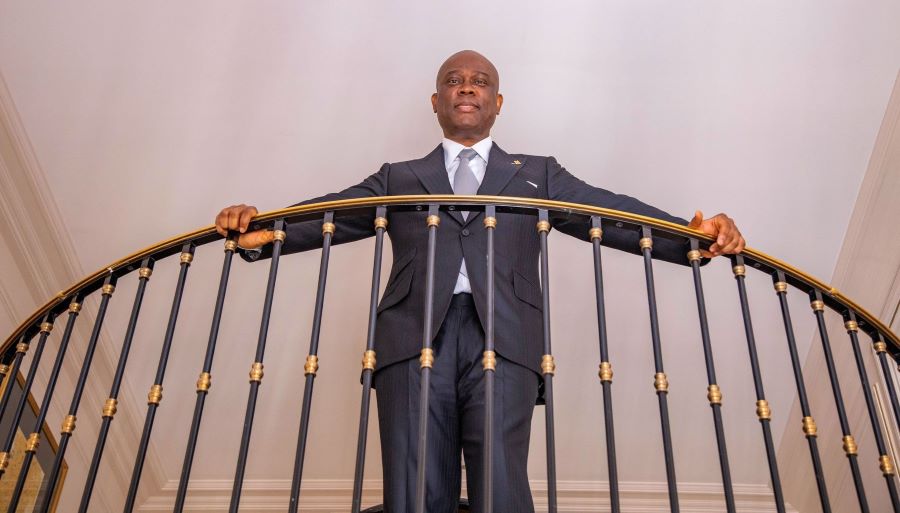
IN a stunning revelation that underscores the scale of global wealth flowing into the United Kingdom’s property market, new findings have linked late Nigerian banking icon, Herbert Wigwe, to an extensive portfolio of real estate assets in London placing him among the top foreign property owners in the British capital.
This investigative report, independently verified and expanded by News Point Nigeria, draws from a groundbreaking study by The Londoner, which has peeled back layers of secrecy surrounding offshore property ownership in one of the world’s most expensive cities.
Read also: Buhari, Tinubu, Osinbajo And The Unanswered Question Of 2023 Succession
At the heart of the revelations is a sweeping database of thousands of properties previously shielded by opaque ownership structures until a recent change in United Kingdom law forced foreign entities to disclose their true owners.

The investigation titled “Revealed: The billionaires who really own London” provides one of the most comprehensive insights yet into who truly owns prime real estate across the city.
According to the report, no fewer than 32,611 properties in London are owned by overseas entities, marking a significant portion of the city’s housing and commercial assets.


These include some of London’s most iconic and commercially valuable locations such as Oxford Street, Canary Wharf, and the Greenwich Peninsula—areas synonymous with global finance, luxury retail, and urban development.
The scale of the investigation is equally remarkable. Researchers spent days analysing vast datasets compiled and shared by tax expert Dan Neidle of Tax Policy Associates, meticulously tracing ownership through thousands of foreign-registered companies.
As the report states: “We’ve spent the last week, using data compiled and shared with us by Dan Neidle of Tax Policy Associates, to go through thousands of those overseas entities to see who has bought up properties in the capital.”

This painstaking effort has now brought to light ownership structures that had long remained hidden from public scrutiny.
Among the most striking revelations is the inclusion of Herbert Wigwe, who was linked to ownership of 106 properties in London, placing him seventh among billionaire real estate holders in the city.
This ranking positions the late Nigerian banker among a select group of ultra-wealthy global investors who have quietly amassed vast property portfolios in London through offshore structures.


Before his death, Wigwe served as Group Chief Executive Officer of Access Holdings Plc, one of Nigeria’s largest and most influential financial institutions.
His rise in the global financial space was widely regarded as emblematic of Nigeria’s growing influence in international finance, and these new findings further highlight the scale of his investments beyond the continent.
Wigwe’s inclusion in the report carries added poignancy following his tragic death in February 2024.
He died in a helicopter crash in the United States alongside his wife, son, and Abimbola Ogunbanjo, a respected figure in Nigeria’s corporate landscape.
The tragedy sent shockwaves across Nigeria’s business community and beyond, cutting short the life of a banker widely seen as one of Africa’s most influential financial leaders.
Since his passing, Wigwe’s estate has been the subject of ongoing litigation, reflecting the complexity and scale of his global assets.
The newly uncovered London property holdings are likely to add further layers to these legal proceedings, as questions of ownership, control, and inheritance continue to unfold.
Legal experts say estates involving international assets especially those held through offshore entities often require extensive cross-border legal coordination, making resolution both time-consuming and complex.
Read also: Petrol Marketers Reject FG’s N1,350 Price Cap, Insist On Deregulated Market
A key dimension of the investigation is the role played by offshore jurisdictions in facilitating property ownership.
Many of the properties identified in the report are held through companies registered in places such as Jersey long known for its financial secrecy and investor-friendly regulations.
These structures historically allowed wealthy individuals to acquire and hold assets without publicly disclosing their identities.
However, recent legal reforms in the United Kingdom have begun to dismantle this opacity.
The new disclosure requirements compel overseas entities to register their beneficial owners, enabling journalists, regulators, and the public to trace property ownership more transparently.
Beyond individual names, the findings highlight the broader phenomenon of foreign investment in London’s real estate market.
For decades, London has served as a magnet for global capital, offering political stability, strong legal protections, and a reputation as a safe haven for wealth.
The revelation that tens of thousands of properties are owned by overseas entities underscores the extent to which international investors shape the city’s housing landscape.
Critics argue that such levels of foreign ownership contribute to rising property prices and reduced housing affordability for local residents.
Supporters, however, maintain that foreign investment plays a vital role in sustaining economic activity and urban development.
Perhaps the most significant aspect of the report is its exposure of ownership structures that were previously inaccessible to the public.
By linking individuals to assets held through complex corporate arrangements, the investigation offers a rare glimpse into the hidden architecture of global wealth.
The Londoner’s database, compiled from newly released disclosures, marks a turning point in efforts to increase transparency in property ownership.
For figures like Herbert Wigwe, it provides a fuller picture of their global financial footprint one that extends far beyond publicly known ventures.
The revelations are likely to fuel ongoing debates around transparency, taxation, and accountability in global finance.
As governments worldwide push for stricter disclosure requirements, investigations like this demonstrate the impact such policies can have in uncovering hidden wealth.
For Nigeria and other emerging economies, the findings also raise questions about capital flows, investment strategies, and the global reach of their economic elites.
Read also: Rivers Gas Pipeline Explosion Injures 20, Razes Over 50 Houses In Eleme
While Herbert Wigwe will be remembered primarily for his contributions to banking and finance, the newly revealed extent of his property holdings adds another dimension to his legacy.
It paints the picture of a global investor whose influence and assets spanned continents reflecting both personal ambition and the interconnected nature of modern wealth.