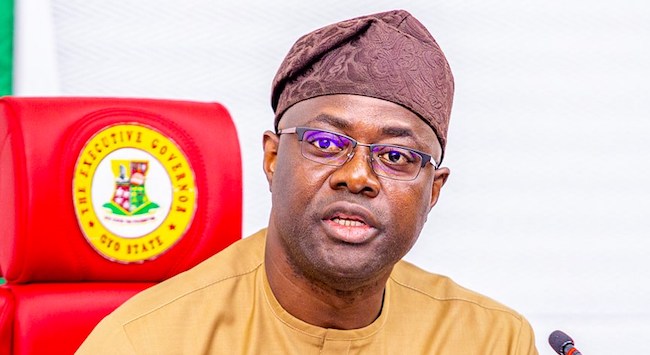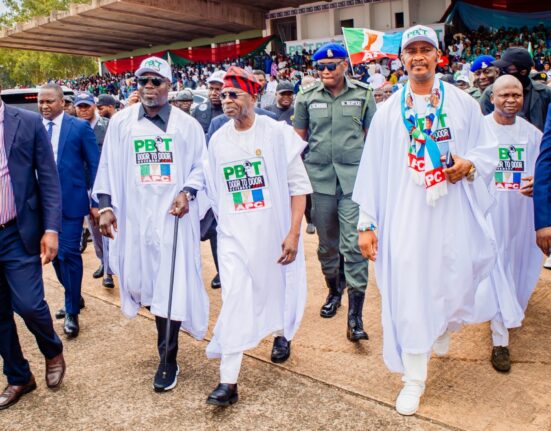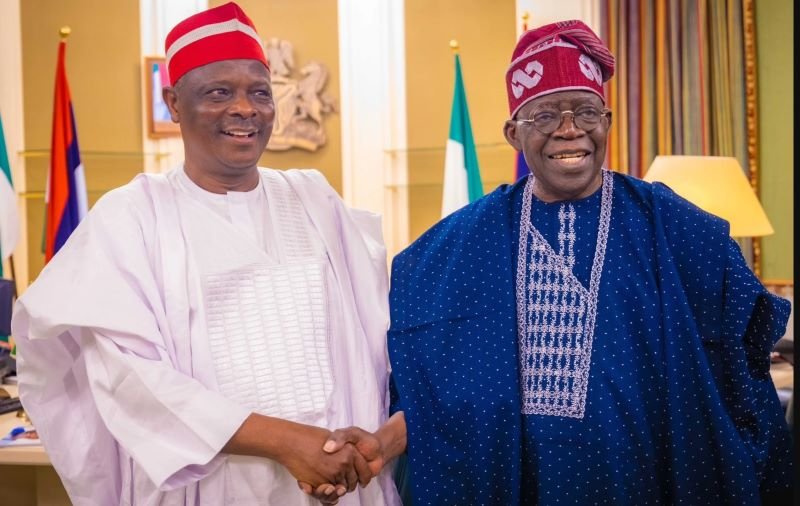
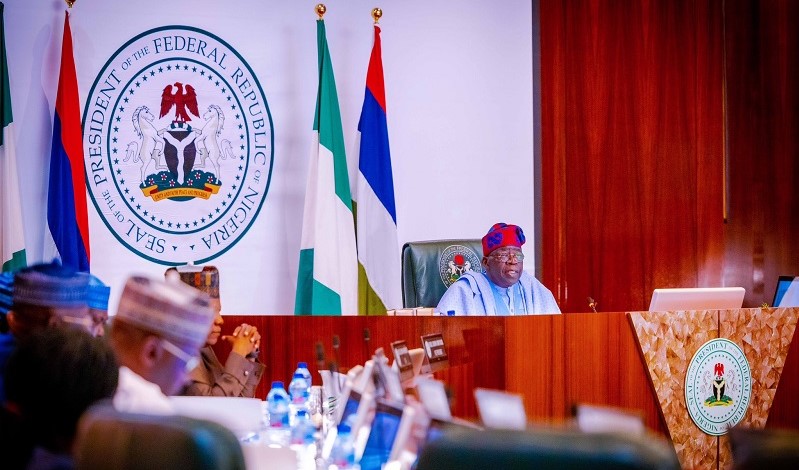
- Minister Of Culture and Tourism, Hannatu Musawa, Only Cabinet Member Present On All Five Major Platforms
IN a country where millions of young people spend hours daily online discussing politics, governance, the economy, entertainment, and national issues, an updated report revised from an earlier 2025 edition and obtained by News Point Nigeria Weekend has exposed what experts now describe as a widening digital disconnect between President Bola Ahmed Tinubu’s cabinet and the Nigerian public.
The report, released by COLUMN, a digital communications and strategy firm, paints a troubling picture of a federal cabinet struggling to establish meaningful online engagement in one of Africa’s most digitally active nations. Despite Nigeria’s massive online population and rapidly expanding digital culture, the country’s 51 cabinet ministers collectively command only 19.3 million followers across five major social media platforms , X (formerly Twitter), Facebook, Instagram, LinkedIn and TikTok.
Read also: Tinubu Denied Second Term Could Trigger Political Crisis, Ex-NAHCON Chairman, Sheikh Pakistan Warns
The findings, which have triggered fresh conversations about transparency, accessibility and modern governance, suggest that many senior government officials remain largely absent from the very digital spaces where millions of Nigerians now live, learn, work, debate and organise politically.

The report, dated May 4, 2026, warned that such underrepresentation in the digital sphere is not merely a public relations concern but a serious governance issue capable of weakening citizen trust and widening the communication gap between leaders and the people.
Even more striking is the concentration of influence among only a handful of government officials. More than 60 per cent of the total 19.3 million followers are concentrated in the hands of just five top officials, leaving the remaining 46 ministers with minimal or negligible digital presence.


By comparison, Nigeria’s population of over 236 million is predominantly youthful, while the average Nigerian reportedly spends up to six hours daily online.
“This is more than just a numbers game,” COLUMN’s report stated.
“It reflects a systemic issue in how government relates to its people in the digital age. A cabinet disconnected online risks becoming disconnected in reality.”

Unsurprisingly, President Bola Tinubu leads the cabinet’s digital presence with about 4.5 million followers, accounting for 26.6 per cent of the total online followership recorded by the report.
He is followed by:
Femi Gbajabiamila, Chief of Staff — 1.6 million followers


Muhammad Ali Pate, Minister of Health — 1.46 million
Festus Keyamo, Minister of Aviation — 1.37 million
Nyesom Wike, Minister of the Federal Capital Territory — 1.33 million
Combined, these five officials dominate the government’s digital ecosystem, effectively carrying much of the administration’s online visibility and public engagement.
The report, however, raised concerns that ministries with critical public-facing responsibilities, including youth development, information and education, are significantly underperforming in online engagement.
According to COLUMN, some ministers are either completely absent online or barely visible, with two ministers having zero presence across any major platform and several others attracting fewer than 500 followers.
Perhaps one of the most ironic revelations in the report is that the Minister of Communications, Innovation and Digital Economy, Dr. Bosun Tijani, did not rank among the top five most-followed officials, despite overseeing Nigeria’s digital infrastructure and innovation policies.
The report further highlighted that only one cabinet member, Minister of Arts, Culture and Creative Economy, Hannatu Musawa — maintains active visibility across all five major platforms.
COLUMN described Musawa’s multi-platform presence as a practical example of what a digitally connected public servant could look like in the modern era.
Platform-by-platform analysis also exposed the uneven engagement pattern across the cabinet.
According to the report:
X (formerly Twitter) accounts for the largest share with 9.4 million combined followers.
Facebook follows with 4.8 million followers.
Instagram accounts for 2.1 million followers.
TikTok — one of the fastest-growing platforms among young Nigerians — is used by only seven ministers.
LinkedIn, despite its increasing relevance for governance, policy and professional engagement, has active participation from only 17 ministers.
COLUMN observed that many of the accounts reviewed were outdated, poorly managed, inactive or limited to occasional ceremonial posts.
Read also: Tinubu Appoints Ex-DSS DG Yusuf Bichi NISS Governing Board Chairman
In several cases, ministers were found to maintain visibility on only one platform, limiting their reach and reducing opportunities for wider public interaction.
“Digital engagement isn’t optional anymore. In today’s world, a government that cannot communicate effectively online is a government that risks irrelevance,” the report emphasized.
The concentration of online influence among only five officials also sparked concerns about over-centralisation of the government’s digital voice and the risks associated with limited diversity in public communication.
“A truly connected cabinet should reflect broad and consistent engagement not just a few online heavyweights while others remain digitally silent,” COLUMN stated.
The report concluded that Nigeria’s cabinet is failing to match the country’s growing digital literacy, particularly among young people, whose median age stands at 18.
According to the firm, trust and transparency in modern governance can no longer rely solely on traditional press statements, official briefings or occasional media appearances.
Instead, the report argued that governance today requires visible, accessible and interactive leadership within the digital spaces where citizens increasingly shape opinions and participate in civic life.
“It’s not just about being unreachable. Ministers with no online presence signal a deeper issue: a fundamental disconnect from modern governance practices,” COLUMN warned.
Still, the report clarified that the expectation is not for ministers to become social media celebrities or viral influencers, but to emerge as intentional, authentic and consistent communicators capable of engaging citizens meaningfully.
“Ministers don’t need to be everywhere, but they need to be somewhere and they must be present with purpose,” the report concluded.
The findings have since drawn reactions from communication experts, governance analysts and digital scholars, many of whom argue that the Tinubu administration risks losing touch with Nigeria’s youth population if deliberate steps are not taken to modernise public communication.
Among those who reacted strongly to the report is Dr. Aisha Bola Rasaki, Professor of Digital Relationship and Social Connect, who condemned what she described as the alarming digital disconnect between members of President Tinubu’s cabinet and the Nigerian public.
According to her, the development exposes a troubling communication gap between government officials and the citizens they are meant to serve, particularly Nigeria’s teeming youth population who largely consume information and engage politically through digital platforms.
Prof. Rasaki stated that in an era where governance is increasingly driven by real-time engagement, transparency and online accessibility, the inability of cabinet members to build strong digital communities reflects weak public communication, poor citizen engagement strategies and an absence of meaningful connection with ordinary Nigerians.
She warned that the disconnect could further widen the trust deficit between government and the people, noting that many young Nigerians now rely on social media not only for entertainment, but also for political participation, accountability, economic opportunities and civic mobilisation.
“The fact that 51 cabinet members could only command a combined followership of 19.3 million in a country with over 200 million people and one of the most active youth populations online is a serious governance concern,” she said.
“This is not merely about numbers or popularity. It is about accessibility, visibility, engagement and the ability of leaders to communicate policies effectively to the people, especially the younger generation.”
The professor explained that effective governance in the digital age requires leaders to maintain consistent interaction with citizens, counter misinformation promptly and create platforms where people can feel heard and involved in national conversations.
According to her, when public officials remain digitally distant, policies become harder to explain, government achievements struggle to gain public acceptance and misinformation easily fills the vacuum.
She added that many Nigerian youths now perceive political leaders as disconnected from their realities because government communication often appears formal, outdated and inaccessible compared to the fast-paced digital environment young people operate in daily.
Prof. Rasaki stressed that ministers must move beyond occasional official statements and develop authentic digital engagement capable of fostering trust, participation and inclusiveness.
“You cannot govern a digitally active generation with analogue communication strategies. Young Nigerians want engagement, responsiveness and sincerity. They want leaders who listen, interact and explain policies directly to them,” she said.
She further argued that stronger digital engagement by ministers could help improve policy awareness, strengthen democratic participation and reduce growing political apathy among young people.
The don also urged government officials to invest in modern communication structures, digital literacy and strategic public engagement in order to bridge the widening communication gap between leadership and citizens.
According to her, governance today is no longer confined to physical offices and press conferences, insisting that leadership visibility and responsiveness on digital platforms have become critical elements of effective administration and public trust.
As millions of Nigerians continue to migrate conversations, activism, business, education and political engagement online, concerns are growing that public officials who remain digitally invisible may increasingly struggle to connect with the realities, frustrations and aspirations of ordinary citizens.
Read also: 2027: Gombe Agog For Tinubu As Inuwa Yahaya Reaffirms Commitment To APC Victory
In a nation where social media has repeatedly shaped elections, public opinion, youth mobilisation and accountability campaigns, analysts say the ability of leaders to communicate effectively online may no longer be optional but essential to democratic relevance and political legitimacy.
And while the report stops short of recommending a wholesale transformation of ministers into online personalities, it leaves behind a powerful message: in the digital age, silence can also become a form of disconnection.