

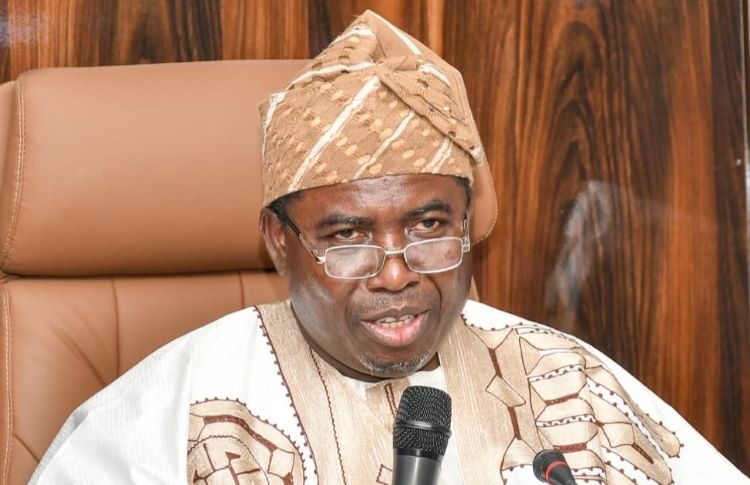
THE Independent National Electoral Commission (INEC) has firmly dismissed growing calls for the removal of its Chairman, Professor Joash O. Amupitan, insisting that such demands are unconstitutional and a threat to the independence of Nigeria’s electoral system.
In a statement sent to News Point Nigeria by the Chief Press Secretary to the INEC Chairman, Adedayo Oketola, on Thursday in Abuja, the Commission said recent criticisms by political actors accusing it of partisanship were misplaced, stressing that its actions were strictly guided by the law and judicial pronouncements.
INEC maintained that the appointment, tenure, and removal of its chairman and national commissioners are clearly defined under Section 157 of the 1999 Constitution of Nigeria, noting that no individual or political group has the authority to demand the chairman’s removal outside constitutional provisions.


“The Chairman does not hold office at the pleasure of any political party or interest group,” the Commission stated, describing such calls as “a distraction” and “a direct assault on the independence of the nation’s electoral umpire.”
The Commission explained that its recent actions, which have sparked controversy, were taken in compliance with a ruling of the Court of Appeal of Nigeria regarding an internal leadership dispute within the African Democratic Congress (ADC).
According to INEC, the decision to maintain the status quo was aimed at avoiding legal complications similar to past incidents in Zamfara and Plateau states, where electoral outcomes were overturned due to disobedience of court orders.
INEC further clarified that proceeding to monitor activities of a faction within the ADC, particularly the leadership led by David Mark, would have amounted to contempt of court, as there was a subsisting order restraining the Commission from doing so.
Citing Section 287(2) of the Constitution, the Commission emphasised that all authorities in Nigeria are obligated to obey and enforce court judgments without exception.
Responding to allegations that its actions were designed to weaken opposition parties, INEC insisted that it remains a neutral regulator and not a participant in political competition.

It pointed to the recent registration and recognition of new political parties, including the Democratic Leadership Alliance (DLA), Nigeria Democratic Congress (NDC), and National Democratic Party (NDP), as evidence of its commitment to expanding the democratic space.
The Commission noted that Nigeria currently has 22 active political parties, describing this as a clear rebuttal to claims of a looming one-party system.
INEC also addressed concerns surrounding its proposed nationwide voter revalidation exercise, which some critics had attempted to politicise.


The Commission explained that the exercise is not a fresh voter registration but an administrative audit aimed at strengthening the integrity of the National Register of Voters.
According to INEC, the revalidation will help address issues such as duplicate entries, voter transfers, and the removal of deceased persons from the register.
“This is a professional necessity,” the statement read, adding that the process will be conducted transparently across all local government areas and polling units, with digital options available to enhance accessibility.
The Commission stressed that the exercise predates the appointment of the current chairman and is not targeted at any region, political party, or demographic group.
INEC reaffirmed its commitment to conducting credible elections, noting that its immediate focus is on preparations for the upcoming off-cycle governorship elections in Ekiti and Osun states scheduled for June and August 2026, respectively.
It warned that it would not be distracted by what it described as unfounded allegations of bias or collusion.
While acknowledging that some of its decisions may not align with the interests of all political actors, INEC reiterated that its actions are guided by the rule of law and the need to ensure free, fair, and credible elections.
“The decisions taken by the Commission are based on thorough evaluations and aligned with the legal framework governing our operations,” it stated.
The Commission concluded by reaffirming its independence and commitment to democratic principles, insisting that calls for the resignation of the chairman are “out of place.”
INEC assured Nigerians that it remains dedicated to delivering transparent, inclusive, and credible elections that reflect the will of the people.