

PAKISTAN’s army chief, Field Marshal Asim Munir, is in Iran as part of ongoing mediation efforts to end Israel and the United States’s war that began on February 28.
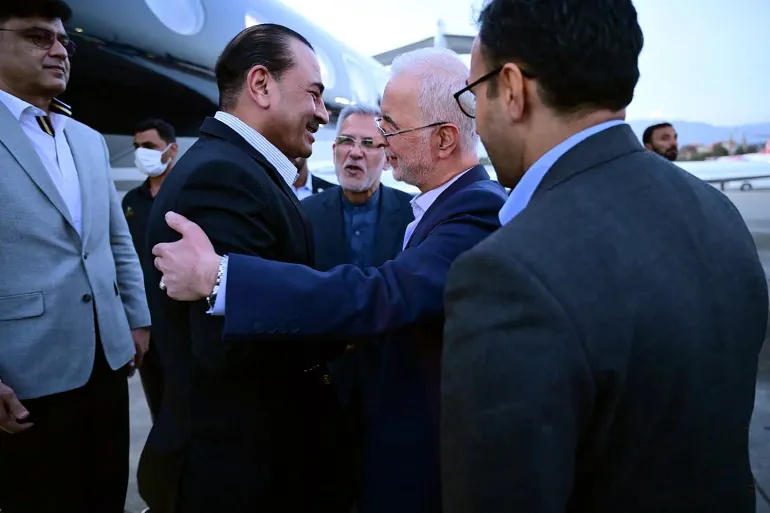
Munir arrived in Tehran on Friday, Iran’s state-run IRNA news agency reported, citing the Pakistan Army.

“On arrival, he was received and warmly welcomed by Iranian Interior Minister Eskandar Momeni,” IRNA said, adding that “Pakistan’s Interior Minister Mohsin Naqvi was also present at the reception.”

It is the second such trip to Tehran by Munir amid Pakistani mediation efforts to end the war.


Islamabad helped secure a temporary ceasefire between the warring sides on April 8, and later hosted the highest-level talks between the US and Iran since 1979 on April 11-12.
During this visit to Iran, unnamed Pakistani sources told the Anadolu news agency that Munir will discuss Iran-US talks, regional peace and stability, and other “important issues”.
Islamabad has intensified its mediation process to secure a second round of direct talks between the two sides.
“The current process and the presence of senior Pakistani officials in Tehran means that we have reached a turning point or a decisive situation,” Iran’s Foreign Ministry spokesperson Esmaeil Baghaei said on Friday.
Iranian state media quoted Baghaei as saying the gaps between Tehran and Washington are “deep and significant”.

“We cannot necessarily say that we have reached a point where an agreement is close,” he said. “The focus of the negotiations is on ending the war. Details related to the nuclear issue are not being discussed at this stage.”
An Iranian official source told Al Jazeera on Friday that a ceasefire on “all fronts is the essential prerequisite for any future negotiations”, adding that although no final agreement has been reached yet, efforts are “unde rway” to bridge the gap between Tehran and Washington.
The source said the “positive atmosphere” surrounding diplomatic efforts is “important, but insufficient” for a genuine agreement, while “ending the war, lifting the US blockade, and ensuring the stability of the Strait of Hormuz are priorities”.


The release of frozen assets and lifting sanctions on oil exports are not details currently being considered in the agreement, the source said.
Qatar’s supportive role for Pakistan’s mediation is “vital, important, and fundamental”, the source added.
Speaking at the White House on Friday, US President Donald Trump said, “Iran is dying to make a deal.”
“We’ll see what happens. But we hit them hard, and we had no choice because Iran cannot have a nuclear weapon. They cannot have it,” Trump added.
Trump just a few days earlier said he was holding off on a military strike against Iran because “serious negotiations” were under way. He has been threatening for weeks that the April ceasefire could end if Iran does not make a deal, with shifting parameters for striking such an agreement.
US Secretary of State Marco Rubio said on Friday that “slight progress” was made during talks with Iran. He spoke before a meeting of NATO foreign ministers in Helsingborg, Sweden, where the military alliance discussed what role it could play in helping police the Strait of Hormuz once the war is over.
Rubio said he did not want to exaggerate the progress in talks, saying there had been “a little bit of movement, and that’s good”. He said the conversations were ongoing. In recent weeks, there have been repeated claims of progress, but a deal has stayed out of reach.