THE Federal Government has earmarked N1.371 billion in the 2026 Appropriation Act for the prosecution of Boko Haram, terrorism, and related cases under the Federal Ministry of Justice, marking a significant increase from the N530 million approved for similar cases in 2025.

Findings by News Point Nigeria show that the 2026 provision was drawn from the Appropriation Bill (Details), as the Budget Office of the Federation had yet to release the full breakdown of the 2026 budget recently signed into law by Bola Tinubu.

Read also: Major, Several Soldiers Killed As Boko Haram Ambush Military Convoy In Yobe
The President, on Friday, assented to the 2026 Appropriation Bill, approving a total budget of N68.32 trillion for the fiscal year.

Within the budget, N5.41 trillion was allocated to defence and security, reflecting the government’s sustained focus on addressing insecurity across the country.
Analysis indicates that the security allocation accounts for about 7.9 percent of the total N68.32 trillion budget, underscoring its prominence within the overall fiscal framework.


The spending plan also places considerable emphasis on capital investment, with roughly half of the budget dedicated to infrastructure and development projects.
A comparative review of the 2025 and 2026 fiscal documents shows that the allocation for the prosecution of terrorism-related cases rose by approximately 159 percent year-on-year.
In the 2026 budget proposal, the line item appears as “BOKO HARAM, TERRORISM AND RELATED CASES” with a provision of N1.371 billion. In contrast, the 2025 Appropriation Act listed it as “MANAGEMENT OF TERRORISM RELATED CASES/ISSUES” with an allocation of N530 million.

Further analysis reveals that the terrorism-related allocation now constitutes a larger share of the ministry’s capital expenditure.
The N1.371 billion proposed for 2026 represents about 14.1 percent of the Federal Ministry of Justice headquarters’ total capital expenditure of N9.725 billion. This marks an increase from 2025, when the N530 million allocation accounted for approximately 7.9 percent of the headquarters’ capital budget of N6.750 billion.
The overall budget for the ministry’s headquarters also recorded an increase within the same period.


In 2025, the Federal Ministry of Justice headquarters had a total allocation of N19.861 billion, comprising N5.611 billion for personnel, N7.500 billion for overhead costs, and N6.750 billion for capital expenditure.
For 2026, the headquarters allocation rose to N23.685 billion, including N3.461 billion for personnel, N10.500 billion for overhead, and N9.725 billion for capital spending.
This represents an increase of about N3.825 billion, or roughly 19.3 percent, in the ministry’s headquarters budget year-on-year.
A closer examination of the capital expenditure components shows that the terrorism-related allocation ranks among the major spending priorities at the headquarters level in 2026.
Read also: Power Generation Crashes From 3,840MW to 476MW, Federal Govt Denies Grid Collapse
Other significant allocations include funding for the repair and renovation of the ministry’s headquarters building and its Lagos zonal office, execution of international cases, liability management, and reforms within the criminal justice sector.
The upward adjustment in funding suggests a shift in priority towards handling terrorism-related prosecutions. Analysts attribute this to increasing caseloads, rising operational costs, and the growing complexity of trials linked to insurgency and related offences.
Earlier in December 2025, the Attorney-General of the Federation and Minister of Justice, Lateef Fagbemi (SAN), called on the judiciary to expedite hearings in cases involving terrorism, human trafficking, kidnapping, and other violent crimes.
Speaking during the ceremony marking the commencement of the Court of Appeal 2025/2026 Legal Year, Fagbemi emphasised the urgency of addressing insecurity through judicial processes.
“At this solemn juncture in our national life, it is also impossible to ignore the grave challenge of insecurity that confronts our country. From insurgency and terrorism to banditry, kidnapping and violent crimes, these threats imperil not only the safety of our citizens but also the very fabric of our constitutional democracy.
“The judiciary, as the guardian of justice and the custodian of the rule of law, must lend its weight to national efforts to combat insecurity through firm, consistent and courageous adjudication. The courts can ensure that those who threaten peace and stability are held accountable, that impunity is dismantled, and that the sanctity of human life and property is protected,” he said.
He stressed that the judiciary becomes more effective when terrorism-related cases are heard and concluded expeditiously.
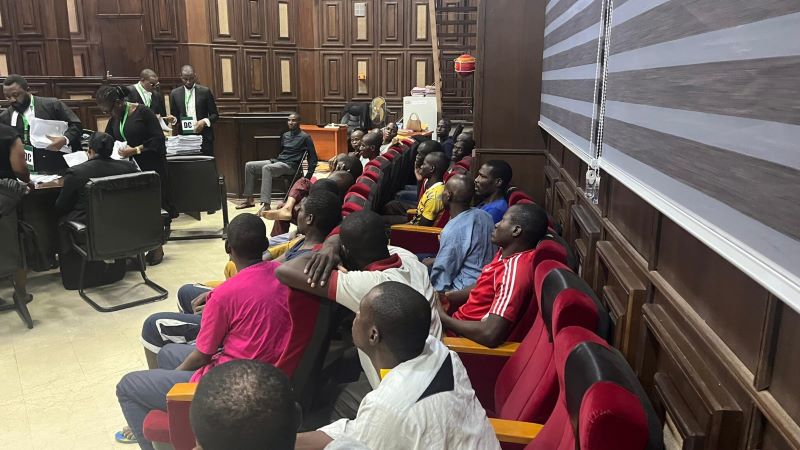
In April 2026, reports indicated that the Federal High Court in Abuja sentenced five terrorism convicts to various prison terms, including up to 20 years’ imprisonment.
The court also remanded another suspect who pleaded not guilty to terrorism charges, as the Federal Government commenced a new phase in the mass trial of about 500 suspects.
Further disclosures by the Attorney-General revealed that the government secured 386 convictions out of 508 terrorism-related cases prosecuted at the Abuja Division of the Federal High Court.
Fagbemi made this known to journalists at the conclusion of the ninth phase of the mass trials.
He added that eight defendants were discharged, two were acquitted, while 112 cases were adjourned to the next phase of proceedings.
“In total, we brought about 508 cases. Of these 508, we were able to secure 386 convictions. Eight discharges, two acquittals and 112 adjourned to the next session or phase,” he said.
According to him, the next phase of the trials has already been scheduled.
Read also: Federal Government Confirms Ebola Case In Abuja, Begins Contact Tracing For 44 People
“Don’t forget that this is the ninth phase. The 10th phase will come up between the 15th and the 18th of June by God’s special grace,” he added.
The trial phase referenced began on Tuesday, April 7, 2026, and concluded on Friday, April 10, 2026.