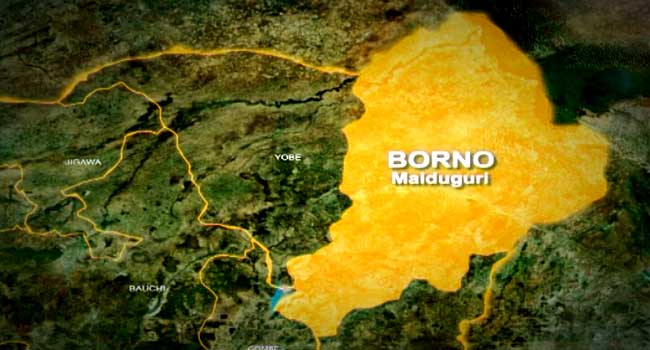
WHEN news filtered in last week that Brigadier General Oseni Omoh Braimah, commander of the 29 Task Force Brigade, had been killed in a coordinated terrorist attack on his own Benisheikh headquarters in Borno, my heart sank. Three days later, when reports came in that yet another commanding officer, this time the man in charge of the 242 Battalion in Monguno, had been killed alongside six soldiers, my heart sank deeper.
Two senior officers killed in three days. Yet you would not know it from the way the news has come and gone. The average Nigerian on the street, the same Nigerian who can recite every member of the Super Eagles squad and the cast of every Big Brother Naija season, would struggle to name even one of them. That is not the fault of the citizen. That is the fault of how we, as a country, have chosen to absorb these losses.

Read also: Nigerians’ Mental Health Is Under Siege – By Boma West

To make matters worse, the Defence Headquarters’ initial statement on Braimah’s death referred only to “a few brave and gallant soldiers” who paid the supreme price. We had to wait for the Presidency to give the country his name. As for the commanding officer killed in Monguno, now widely reported as Lt Col I.A. Mohammed, again the nation had to piece his identity together from secondary reporting. Is this how a serious country mourns its fallen senior officers? I don’t think so.


Let me lay out what the open record actually shows. Since 2016, at a conservative count, at least 13 named Nigerian military officers from the rank of Lieutenant Colonel and above have been killed by bandits and terrorists on our soil. Add two more credible cases and the figure rises to 15. The breakdown is sobering. Nine Lieutenant Colonels. One Colonel.
Three Brigadier Generals. Almost every one of them an Army officer. Almost every one of them killed in Borno State. Almost every one of them killed while doing exactly what senior officers are supposed to do, which is to lead from the front.
Permit me to refresh our collective memory with the names this country has been too quick to forget. Lt Col K. Yusuf went missing in October 2016 when the Gashigar position was overrun, and his body was recovered three months later. Lt Col Muhammad Abu Ali, that war hero whose name was once a household name in the North-East, was killed at Mallam-Fatori on November 4, 2016. Ten days after that, Lt Col B.U. Umar’s convoy was struck by an IED. One month later, Lt Col O. Umusu was ambushed between Zare and Gudumbali. In November 2018, the brutal Metele attack swallowed Lt Col Ibrahim Sakaba in one of the bloodiest engagements of the entire war.
The pattern did not slow. Colonel Dahiru Chiroma Bako, described by the Army itself as one of its “finest war heroes”, was ambushed near Wajiroko in September 2020. Days later in Katsina, Lt Col M.Z. Manu was killed by bandits in Faskari. In November 2021, Brigadier General Dzarma Zirkusu fell at Askira-Uba while moving with reinforcement troops.
Then 2025 happened. January took Lt Col T.E. Alari at Mallam-Fatori. October took Lt Col Aliyu Saidu Paiko at Bama. November took Brigadier General Musa Uba at Wajiroko. The same Wajiroko that swallowed Bako five years earlier. 2026 has been even worse. March took Lt Col S.I. Iliyasu at Konduga and Lt Col Umar Farouq at Kukawa, just days apart. This April has now taken Braimah and Mohammed.

Now look at that geography again. Wajiroko. Damboa. Mallam-Fatori. Kukawa. Konduga. Monguno. Bama. The same towns keep appearing on our casualty list year after year, like a cursed roll call. If our military planning department was a private company, it would have been wound up long ago for failing to learn from its own ledgers.
So what exactly is going on, and why are we losing battalion commanders, brigade commanders and brigadier generals at this rate?
To be sure, the terrorists, particularly ISWAP, have refined three killing methods against our senior officers. The IED strike on a moving convoy. The ambush of a reinforcement column responding to a base under attack. And the overnight overrun of a forward base where the commanding officer is sleeping in his quarters. B.U. Umar, Bako, Zirkusu, Uba, Mohammed, different years, different bases, but the same script. We are not facing some unknowable, mystical enemy. We are facing a method. The question every Nigerian deserves answered is, why has our counter-method been so slow to evolve?


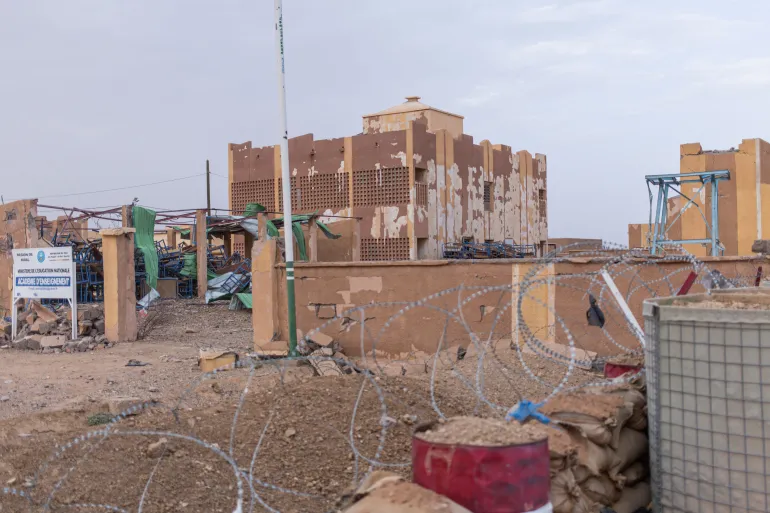
There is also a serious force-protection problem. When a brigade headquarters in Benisheikh can be hit in a coordinated assault in 2026, after a decade of war, that is not bad luck. That is a system that has failed to upgrade itself at the speed of the threat. The perimeter design, the early-warning capability, the depth of the quick-reaction force, the air-support response time, something is just not adding up.
Read also: Boko Haram Attacks Military Base In Borno, Seven Soldiers Feared Killed
Then there is the intelligence question. How is it that ISWAP always seems to know which base is least defended, which night to attack, and which officer is in residence? Like I have said previously on this page, the army has paraded surrendered terrorists in their tens of thousands, and we were promised intelligence dividends from those surrenders. Where is that dividend? Are we sitting on intelligence and refusing to act, or are we simply not getting it in the first place? Either answer should worry us.
Now let me speak as a journalist before I speak as a citizen. There is a transparency problem here that does no favours to the fallen. When the Defence Headquarters announces casualties without names and ranks, when the Presidency has to be the one to name a brigadier general, when families learn of their loved one’s death from social media before they get any official notification, we are quietly normalising loss. A country that cannot bring itself to name its fallen senior officers in real time is not a country at peace with itself.
I am not asking for operational details that will help the enemy. God forbid. I am asking for the basic dignity of acknowledgement. Mind you, Brigadier General Musa Uba’s death was at first surrounded by official denials of the very abduction reports that later turned out to be true. We had to wait for a Presidential condolence to anchor the truth. That is not how a serious military communicates with the country it serves.
In fairness, none of this takes away from the courage of the officers in question. These were men who could have stayed in air-conditioned offices in Abuja. Many of them volunteered for the front. Their courage is not in question. What is in question is the institutional environment in which their courage is being spent.
So what must change? I have three concrete suggestions.
One, the National Assembly should compel a transparent annual report on senior-officer casualties. Names, units, dates, and operational lessons learned. The Senate Committee on Defence and the House Committee on Army Affairs have the powers to demand it. They should use them.
Two, every base that has been attacked twice should automatically trigger an engineering, intelligence and command review, with a published, declassified summary of what was changed. The Wajiroko ambush of 2020 should not have been allowed to repeat itself in 2025. That fact alone should keep our defence planners awake at night.
Three, the Federal Government must invest seriously in night-fighting capability, drone surveillance and rapid air response in the North-East. Our soldiers cannot keep dying because the cavalry takes too long to arrive.
Beyond the tactical, there is a moral point. This country owes the families of these fallen officers more than a flag-draped coffin and a 21-gun salute. It owes them schools their children can attend without paying fees, scholarships their wards can access without bureaucratic torture, and pensions paid on time and in full. Let governors of the states where these officers came from publicly adopt the educational welfare of their children. That is the very least we can do.
This column is not an attack on the Nigerian Army. Far from it. As a rule, I don’t criticise the military, because of the sacrifices many of them are making to secure the nation. Without our soldiers, Boko Haram would have planted its flag over Maiduguri years ago, and bandits would have walked into Kaduna and Katsina and never left. Credit is due where credit is earned, and our military has earned plenty. But love of country, and love of the Army, demands that we ask the hard questions when officers keep dying in patterns that look avoidable.
Read also: Why We Omitted Pantami, Adebutu, Gwarzo From 2027 Governorship List – INEC
The next time you hear of a brigadier general or a battalion commander killed in the North-East, please do not let the news scroll past you. Ask his name. Ask his unit. Ask which base. Ask if it is a base that has been hit before. Ask what changed since the last attack. Ask what the National Assembly is doing about it.
Because here is the painful truth. We have buried a colonel, three brigadier generals, and at least nine lieutenant colonels in just one decade, and the system that sent them to those bases is largely unchanged. If we do not change the system, we will only keep changing the names on the gravestones.
- Nda-Isaiah is a political analyst based in Abuja and can be reached on jonesdryx@gmail.com. His syndicated column appears on News Point Nigeria newspaper on Saturday.