

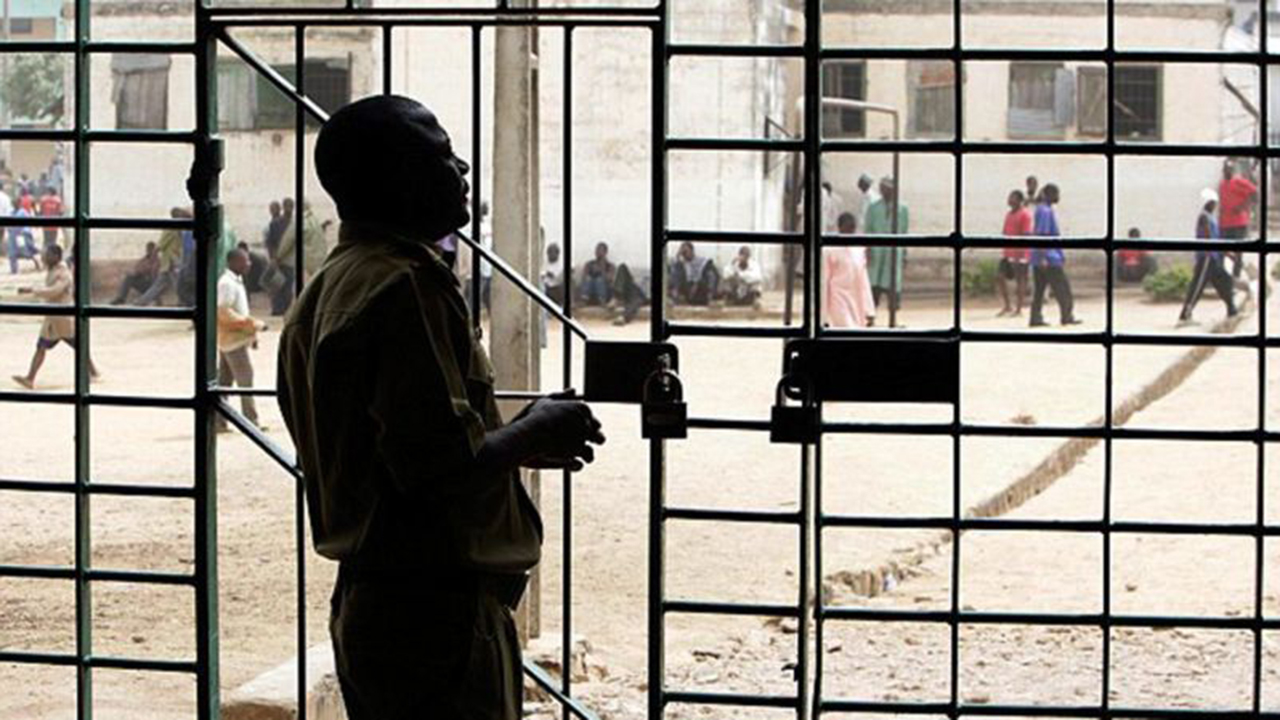
AN independent investigative panel established by the Federal Government to probe allegations of corruption and human rights violations within the Nigerian Correctional Service (NCoS) has uncovered widespread inmate malnutrition, alleged abuses in the administration of feeding contracts, and institutional practices contributing to prison overcrowding.
The findings were contained in the panel’s final report submitted to the Minister of Interior, Dr. Olubunmi Tunji-Ojo, on June 3, 2026. The report, sighted by News Point Nigeria on Tuesday through the Ministry of Interior’s website, recommended an immediate increase in the daily feeding allowance for inmates from N750 to N3,000.
The panel, which was inaugurated on September 30, 2024, was mandated to investigate allegations of corruption and human rights abuses within the correctional system and recommend measures for comprehensive reform.


As part of its assignment, the panel conducted assessments of 86 custodial facilities across 23 states and the Federal Capital Territory, organised public hearings, and undertook a study mission to the Republic of Türkiye.
Field visits were carried out between late 2024 and mid-2025 in Abia, Anambra, Adamawa, Edo, Kano, Lagos, Plateau, the FCT, Nasarawa, Akwa Ibom, Kaduna, Delta, Rivers, Sokoto, Borno, Ebonyi, Enugu, Gombe, Imo, Oyo, Kwara, Ondo and Ogun states.
According to the report, investigators found evidence of serious deficiencies in inmate welfare, particularly in feeding arrangements and the management of resources allocated for prisoners.
“These include allegations of misappropriation or diversion of funds allocated for inmate feeding, healthcare, and rehabilitation. Examples include inflated figures for feeding contracts or missing rehabilitation programme funds,” the report stated.
The panel noted that inadequate feeding budgets and corruption in food supply arrangements had contributed significantly to widespread malnutrition in custodial facilities across the country.
“Inadequate feeding budget and corruption in food supply have resulted in widespread malnutrition among inmates,” the report noted.

The report cited several facilities where conditions were found to be particularly alarming.
“Specific Finding (Imo State): Feeding provisions are critically deficient; the panel recorded instances where nominal portions of raw protein (fish) were subdivided into fractional pieces for multiple inmates in Owerri Correctional Centre.
“Specific Finding (Akwa Ibom State): Malnutrition is a significant concern due to poor food rations, with reports of inmate deaths.”


Beyond welfare concerns, the investigation uncovered alleged irregularities in the award and execution of inmate feeding contracts.
According to the panel, many feeding contracts were awarded to companies operating far from the custodial centres they were expected to serve, creating opportunities for extensive subcontracting arrangements.
“The contract for food supply is awarded to many companies, most of which stay outside the location of the custodial centre they are to supply the food to; hence, the interest in sub-contracting the supply of the food to the officer in charge of the custodial centres,” the report stated.
The panel further alleged that politically exposed persons, as well as serving and retired correctional officers, played significant roles in the contract process.
“The investigation revealed the involvement of past and current senior correctional officers, politicians, and high-level public officers in contract awards, sale of contracts, and subcontracting of inmates’ food.
“Most of the companies awarded the supply of inmates’ food were fronts for past and current senior correctional officers, politicians, high-level public officers, or their friends and relatives,” the report added.
Investigators also received accounts suggesting that subcontractors frequently transferred responsibility for feeding inmates to custodial centre officials at rates far below the approved government allocations.
“For example, the panel members were informed that when the rate of feeding of inmates was assigned as N750.00 per inmate per day, some subcontracted this to the officer in charge at N460.00 per inmate per day, and with the new increase in the rate to N1,250.00, some subcontracted this to the in-charge custodial centres at the rate of N600.00,” the report stated.
According to the panel, some contractors allegedly used their influence to threaten officers who resisted such arrangements and sought their removal from office.
Beyond feeding contracts, the report identified what it described as institutional incentives that encourage the maintenance of high inmate populations and undermine efforts to reduce congestion through alternative sentencing measures.
“It is the interest of correctional officers that benefit from the food contracts and other supplies to have a high number of inmates, to under-utilise non-custodial measures, and not to have sustainable agricultural programmes that will feed the inmates through the proceeds from the Nigerian Correctional Service Farm Centres,” the report stated.
In response to its findings, the panel recommended a substantial increase in funding for inmate feeding across correctional facilities.
“Immediately increase inmate feeding allocation from N750 to N3,000 per inmate per day to address systemic malnutrition,” the report recommended.
The panel added that the proposed adjustment should reflect prevailing economic realities and be reviewed periodically to ensure its effectiveness.
It also recommended the mechanisation of correctional farm centres and the expansion of agricultural production within custodial facilities as a means of reducing dependence on external food vendors.
According to the report, increasing agricultural output within the correctional system would help in “reducing the feeding budget and dependency on external vendors” while creating incentives for the Nigerian Correctional Service to progressively meet inmates’ feeding needs through its own farming programmes.
In addition, the panel called for measures “to remove incentives linking custodial centre population to an increase in profit margin from food ration awards.”
The report expressed optimism that implementing its recommendations would significantly improve inmate welfare, strengthen transparency and accountability in procurement processes, tackle prison overcrowding, and support broader reforms aimed at transforming Nigeria’s correctional system.