

The International Criminal Court (ICC) says it has obtained “concrete evidence” linking leaders of Sudan’s paramilitary Rapid Support Forces (RSF) to alleged war crimes and crimes against humanity committed during the ongoing conflict in the Darfur region.

The ICC’s Deputy Chief Prosecutor, Nazhat Shameem Khan, disclosed that investigators had achieved what she described as a “breakthrough” in the court’s probe into the massacres of civilians in the Sudanese cities of el-Fasher and el-Geneina.

Speaking to the BBC, Khan expressed confidence that those responsible for the atrocities would eventually face justice, even if the legal process takes time.


“It may take time for justice to develop, to be brought to the court, but we will get there,” she said, adding that the investigation had also established links between RSF leaders and alleged crimes against humanity.
According to Khan, investigators have now gathered evidence connecting senior leaders of the paramilitary group to crimes committed on the ground.
“We have now found concrete evidence that links what is happening on the ground through linkage evidence to specific persons in leadership mode,” she said.
However, the ICC official declined to give a timeline for when charges could be filed against those allegedly responsible for the atrocities committed during Sudan’s conflict, which began in April 2023.
“We cannot say how quickly or how long it’s going to take,” Khan said.
“But we can say that progress has been significant and that we have achieved a breakthrough.”

The siege and eventual capture of el-Fasher by the RSF has been described as one of the deadliest episodes of the war between the paramilitary group and the Sudanese Armed Forces.
According to the United Nations, more than 6,000 people were killed in el-Fasher after the RSF seized the city in October last year.
The RSF has also been accused of carrying out a similar massacre in el-Geneina.


The paramilitary organisation has consistently denied allegations that it committed widespread killings anywhere in Darfur.
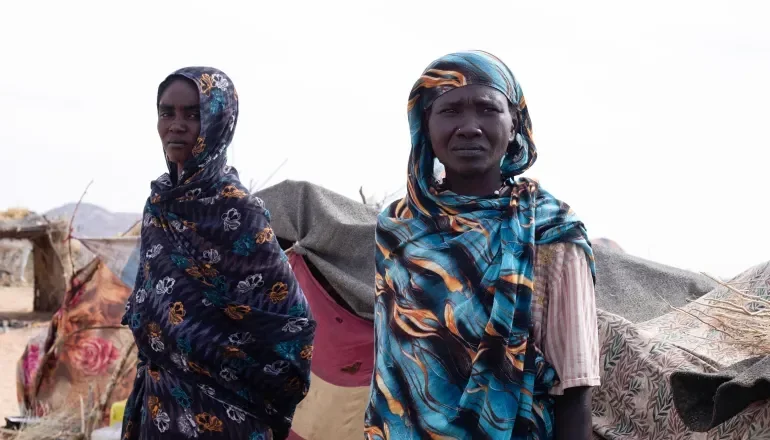
Khan spoke after visiting refugee camps in eastern Chad, where thousands of people who fled the fighting in Darfur recounted the atrocities they experienced during the conflict.
The United Nations has stated that tens of thousands of residents were forced to flee el-Fasher and described the violence in the city as bearing the “hallmarks of genocide.”
The RSF has denied allegations that the killings in el-Fasher were ethnically motivated or formed part of a systematic campaign by Arab paramilitary fighters against non-Arab communities.
While insisting that reports of atrocities had been exaggerated, the group acknowledged that some violations occurred during the fighting.
Shortly after the capture of el-Fasher, RSF leader General Mohamed Hamdan Dagalo announced that the group had launched an internal investigation into allegations of atrocities.
The RSF recently confirmed that the investigation remains ongoing.
The ICC has been investigating alleged war crimes and crimes against humanity in Darfur for more than two decades, dating back to the conflict that erupted in the early 2000s.
According to Khan, investigators are seeing recurring patterns of violence similar to those documented during the previous Darfur conflict.
“What we see is patterns of offending that in fact were the same patterns of offending 20 years ago when this situation was first referred to us by the Security Council,” she said.
She explained that the ICC’s investigation is based on witness testimonies, survivor accounts and corroborating evidence, including videos, photographs and forensic material.
Previous ICC investigations into Darfur have resulted in seven arrests and six separate cases involving allegations of war crimes and crimes against humanity.
Among those charged is Sudan’s former President, Omar al-Bashir.
Al-Bashir, who was removed from office in a military coup in 2019, remains at large and is believed to be held in a secure medical facility in Sudan.
Four other suspects are also the subject of ICC arrest warrants but have yet to be apprehended.
Last year, the ICC sentenced former militia commander Ali Muhammad Ali Abd-Al-Rahman to 20 years’ imprisonment after convicting him on 27 counts of war crimes and crimes against humanity committed in Darfur between 2003 and 2004.
Abd-Al-Rahman was a senior commander of the Janjaweed, a government-backed militia accused of targeting civilians from non-Arab communities in Darfur.
The Janjaweed later evolved into the Rapid Support Forces, a paramilitary organisation that was once allied with Sudan’s military but is now engaged in a devastating civil war against it.