

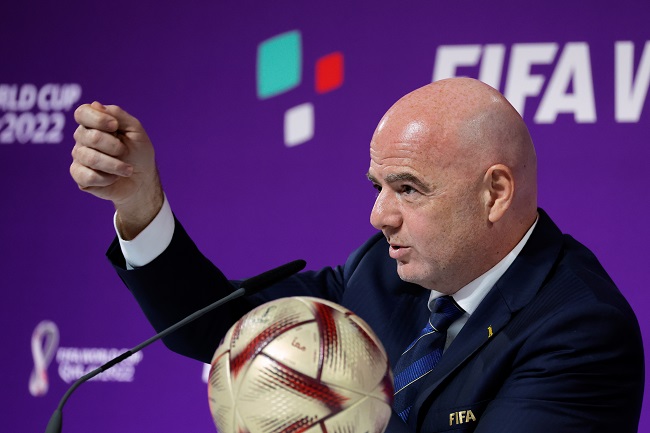
FIFA president, Gianni Infantino, is facing mounting political pressure after 72 members of the European Parliament called for a formal investigation into his conduct following the controversial decision to suspend United States striker Folarin Balogun’s ban during the ongoing World Cup after alleged direct intervention from the White House.
News Point Nigeria Sport reports that the lawmakers have written to the heads of the 27 European Union football associations, demanding an immediate probe into the decision-making process that enabled Balogun to avoid serving a red-card suspension.
The move followed revelations that United States President Donald Trump personally contacted Infantino to lobby on behalf of the player, triggering widespread concerns over political interference in football governance.

The Members of the European Parliament argued that the continent’s football associations, as recognised FIFA member associations, have both the authority and responsibility to intervene and seek a full investigation into the circumstances surrounding the decision.


According to the lawmakers, FIFA’s own statutes and code of ethics provide a clear legal basis for such action.
The MEPs anchored their demand on FIFA’s long-standing commitment to political neutrality, citing Article 4(2) of the FIFA Statutes, which states that the world football governing body must remain neutral in matters relating to politics and religion.
They also referenced Article 15 of FIFA’s Code of Ethics, which requires football officials to maintain political neutrality and provides sanctions for any breaches of the rule.
In addition, the lawmakers urged European football associations to support calls by the Norwegian Football Federation for closer scrutiny of the decision-making process surrounding the Balogun case.
Despite the backlash, Infantino has remained defiant, insisting that FIFA’s judicial organs operate independently and that he merely explained the governing body’s existing procedures to Trump rather than interfering with the disciplinary process.

According to the FIFA president, the organisation’s judicial bodies function autonomously and apply the Disciplinary Code in line with the relevant regulations.
He maintained that during his conversation with Trump, he only informed the US president that a legal process was ongoing and that the matter would ultimately be decided by the competent FIFA bodies.
Meanwhile, UEFA has also entered the debate, issuing a strongly worded statement despite Belgium’s emphatic 4-1 victory over the United States on the pitch.


European football’s governing body warned that when the certainty and consistency of football rules are no longer guaranteed by those entrusted with protecting them, the integrity of the game and the credibility of the competition are placed at risk.
UEFA further argued that the decision had created a precedent that would require equal treatment in similar cases for the remainder of the tournament.
The organisation also expressed disbelief over what it described as an unprecedented and unjustifiable decision, adding to the growing pressure on FIFA and its president over the Balogun controversy.