

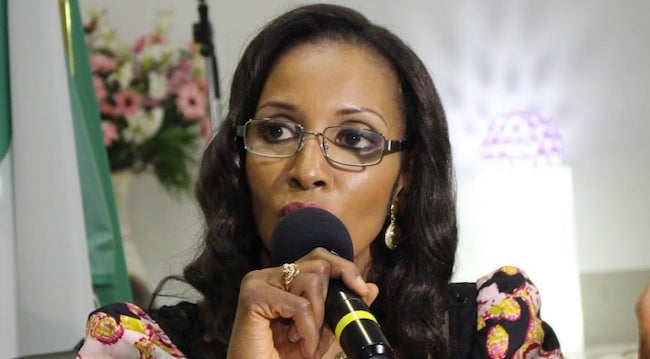
THE Minister of Foreign Affairs, Ambassador Bianca Odumegwu-Ojukwu, has warned foreign diplomatic missions against making unguarded comments, disparaging remarks or unsolicited lectures on democracy as Nigeria prepares for the 2027 general elections.
News Point Nigeria reports that the minister issued the warning on Thursday at a diplomatic briefing with members of the Diplomatic Corps at the Ministry of Foreign Affairs in Abuja.
Odumegwu-Ojukwu, who described Nigeria as Africa’s largest democracy, said developments in the country had regional and international implications, urging diplomatic missions to respect Nigeria’s sovereignty and established diplomatic channels.

She said, “As the 2027 general elections draw near, the Ministry of Foreign Affairs would request that missions remain guided. Recognising the fact that Nigeria is the largest democracy in Africa, and that developments in Nigeria have regional and international complications and implications, we would not look kindly upon unguarded comments, disparaging remarks, or unsolicited lectures on democracy.”


The minister assured the diplomatic community that the administration of President Bola Ahmed Tinubu was committed to democratic governance and delivering a credible election.
“The Government of President Bola Ahmed Tinubu is committed to democracy and to delivering an election that will be peaceful, free, fair, and credible in all ramifications,” she stated.
The briefing marked Odumegwu-Ojukwu’s first formal engagement with the Diplomatic Corps since her appointment as Minister of Foreign Affairs.
She called for closer cooperation between the ministry and foreign missions, emphasising the importance of dialogue, mutual respect and adherence to established diplomatic procedures.
“I want us to speak frankly, to engage constructively, and to resolve issues through dialogue, established diplomatic channels, and mutual respect,” she said.

The minister also urged diplomatic missions to route official communications and requests intended for the Presidency, ministries, departments, agencies and other government institutions through the Ministry of Foreign Affairs.
She explained that the ministry’s role was to facilitate, rather than obstruct, diplomatic engagement with the Nigerian Government.
“Let me emphasize that the Ministry is not an obstacle between you and the Nigerian Government; we are your bridge to the Nigerian Government,” she said.


Odumegwu-Ojukwu said the ministry would pay renewed attention to inactive Joint Commissions and Bi-National Commissions to strengthen bilateral cooperation in trade, investment, security, education, technology, health and agriculture.
She said diplomatic relations should be assessed by the tangible benefits they delivered to citizens rather than by the number of meetings held or communiqués issued.
“The true measure of our relationships will not be the number of meetings we hold, neither will it be the number of communiqués we issue. It will be the progress we achieve for our peoples, the investments we facilitate, the opportunities we create, the challenges we resolve, and the friendships we strengthen,” she stated.
The minister reiterated that Nigeria’s foreign policy under Tinubu was anchored on the four Ds—Demography, Development, Democracy and Diaspora.
According to her, the policy seeks to place Nigerians at the centre of the country’s international engagements while maintaining its commitment to Africa and constructive relations with the wider international community.
She said Nigeria would continue to pursue strategic autonomy in its international relations, stressing that the policy did not amount to isolation.
“Strategic autonomy does not mean isolation; it means preserving Nigeria’s sovereign right to determine the relationships and positions that best serve our people,” she said.
On consular services, Odumegwu-Ojukwu urged Nigerian and foreign authorities to improve efficiency in handling diplomatic correspondence, document authentication, legalisation and visa applications.
She appealed to foreign missions to review their visa processes for Nigerian applicants, noting that prolonged waiting periods could affect legitimate travellers, students, businesspersons and families.
“While we fully respect the sovereign right of every country to determine its visa policy, excessively long waiting periods can create considerable difficulties for legitimate travellers, students, businesspersons, and families,” she said.
The minister further assured members of the Diplomatic Corps that the safety and welfare of diplomatic personnel, their families and their premises remained a priority of the Nigerian Government.
**“On security, welfare, and cultural diplomacy, Excellencies, please be assured the safety and the well-being of the Diplomatic Corps remain a priority of the Government. Nigeria remains fully conscious of its obligations under the Vienna Conventions, including the protection of diplomatic and consular personnel, their families, their premises, and property.
“Whenever you have security concerns or other issues affecting your stay in Nigeria, please bring them promptly to our attention. The Ministry will engage the appropriate government and security agencies to ensure that legitimate concerns are addressed. We want you to feel safe, enjoy your assignments, and ultimately leave Nigeria with positive memories of our country and our people.”
The minister said Nigeria possesses extraordinary cultural richness while urging the diplomats to experience the country beyond official engagements.
She said Nigeria would continue to work with diplomatic missions to deepen trade and investment, promote peace and security, advance education, health and technological innovation, and create opportunities for citizens.
“Excellencies, Nigeria is open to trade, investment, tourism, technology, knowledge, and meaningful partnerships. At the heart of these engagements must be reciprocity, sovereign equality, and mutual respect.
“At a time of increasing geopolitical complexity, conflicts, terrorism, climate change, cyber insecurity, irregular migration, and economic uncertainty remind us that in these times, no country can confront today’s challenges alone,” she said.
Odumegwu-Ojukwu also reaffirmed Nigeria’s commitment to dialogue, multilateralism and the peaceful resolution of disputes through its engagements with ECOWAS, the African Union, the United Nations, the Commonwealth and other international institutions.
**“Nigeria will, therefore, continue to champion dialogue, multilateralism, and peaceful resolution of disputes while remaining active within ECOWAS, the African Union, the United Nations, the Commonwealth, and other international institutions.
“We will continue to advocate an international system in which Africa’s voice is heard, and the continent participates meaningfully in shaping global decisions.
“We are ready to work with each of you to deepen trade and investment, strengthen cooperation on peace and security, advance education, health, and technological innovation, and create greater opportunities for our peoples,” Odumegwu-Ojukwu stressed.