

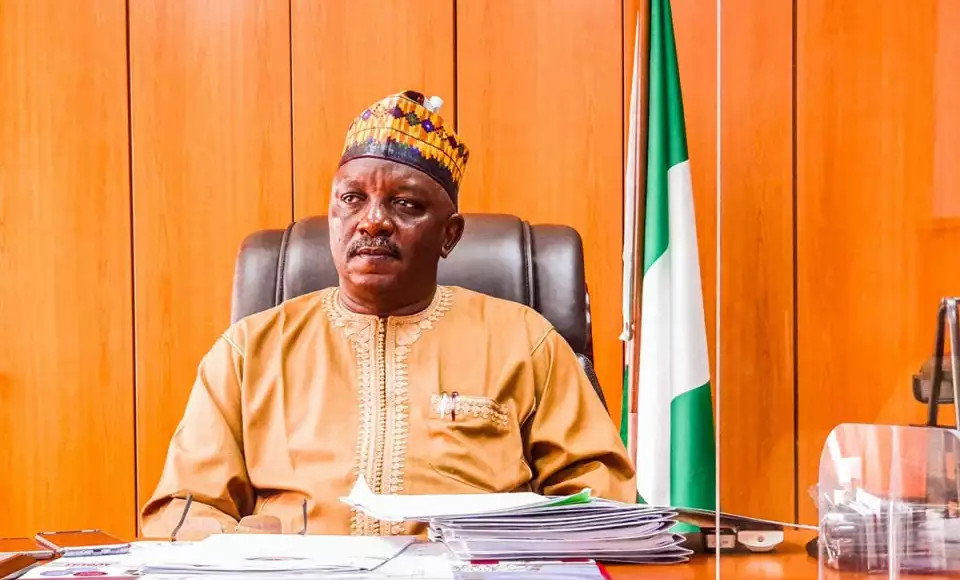
THE sudden acceleration of judgment in the ongoing trial of former Minister of Power, has triggered intense political speculation, with observers questioning whether the timing of the ruling is connected to growing reports of his governorship ambitions and rising political influence ahead of the APC screening process.
For over two years, the case moved through prolonged hearings, adjournments, witness testimonies, and procedural arguments. Yet, in what many political observers now describe as an unusually swift judicial turnaround, the anticipated judgment date reportedly shifted from expectations of a later schedule to an immediate pronouncement coinciding with sensitive political developments within the ruling party.

The development has fueled concerns among supporters and neutral analysts alike that the legal process may be intersecting with political calculations.

Only weeks ago, Mamman returned to his hometown to a massive reception by thousands of supporters, an event widely interpreted in political circles as an unofficial signal of his growing relevance within the APC power structure. Videos and images from the gathering circulated heavily across social media, portraying a formidable grassroots mobilization that some believe unsettled political rivals.


To many of his loyalists, that public show of strength marked a turning point.
“It was after that rally that the political temperature changed,” one political associate familiar with northern APC dynamics observed. “The momentum around his possible governorship ambition suddenly became impossible to ignore.”
Since then, questions have intensified over whether unseen political interests may be influencing public narratives surrounding the trial.
Throughout the proceedings, multiple courtroom testimonies exposed apparent evidentiary weaknesses in the prosecution’s case. Several prosecution witnesses admitted under cross-examination that they neither knew Mamman personally nor conducted transactions directly with him. Others confirmed that instructions regarding disputed accounts came from project accountants and designated officials — not from the former minister himself.
Financial records tendered before the court reportedly failed to establish direct ownership, signatory authority, or operational control over the accounts linked to the alleged transactions.

Witnesses from government institutions also acknowledged that payment processes were handled through institutional channels involving the Office of the Accountant General and the Central Bank of Nigeria.
Legal analysts monitoring the proceedings have therefore questioned whether the threshold for criminal liability was sufficiently established.
Even more controversial were revelations that some key documentary materials allegedly seized during investigations — including handwritten disbursement records were never produced in court despite defence requests. The defence argued that withholding such materials undermined fair hearing protections guaranteed under the Constitution.


Additional concerns emerged over allegations of late evidence disclosures, disputed witness procedures, and restrictions placed on attempts to recall witnesses during the trial.
Against this backdrop, supporters now argue that the sudden urgency surrounding the judgment naturally raises suspicions.
Critics of the process also point to what they describe as aggressive media framing around the case. Selective headlines and prosecutorial briefings, they argue, have increasingly shaped public perception toward presumed guilt despite unresolved evidentiary contradictions presented openly in court.
Some observers have further questioned whether anti-corruption mechanisms are being selectively amplified against politically exposed figures perceived as emerging threats within intra-party contests.
While no direct evidence has surfaced proving political interference in the judicial process, the convergence of legal developments with escalating governorship speculations has undeniably intensified public scrutiny.
For many Nigerians, the issue now extends beyond one individual or one trial. It touches on a broader national concern: whether high-profile prosecutions can remain insulated from political pressure during periods of heightened electoral realignments.
As the nation watches closely, the integrity of both the judicial system and the anti-corruption process will likely be judged not only by the verdict itself, but also by whether the process convincingly appears independent, transparent, and free from political timing.
In the court of public opinion, that debate has already begun.
- Jamil, a public commentator writes from Kano.