
ON our way home on Friday, my little niece, Aleenah, was gisting me about her new class, her new teacher, Ms. Matilda, and, of course, Farouk. Apparently, Farouk has become a recurring character in my life. Every day, it is, “Farouk did this,” “Farouk said that,” “I am not talking to him again,” and another episode from the very dramatic life of a Nursery One child.
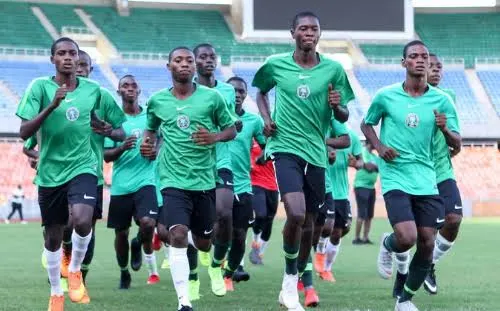
At this point, I have decided I need to go and meet Farouk one day. Anyway, somewhere between the stories of Ms. Matilda and Farouk, she excitedly announced, “On Wednesday I’m going to school holding a flag and wearing green and white.” I thought, okay, another school activity. The other time it was Fruit Day and today it is Flag Day.
Read also: The One-Term Gambit – By Jonathan Nda-Isaiah
Schools will always find something to celebrate these days. Then we started talking about the different shades of green and that was when it hit me.

Independence! October 1st.
To God who made me, I had forgotten. I actually forgot that Independence Day was approaching, and I literally had plans for October, but I forgot that every October 1st, Nigeria stops for a moment to celebrate the day the British Union Jack was lowered and our green-white-green was raised.


And there I was, looking at this little girl who has absolutely no idea what independence means, but is already excited about it. She will carry her little flag, wear green and will probably sing the anthem with all the seriousness her tiny lungs can produce. She will go home believing that something wonderful happened on October 1, 1960.
And it did. For those who were truly free after independence, they had every right to celebrate. For a nation that had finally taken over the running of its own affairs, independence was worth celebrating, and for those who could look at the Union Jack coming down and believe that the future had finally become theirs, October 1st must have felt like a new beginning.
But here we are, decades later. I cannot help but ask: What exactly are we celebrating now? Are we truly independent? Or is Nigeria just big for nothing? Before somebody accuses me of insulting Nigeria again, let me clarify, I love this country, and that is precisely why some things annoy me this much.

Nigeria has almost everything. We have mineral resources, oil, gas, agricultural land, brilliant minds. We have entrepreneurs building empires from almost nothing. We have billionaires and trillionaires. We have culture, Music, Film, Fashion, Sport, Food, Humour, religion, history, languages, Talent, Creativity, and Nigerians have proved repeatedly that when placed in functional environments, they can compete with anybody in the world. So why does a country with so much continue to struggle with so little?
Ordinary stable electricity, we no get. And before anyone tells me about the number of Nigerians connected to the grid, let us not confuse access to electricity with reliable electricity. Even the World Bank describes grid unreliability as a defining feature of electricity access in Nigeria, with frequent and prolonged blackouts across much of the country. We have become experts at survival. At some point, you realise that the average Nigerian is not living in a country; they are running a personal emergency-management agency, and yet on October 1st, we will celebrate independence.
I once heard a cleric say that the only enjoyable thing left for the average Nigerian is marriage. Not the wedding, or the asoebi, not the debt incurred to feed 500 people who came to eat jollof rice and disappear. He meant the comfort of having a significant other, or rather the intimacy. Well, I agree to disagree because that comfort is difficult when both people are drowning in responsibilities.

Peace at home is easier when you can afford the responsibilities outside the home. When there is food, security and healthcare. When your children can go to school without you wondering what kind of future awaits them, when electricity is not a luxury, when you can travel on a road without praying the entire journey and when you can sleep without wondering whether bandits, kidnappers or armed men will decide to make your community their next destination. What kind of independence is this?
We gained political independence from Britain in 1960 and Nigerians took over the formal reins of government from foreigners. But sometimes I wonder whether we have been independent long enough to still be behaving like a people waiting for somebody else to come and fix the country. The British are no longer sitting in our public offices, not directly anyway. So what happened? We replaced the colonial masters with our own masters. We replaced the foreigner with the Nigerian who has learnt how to behave like the foreigner never left. We changed the flag, the anthem, the faces, but did we change the system?
That is the uncomfortable question, because independence was never supposed to mean merely that the person signing documents in Lagos or Abuja had Nigerian blood. It was supposed to mean that Nigerians would have a country capable of giving them dignity, opportunity, security and a genuine stake in their own future. Instead, we have become a country where people are constantly being told to endure.
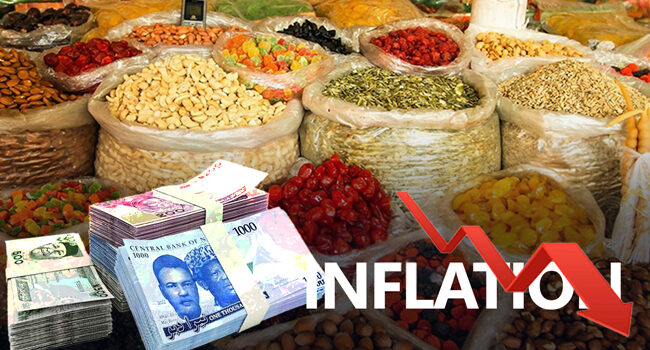
Endure fuel prices, insecurity, unemployment, poor roads, epileptic electricity, inflation, bad leadership. Endure, endure, endure. Apparently, endurance has become one of our national resources.
And every October 1st, we will hear speeches. We will be told to love one another, to live peacefully, remain hopeful and believe in Nigeria. Somewhere in the speech, there will probably be another reminder to vote, then come the promises.
Oh, the promises.
We have heard so many that Nigerians can now predict the next paragraph before the speechwriter gets there. We have mastered the language.
Read also: Wife Scarcity: What Will Our Young Sons Do Now? – By Funke Egbemode
“We are committed.”
“We will transform.”
“We will empower.”
“We will provide.”
“We will ensure and We will deliver.”
At this point, “we will” is practically one of Nigeria’s official languages.
While we are talking about leadership, there is another irony that is difficult to ignore. For weeks now, the President has remained outside Nigeria after travelling abroad on what was initially announced as a three-week annual vacation, which was later extended. Vice-President Kashim Shettima has meanwhile been representing him at the United Nations General Assembly in New York, accompanied by governors, ministers and other government officials.
The Federal Government says the delegation is there to advance Nigeria’s interests through high-level meetings, bilateral engagements and investment opportunities. Fair enough, but what measurable returns should Nigerians expect from them?
And while the Vice-President is away representing the President, Senate President Godswill Akpabio has been outside the country as well, another question naturally follows: has the constitutional procedure for the President’s prolonged absence been properly complied with? Section 145 of the Constitution provides for a written declaration to the Senate President and Speaker when the President is unable to discharge the functions of his office.
And this is where independence becomes almost philosophical, because what does it mean to be an independent country if the people are still constantly asking: Who is in charge? Who is responsible?
The irony is that our children will be celebrating on Wednesday. My little niece will carry her flag, she will wear green and will probably come home tired and happy. I will watch her and smile, or even join her, because despite everything, there is still something beautiful about watching a child believe in a country.
But maybe the responsibility of my generation is to ensure that her generation does not inherit only the ceremony of independence; they deserve the substance of it. They deserve a Nigeria where independence is not something we remember from a history book, a Nigeria where freedom is not simply the absence of British officials from our public offices.
They deserve freedom from fear, freedom from preventable suffering, from leaders who make promises every four years and explanations every year after. Freedom from the idea that surviving Nigeria is itself an achievement.
So, on October 1st, the flags will fly, the children will wear green and white, the speeches will come. And we will tell ourselves that Nigeria is 66 years independent.
If a country has its own flag, its own government, its own resources and its own people in power, but millions of its citizens still cannot enjoy the basic dignity that independence was supposed to deliver, then the next independence we need is not from Britain, it is from ourselves.
We need to be free from corruption, impunity, our addiction to political worship. From our willingness to accept crumbs from people sitting at the table of plenty and the dangerous belief that because Nigeria has always been this way, Nigeria must remain this way.
My niece does not know any of this. She only knows that she is going to school with a flag, and perhaps that is the saddest and most beautiful part — she is excited about Nigeria.
Read also: Will A Nobel Solve The World’s Trump Problem? The President Thinks So – By Azu Ishiekwene
I only pray that by the time she is old enough to understand what independence means, Nigeria will finally be worthy of the excitement.
Voice, just cleared its throat!
- Kabara is a writer and public commentator. Her syndicated column, Voice, appears in News Point Nigeria newspaper on Monday. She can be reached at hafceekay01@gmail.com.