

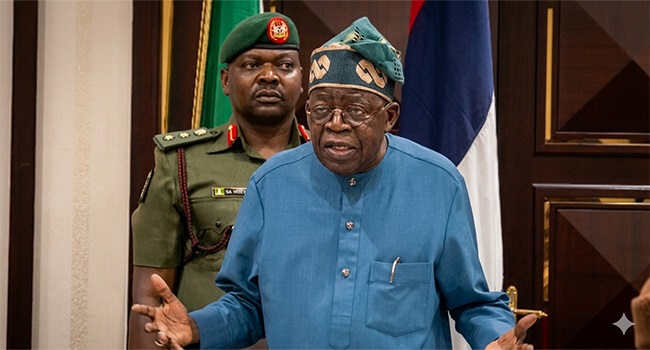
THE Senior Special Assistant to President Bola Tinubu on Media and Public Enlightenment, Abdulaziz Abdulaziz, has called for stronger collaboration between government, citizens, the media and social media influencers, stressing that ethical journalism and responsible digital engagement are essential to building trust, national unity and democratic governance.
News Point Nigeria reports that Abdulaziz made the call on Monday while delivering his welcome address at the First Arewa Media Summit held in Kano, where more than 1,000 media leaders, journalists, content creators, social media influencers and other stakeholders gathered to deliberate on the theme, “Government-Citizen Accord: Accountability, Responsibility and Ethical Media Practice.”
Welcoming participants to Kano, Abdulaziz described the city as one of dialogue, politics and enterprise, expressing appreciation for the overwhelming support the summit had received since it was conceived.

“As the convener of this very important gathering; a gathering of leaders and followers, of decision-makers and critics, gate-keepers and reporters, influencers and their followers; I am highly elated and humbled by your presence this morning and the outpouring of interest generated by this summit since the idea was unveiled. Thank you!” he said.


He also expressed gratitude to the Kano State Government under the leadership of Governor Abba Kabir Yusuf for agreeing to host the summit.
“I must begin by thanking the Kano State Government under the leadership of His Excellency Governor Abba Kabir Yusuf for agreeing to host us, over 1,000 media leaders, practitioners, content creators and social influencers,” he said.
Abdulaziz explained that the choice of the summit’s theme could not have been more timely, noting that an accord represents a pact founded on mutual responsibilities.
According to him, government has the responsibility to remain accountable and open with information, while citizens must engage facts rather than rumours and hold leaders accountable constructively. He said the media occupies the critical middle ground as the bridge, translator and conscience between both sides.
He warned that no nation could make meaningful progress in an atmosphere of distrust, arguing that when citizens lose confidence in government communication and government distrusts the media, development suffers.

“Ethical media practice restores that missing trust. Accurate reporting, fair context, and verified facts give citizens confidence to support their leaders even in turbulent times. They also give government the feedback it needs to serve better. In short: ethical media is not a luxury. It is infrastructure for unity, progress and growth,” he stated.
The presidential aide also highlighted the growing influence of social media influencers, describing them as the new gatekeepers of information whose enormous reach comes with significant responsibility.
He cautioned that while a viral post can inspire hope, it can equally inflame tensions before facts are verified, especially as Nigeria approaches the 2027 general elections.


“We cannot discuss ethics today without naming the new gatekeepers: social media influencers. They command attention our newsrooms once held alone. With that reach comes responsibility. A viral post can mobilize hope, but it can also mobilize anger before facts are checked.
“As 2027 approaches, the line between free expression and reckless amplification gets thinner. So our accord must include them: influencers must see themselves as custodians of public peace, not just content creators. Fact-check before you post. Correct mistakes openly. We must never allow the urge to trend to cost us our country,” Abdulaziz said.
He added that government also has a responsibility to improve access to information and sustain dialogue in order to bridge information gaps and deny fake news merchants opportunities to spread disinformation.
“On the side of government, increasing access to information and dialogues serve as avenues that breach information gaps and help shut the door against merchants of fake news and disaffection. This is exactly why we are doing this,” he noted.
Abdulaziz further disclosed that, as part of activities preceding the summit, over 100 social media supporters of the All Progressives Congress (APC) and the Tinubu administration had been trained on effective communication of government programmes and achievements.
He also announced the launch of the Gani-Ya-Kori-Ji initiative, a project inspection tour across Northern Nigeria aimed primarily at Hausa-speaking audiences.
According to him, the initiative will, in the coming weeks, cover the entire Northern region to showcase projects executed by President Bola Tinubu and state governors which, he said, remain under-celebrated or largely unknown.
Addressing participants, Abdulaziz said the summit reflects the Tinubu administration’s commitment to free speech, dialogue and the deepening of democracy.
He described President Tinubu as a veteran of Nigeria’s democratic struggle and “an unavowed believer in plurality of opinion and guaranteed place of free expression and dialogue.”
He explained that the summit was designed to examine the often-contentious relationship between leaders and citizens in a democratic setting.
According to him, the gathering brings together a broad spectrum of stakeholders and differing viewpoints within Northern Nigeria’s media and information ecosystem.
He noted that although it was impossible to accommodate everyone interested in attending, efforts were made to ensure every Northern state was represented and that the panel sessions reflected the region’s diversity.
Abdulaziz also praised Kano State, saying it had consistently led by example through its vibrant commerce, media and political landscape.
He commended Governor Abba Kabir Yusuf for repositioning Kano within Nigeria’s socio-economic landscape.
Concluding his address, the presidential aide urged all stakeholders to adopt a shared commitment where government becomes more transparent, citizens make their demands with civility, while journalists and social media influencers uphold integrity in reporting.
“Let this summit be where we agree on a simple code: government will open more doors, citizens will demand with civility, media and influencers will report with integrity.
“Let’s listen, debate, and leave here with commitments we can defend in public.
“Thank you, and let the dialogue begin,” he said.