

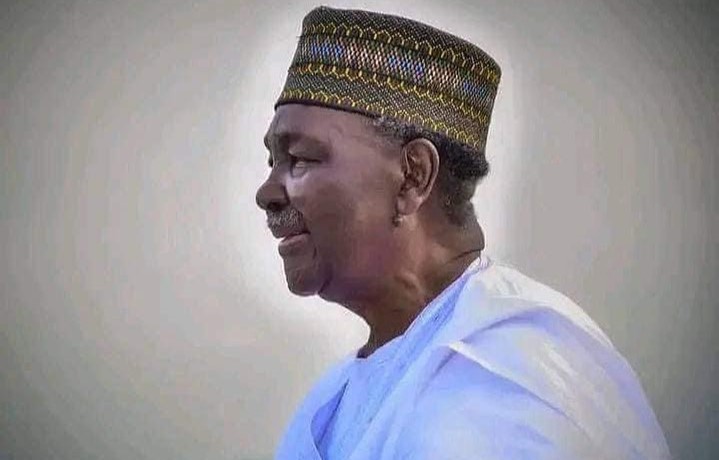
FORMER Nigerian Head of State, Yakubu Gowon, has said his newly released autobiography was written to provide clarity on the decisions and policies of his administration during the Nigerian Civil War, stressing that the book was not intended to reopen painful memories of the conflict.
News Point Nigeria reports that Gowon made the remarks ahead of the public presentation of the 881-page autobiography scheduled for May 19, 2026, at the Bola Ahmed Tinubu International Conference Centre, according to a statement issued on Tuesday by Havilah Group, the publishers of the book.
The event is expected to attract top political leaders, military veterans, diplomats and government officials, with President Bola Ahmed Tinubu billed as the special guest of honour.


Former Minister of Defence and ex-Chief of Army Staff, Theophilus Danjuma, will officially unveil the autobiography published by Havilah Group.
Explaining the motivation behind the memoir, Gowon said the autobiography became necessary because many accounts of the civil war era had been written from different perspectives over the years without fully reflecting his own reasoning as Nigeria’s leader at the time.
“By choosing to write, I took a conscious decision not to reopen old wounds but to clarify my thinking on policies and plans at a period often narrated by others,” Gowon said.
“My story is one of conviction evaluated by circumstances at the crossroads of expectations and reality,” he added.
The autobiography is expected to provide Gowon’s personal reflections on some of the most defining moments in Nigeria’s post-independence history, particularly the 30-month civil war fought between 1967 and 1970.
The conflict, which followed the attempted secession of the then Eastern Region as the Republic of Biafra, remains one of the most sensitive and consequential periods in Nigeria’s history, with millions displaced and countless lives lost.

Gowon, who assumed office on August 1, 1966, at the age of 31, led the country through the war and later introduced the post-war policy of “No Victor, No Vanquished,” aimed at promoting reconciliation, reintegration and national unity after the conflict.
The former military leader is also expected to recount his early years, military career and unexpected rise to power following the political crises and coups that destabilised Nigeria in 1966.
Born in 1934 in present-day Plateau State, Gowon became one of Nigeria’s youngest leaders and remained in office for nine years before he was overthrown in a bloodless military coup in July 1975 while attending an Organisation of African Unity summit in Uganda.


Beyond his years in government, Gowon built a reputation as a statesman committed to peacebuilding, interfaith dialogue and humanitarian causes.
After leaving office, he obtained a doctorate in Political Science from University of Warwick in 1984 and later founded the Yakubu Gowon Centre to promote peace, leadership and national development.