


NIGERIA’s political class now touts “consensus candidacy” with renewed assurance. Party leaders, governors, and godfathers frame it as proof of democratic progress, a tool to avoid divisive primaries, mend party fractures, and foster unity before elections. Surface reasoning seems sensible; Nigeria’s primaries are costly, bitter, violent, and prone to delegate-buying. Yet beneath harmonious language hides a troubling reality. Consensus often masquerades as consent; power is quietly imposed rather than freely granted. Persuasion yields to pressure; agreement bows to obedience. Internal democracy is not refined; it is sidestepped.

This distinction matters. Nigeria’s democracy is fragile at the general election stage. The country entered the 2023 elections with 93,469,008 registered voters and 176,846 polling units, but voter turnout remained low. Only 27 per cent of registered voters took part in the presidential election, the lowest since 1999. A system that struggles to mobilise voters cannot afford to remove choice earlier, at the candidate selection stage. If primaries are weakened, general elections become contests among candidates filtered by private deals, wealth networks, and elite bargains.
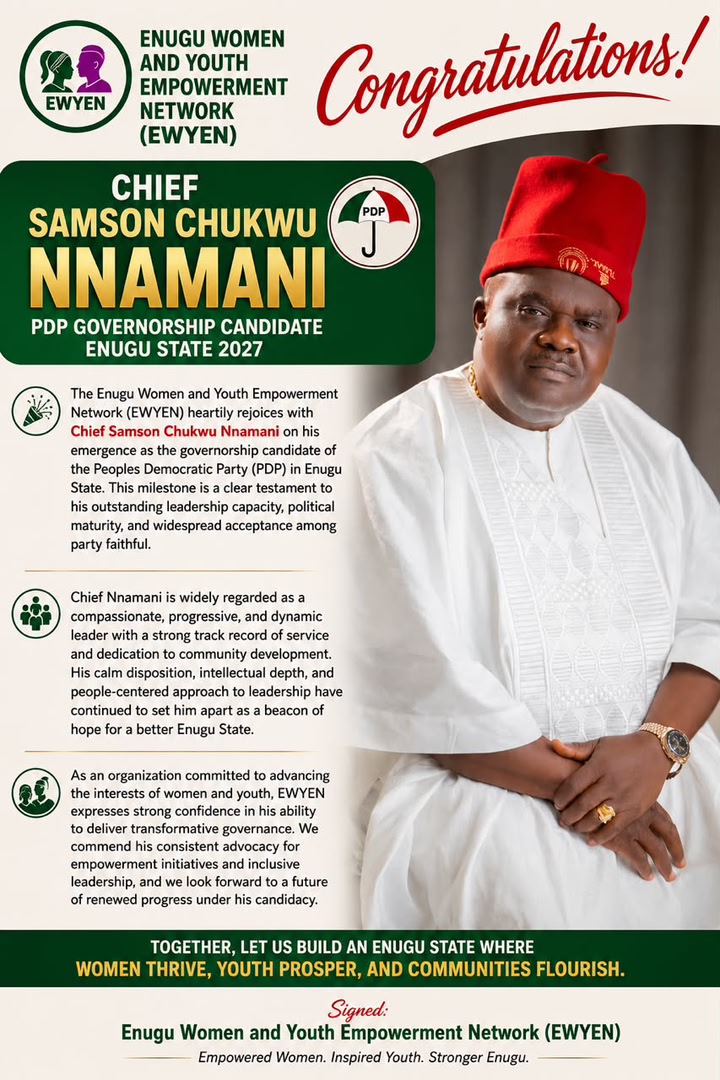
Primary elections are not just internal matters. They are the first test before the general election, deciding who faces the voters. When party members lack real choice, citizens in the general election pick from options already narrowed by leaders and power brokers. The ballot may be printed, campaigns held, and results declared, but democratic legitimacy is wounded before any public vote.


Consensus, properly understood, is not inherently undemocratic. In mature political systems, it can reduce division and manage ambition, uniting a party around a credible candidate. Yet genuine consensus and forced agreement are fundamentally different: voluntary, transparent, and participatory negotiation contrast starkly with decisions imposed through intimidation, command, or mere announcement. The Electoral Act 2022 draws this line: it allows consensus nomination only if all cleared aspirants give written consent and voluntarily endorse the candidate. Without such unanimity, genuine primaries must occur. Thus, the law legalises consent, not coronation.
Yet the spirit of that law is often violated. In Nigeria’s political parties, especially the ruling APC, consensus has become a polite term for elite settlement driven by incumbency advantage. Decisions are taken in private meetings. Aspirants are persuaded, pressured or threatened into withdrawal. Delegates receive instructions rather than choices. Party members are asked to clap for outcomes they did not shape. What should be a democratic selection process becomes a ceremonial coronation. The words remain democratic, but the substance is feudal.
The danger is not theoretical. Nigeria has already seen how damaged primaries can distort the entire electoral process. In 2019, the Supreme Court nullified the election of all APC candidates in Zamfara State after holding that the party failed to conduct valid primaries. Votes cast for the party were treated as wasted votes, and candidates who had been declared winners lost their seats. That episode should have served as a permanent warning to Nigerian parties: internal democracy is not an administrative decoration; it is the foundation of legal and political legitimacy. When parties manipulate nominations, they not only offend aspirants but also undermine democracy. They risk invalidating the people’s mandate, provoking litigation, destabilising governance and deepening public distrust.
The monetisation of party primaries worsens the problem. Before the 2027 elections, the APC, ADC, NDC, and PDP set the price of their presidential nomination forms at about N40 million to N100 million. Forms for governorship, the Senate, the House of Representatives, and state assemblies also carried high fees in major parties. These are not neutral costs. They are barriers. They tell citizens without wealthy backers that ambition demands money first. This narrows political recruitment to those with personal fortunes, access to state resources, or financiers expecting payback. In such a system, consensus is easier to manipulate since the field is restricted even before any meeting.
The consequences are visible in representation. Nigeria had 18 political parties and 15,336 candidates for the 2023 general elections, according to INEC’s candidate list, yet inclusion remained weak. Women, despite making up a major share of Nigeria’s voting population, remained marginal in candidacy and elected office. Youth candidacy also declined, with Yiaga Africa reporting that the share of young candidates fell from 34 per cent in 2019 to 28 per cent in 2023. These numbers reveal a hard truth: when parties claim to build consensus, the voices most likely excluded are women, young people, reformers, professionals without godfathers, and grassroots candidates whose strength lies in credibility rather than patronage.
Consensus candidacy, as practised, sustains inequality. It favours access over acceptance, rewards loyalty to power over ideas, and protects incumbents and chosen successors from fair competition. Party structures serve elite control, not democratic participation. Ordinary party members are spectators. Ward executives run errands. Delegates are managed votes. Aspirants without patrons become burdens.

The specific case of Rivers State is even more disturbing and deeply disgraceful. Party members were never offered a genuine choice; instead, Abuja simply imposed its preferred candidates and shut out anyone outside its inner circle from meaningful participation in the party’s primary process. What passed for a primary process was little more than a coronation of preselected nominees by Abuja. When candidate selection is held hostage to Abuja calculations, godfather deals, and shifting alliances, the damage goes beyond one party. The message is national: political participation is subordinated to patronage, local membership is overridden by central power, and party labels matter less than access to state machinery.
It is also troubling that party identity and power alignment are blurring in Rivers. The APC–PDP line has weakened as loyalties turn transactional. Ideological competition is now a network contest, party democracy, mere endorsement. In practical terms, the APC has suffocated internal democracy, trampled on the rights of its members, and reduced the political process in Rivers State to a brazen exercise in elite imposition. The result is a tragic mockery of democracy and a source of national embarrassment.
The issue is not who wins primaries, but if real primaries still exist. The imposed consensus argues that politics needs pragmatism. Supporters say open primaries lead to division, litigation, vote-buying, and sabotage. They are partly right about the problems. Nigerian primaries have long been tainted by money, violence, and factional manipulation. But less democracy is not the cure for a sick democracy. Vote-buying cannot be solved by abolishing choice. Factionalism is not healed by silencing members. Litigation is not stopped by hiding injustice. Unity is not forced silence, but real agreement.


True unity stems from a process losers can accept. Transparency does not ensure harmony, but it lends defeat legitimacy. It lets members observe choices. It leaves a record and a base for reconciliation. Imposition breeds bitterness, wounded ambition, suppressed grievance. The excluded may wear smiles, but resentment surfaces as apathy, sabotage, defections, parallel structures, court cases, and anti-party acts. Imposition yields short-term control but destroys long-term trust.
The bigger danger is accountability. A candidate imposed by patrons does not enter office as a servant of the people. He enters as a debtor to power. Governance then becomes repayment. Appointments, contracts, regulatory favours, and political protection are distributed according to the invisible ledger of sponsorship. Citizens wonder why elected officials appear distant, arrogant, or unresponsive. Often, the answer lies in how they emerged. Leaders who do not owe their candidacy to the public rarely govern with humility toward citizens.
This is the civilian coup at the heart of Nigeria’s party politics. It does not announce itself with soldiers, decrees, or tanks. Instead, it quietly redefines democratic processes: party secretariats, hotel rooms, and late-night deals preserve rituals but empty them of substance. The ballot remains, but the real choice is removed. Primaries are held, but outcomes are predetermined. Consensus is invoked, but genuine competition is avoided.
Nigeria cannot continue to treat candidate selection as a private quarrel among politicians. Political parties are legally private associations, but functionally they are public institutions because they produce the people who govern the country. Their internal processes determine the quality of governors, legislators, presidents, and local officials. Therefore, INEC, civil society, the courts, the media, and citizens must treat internal democracy as a national democratic issue. A party that cannot practise democracy internally cannot be trusted to protect democracy in office.
Reform must begin with clarity. Consensus should be permitted only where it meets the legal and moral test of free consent. Written withdrawals by aspirants should not be reduced to forced signatures obtained under pressure.
Nigeria’s parties must also confront the commercialisation of nomination. Exorbitant forms, delegate inducement, and patron-funded campaigns turn candidate selection into an auction. The result is a democracy of gatekeepers rather than citizens. Reducing the cost of entry, publishing audited party finances, maintaining credible membership registers, strengthening internal appeal mechanisms, and guaranteeing transparent primaries are not technical details but democratic necessities.
The question, then, is not whether consensus candidacy is lawful or useful. Under the right conditions, it can be both. The real question is whether what Nigerian parties now call consensus contains consent. Rivers State is a painful example, but it is not an isolated warning. Across the country, party members are being asked to accept coronations as contests, endorsements as elections and elite bargains as popular will. This must be resisted. Democracy cannot survive when citizens are invited only after decisions have already been made. It cannot flourish when the people are reduced to an audience, and power circulates only among the initiated.
Consensus without choice is not consensus. It is elite capture. It is a democratic forgery. It is a civilian coup against the people’s right to decide.
- Dr Dakuku Peterside is the author of bestsellers, Leading in a Storm and Beneath the Surface. His syndicated column appears on News Point Nigeria newspaper on Monday.