WITH barely 21 days left before the statutory deadline for the release of election funds, the Independent National Electoral Commission (INEC) has yet to receive the money earmarked for the conduct of the 2027 general elections, raising fresh concerns over the electoral body’s preparations for the nationwide polls.
News Point Nigeria reports that the funding concerns come against the backdrop of INEC’s proposal of N873 billion for the conduct of the 2027 general elections. The electoral umpire has also disclosed plans to conduct mock presidential election exercises to test its technology infrastructure ahead of the polls, while assuring Nigerians that the technical glitches that affected the INEC Result Viewing (IReV) portal during the 2023 presidential election would not be repeated.

Read also: 2027 Elections: ‘Algorithms Will Not Decide Who Governs Nigeria,’ Amupitan Declares

As INEC intensifies preparations for the January and February 2027 general elections, attention is also focused on the commission as it releases official access codes to political parties today to enable them upload their nominated candidates to its portal. The move is expected to end concerns over delays by political parties in making public the names of candidates for various elective positions.


The development has equally heightened political intrigue over the choice of running mates by major presidential candidates. Apart from the presidential candidate of the Nigeria Democratic Congress (NDC), Peter Obi, whose choice of former Kano State governor, Senator Rabiu Musa Kwankwaso, predated his emergence as the party’s standard bearer, uncertainty continues to trail the selection of running mates by other frontline presidential flag-bearers.
Another issue attracting attention is the fate of parties whose leadership remains the subject of litigation. Only factions recognised by INEC will receive access codes to upload candidates. Earlier this week, the Minister of the Federal Capital Territory, Nyesom Wike, challenged the Tanimu Turaki-led faction of the Peoples Democratic Party (PDP), insisting that June 26 would determine the authentic leadership recognised by the electoral commission.
Although the Turaki-led Interim National Working Committee claimed that INEC had validated all candidates contesting elections on its platform, Wike dismissed the assertion during the party’s National Executive Committee meeting.
“June 26 is around the corner. Let’s see who INEC will give the access code to upload their nominated candidates. Some of you picked forms from the wrong place. This is the authentic place to pick from. Let’s see what happens on June 26,” he said.
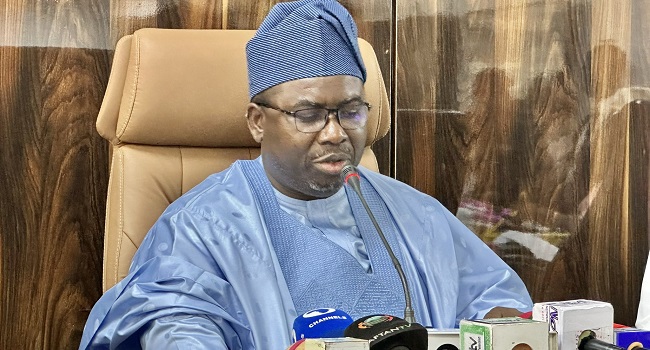
Speaking on preparations for the 2027 elections, INEC National Commissioner and Chairman of the Information and Voter Education Committee, Mohammed Haruna, raised concerns during a closed-door fireside chat with select journalists organised by the Peering Advocacy and Advancement Centre in Africa (PAACA) in partnership with Legis360 in Abuja.

Haruna noted that Section 3(3) of the Electoral Act, 2026, requires election funds to be released “not later than six months before the next general election.” With the presidential and National Assembly elections scheduled for January 16, 2027, the legal deadline falls on July 16, 2026, leaving just 21 days before the statutory threshold is reached.
Although the deadline has not yet been breached, Haruna warned that releasing funds at the last permissible moment could seriously constrain preparations for what is expected to be one of Nigeria’s most complex and expensive elections.
According to him, INEC is already under pressure to begin procurement and replacement of critical election materials, many of which require lengthy manufacturing and delivery timelines.


Haruna explained that ballot boxes, voting cubicles, ballot papers and election technology infrastructure are not items that can simply be purchased off the shelf.
He disclosed that discussions have already commenced regarding the procurement of new Bimodal Voter Accreditation System (BVAS) devices, noting that some of those used during previous elections were damaged, lost or never recovered.
“Our Director of ICT just came back from China regarding procurement because not all the BVAS devices used during the last general election were recovered. Orders need to be placed and these things take time,” he said.
The commissioner observed that while the Electoral Act permits election funds to be released as late as six months before polling day, modern elections require significantly longer planning periods, particularly in a country with over 176,000 polling units and one of the world’s largest electorates.
The concerns contrast with preparations ahead of the 2023 elections when election funding was released much earlier, enabling the commission to commence procurement and logistics well ahead of schedule.
Earlier this year, INEC informed the National Assembly that its proposed N873 billion budget would cover election operations, administrative costs, election technology, capital projects and other miscellaneous requirements associated with organising nationwide polls.
Haruna, however, argued that public discussions often focus only on the headline figure without appreciating the realities of election management.
“This N800 billion-plus sounds humongous, but when you calculate the average cost per voter, it is about six dollars per voter, which is reasonable for a country like Nigeria. People forget that virtually everything we use is imported. The BVAS devices are imported. A lot of election materials are imported. Exchange rate fluctuations also affect costs,” he said.
Reacting, Executive Director of PAACA, Ezenwa Nwagwu, warned that delayed release of election funds could create avoidable crises capable of undermining electoral integrity.
According to him, late funding often encourages emergency decision-making and weakens compliance with established procedures.
Haruna also acknowledged persistent public concerns over the technical difficulties that affected result uploads to the IReV portal during the 2023 presidential election, insisting that the commission has learnt valuable lessons and is determined to prevent a recurrence.
He revealed that INEC is considering conducting mock presidential election exercises before the 2027 polls to stress-test its technology infrastructure under conditions similar to nationwide voting.
Read also: ‘I Won’t Go Everywhere With You,’ Tinubu Says Presidential Duties May Limit 2027 Campaign Tour
According to him, the challenges experienced during the presidential election differed from other elections because of the sheer volume of simultaneous data transmissions involved.
Haruna also identified what he described as increasing judicial interference in election administration through conflicting court orders and last-minute judgments.
He said INEC has become increasingly concerned about judicial decisions that alter election arrangements shortly before polling day, forcing the commission to make emergency adjustments to logistics, technology deployment and ballot design.
To address the challenge, Haruna disclosed that INEC has scheduled consultations with judicial authorities, beginning with the Supreme Court.
He cited situations where court orders compelled the commission to alter ballot configurations close to election day, creating significant operational complications despite extensive planning, procurement and system configuration.
Meanwhile, political permutations ahead of the 2027 presidential election continue to gather momentum.
Based on the vote tally of the 2023 presidential election, the ruling All Progressives Congress (APC), with President Bola Tinubu as its standard bearer for 2027, trailed by the Peoples Democratic Party (PDP), Labour Party (LP), New Nigeria Peoples Party (NNPP) and Social Democratic Party (SDP).
However, virtually all the major presidential contenders from the 2023 election, except President Tinubu and SDP candidate Adebayo Adewole, have since changed political platforms.
The APC has remained silent on whether President Tinubu will retain Vice President Senator Kashim Shettima as his running mate, particularly following the political controversy that culminated in the removal of the party’s former National Chairman, Dr Abdullahi Umar Ganduje.
The controversy stemmed from the June 15, 2025 North-East consultative meeting in Gombe, where President Tinubu’s second-term endorsement omitted Shettima’s name before the omission was later corrected by Deputy National Chairman (North), Bukar Dalori, triggering protests and violence among delegates from Borno State.
Speculation intensified after the United States Senate designated Nigeria as a Country of Particular Concern over religious intolerance, citing the APC’s same-faith ticket as evidence of alleged persecution of Christians.
The appointment of former Chief of Defence Staff, General Christopher Musa, as Defence Minister further fuelled reports that he could replace Shettima on the APC ticket to achieve religious balance, although insiders in the Presidency have maintained that the appointment was intended to groom him in governance and politics.
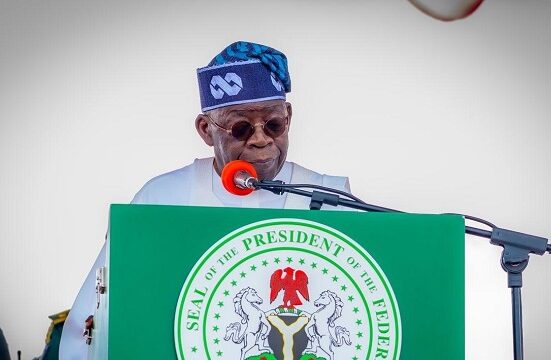
Until the names are officially uploaded and the substitution window closes, only President Tinubu and a handful of insiders know who will ultimately emerge as his running mate.
Within the African Democratic Congress (ADC), internal disputes continue to threaten preparations. The faction loyal to Gombe has nominated Chris Uba as its presidential candidate, while the faction loyal to the party’s 2023 presidential candidate, Dumebi Kachikwu, has retained him as its flag-bearer.
Despite ongoing litigation challenging the Senator David Mark-led National Working Committee, the leadership conducted its presidential primary, producing former Vice President Atiku Abubakar as winner amid complaints from rival aspirants.
Efforts to placate former Minister of Transportation, Rotimi Amaechi, and banker Mohammed Hayatu-Deen resulted in stakeholders persuading Amaechi to accept the vice-presidential slot despite his initial reluctance.
Amaechi reportedly outlined conditions before agreeing to the position, prompting speculation among Atiku’s supporters about a possible replacement. His supporters have reportedly advised him to proceed with legal action challenging the ADC presidential primary should his name not be uploaded to INEC’s portal by June 27.
The debate over the selection of running mates has continued to dominate political discussions.
In 2023, former Vice President Atiku Abubakar’s failure to nominate the first runner-up in the PDP presidential primary as a consolation reportedly contributed to internal divisions that culminated in another electoral defeat for the party.
Religion, regional balance, electoral strength, funding capacity, public recognition and political acceptability remain key considerations in selecting running mates.
Speaking on the issue, PDP governorship candidate in Adamawa State, Maurice Vunobolki, said transparency, pedigree, education, experience, exposure, reliability and public acceptability should guide the selection process.
He stressed that although the flag bearer has the constitutional responsibility to choose a running mate, party stakeholders must also play a decisive role.
Read also: INEC Introduces QR Codes For PVC Collection, Announces New 2027 Election Dates
“Well, I know that it is the duty of the flag bearer to get his running mate, but then, party structures are involved in getting running mates. Now, because you can’t just go and say I’m going to pick someone who has no input in what the political fortunes are going to be like. So, you must be involved in the choice of a running mate, but the party structures are very important in doing that.
“In all, I think usually they have pencilled like three different nominees, and then, based on what I’ve mentioned now, the criteria I gave out, we’re able to take a running mate that is on the ground as well. We haven’t yet, but we have identified some people, but not a particular individual. We have like about five of them that are very good, that have the pedigree, experience, exposure that will fit into that office, but the stakeholders will have the final say out of these five.”