

THE National Economic Council (NEC) has approved the release of over ₦83 billion under the Anticipatory Action Trust Fund (AATF) to address the recurring challenge of flooding across Nigeria and strengthen the country’s capacity for disaster preparedness and emergency response.
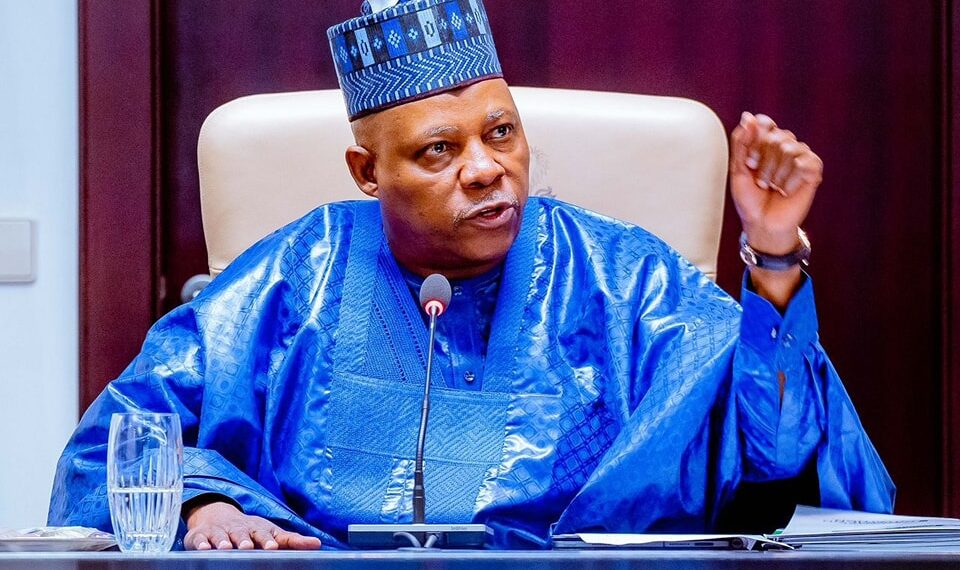
NEWS POINT NIGERIA reports that the approval was granted during the NEC meeting chaired by Vice President Kashim Shettima at the Council Chamber of the State House in Abuja on Thursday.
Briefing State House correspondents shortly after the meeting, Governor Bassey Otu disclosed that a total of more than ₦166 billion had initially been proposed for the Anticipatory Action Trust Fund.

However, he said the Council approved the sum of ₦83.2 billion.


According to him, the fund will support proactive interventions, including the deployment of early warning systems, emergency preparedness mechanisms and other flood mitigation initiatives aimed at reducing the devastating impact of seasonal flooding across the country.
The Council also underscored the significance of the Anticipatory Action Trust Fund in addressing disasters and emergencies nationwide, stressing that NEC cannot continue to be perceived as an institution that only responds after disasters have occurred.
Members of the Council agreed that a more proactive approach to emergency and disaster management is necessary to safeguard lives, livelihoods and critical infrastructure.
Speaking during the meeting, Vice President Shettima said the reform agenda of President Bola Ahmed Tinubu must now translate into visible and measurable improvements in the lives of Nigerians.
He noted that the work of the Council should ultimately be judged by its impact on ordinary citizens, particularly farmers, manufacturers, vulnerable populations, unemployed youths and future generations.

“When this Council last met, I called our economy a workshop. A place of measurement and correction. A place where plans are turned into systems, and systems into institutions, before any of it becomes prosperity.
“A workshop is judged by one thing. Not by the plans pinned to its walls, but by what comes off the bench. We return to that bench today. Not to admire the image, but to ask the question that honours it. Is the work taking shape?” he said.
In a statement issued after the meeting, Stanley Nkwocha, Senior Special Assistant to the President on Media and Communications, quoted the vice president as saying that Nigeria remains on a path of economic transformation.


According to Shettima, the country is moving from stabilisation to production, from aspiration to implementation, and from isolated interventions to coordinated national growth.
“The assignment has not changed. We remain a federation moving from stabilisation to production, from aspiration to implementation, from isolated interventions to coordinated national growth. What has changed, I hope, is our proximity to delivery,” the vice president said.
He emphasised that economic growth must be inclusive and must not leave the most vulnerable citizens behind.
“A federation does not earn its prosperity by leaving its most vulnerable behind and hoping they catch up. The dignity of the citizen with the least is the floor beneath which we have resolved that no Nigerian shall fall.”
Social Protection Must Strengthen Human Capital
Shettima further described the social protection agenda before the Council as an opportunity to transform national compassion into a durable system capable of protecting citizens and strengthening Nigeria’s human capital base.
He stressed that government policies must continue to focus on improving the welfare of vulnerable Nigerians while creating pathways for long-term economic participation and productivity.
On exports and industrial production, the vice president maintained that Nigeria must break away from the longstanding practice of exporting raw materials only to import finished products from other countries.
According to him, meaningful economic transformation can only occur through the development of a complete value chain that connects agriculture, manufacturing, standards, logistics and international trade.
“We cannot continue to export raw materials and import finished products,” he stated.
Shettima assured the Council that efforts would be intensified to address bottlenecks undermining Nigeria’s agricultural exports, particularly challenges relating to port operations and compliance with international market standards.
He explained that improving port efficiency and meeting export requirements are essential steps toward rewarding farmers, strengthening local manufacturers and expanding Nigeria’s footprint in global commerce.
The vice president noted that a country’s economic potential cannot be fully realised if its goods cannot move efficiently from production centres to local and international markets.
“A nation that cannot move its goods has imprisoned its own farmers. Meeting international standards is not submission to foreign demand. It is the price of the markets that will reward our labour,” Shettima added.
The Council’s deliberations, he said, reflected a growing commitment to ensuring that economic reforms, disaster preparedness initiatives and social protection programmes produce tangible outcomes that directly improve the lives of Nigerians across the federation.