

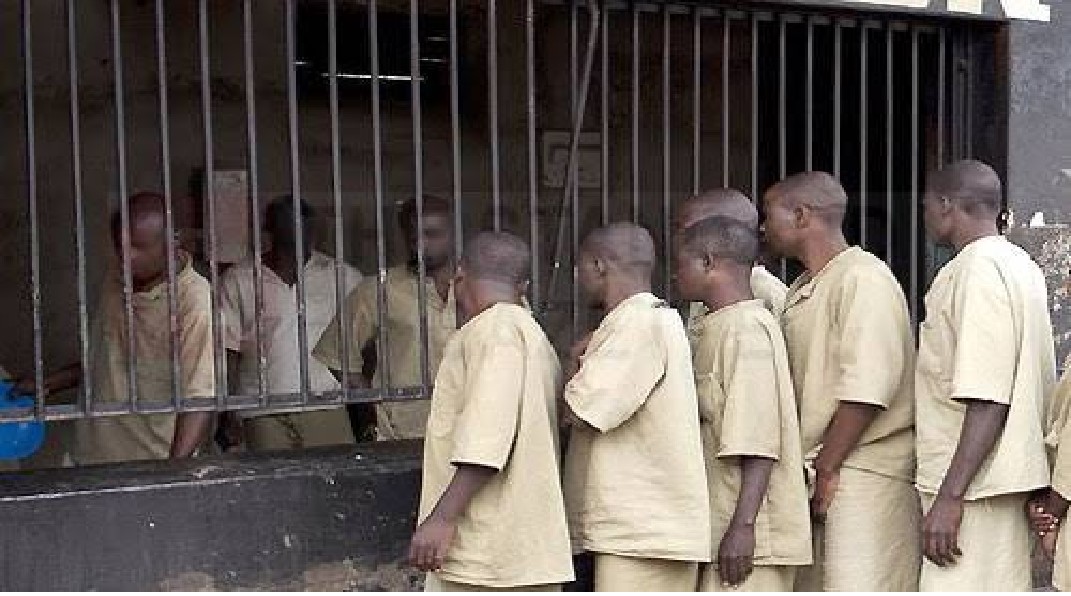
PRESIDENT Bola Tinubu has dispatched a high-level delegation to Addis Ababa, Ethiopia, in a fresh bid to secure the immediate repatriation of nearly 300 Nigerian nationals currently serving prison sentences in the East African country.

News Point Nigeria reports that the delegation, acting on the President’s directive, includes the Minister of Foreign Affairs, Bianca Odumegwu-Ojukwu, and the Attorney-General of the Federation and Minister of Justice, Lateef Fagbemi.

Their mission is to conclude and sign a Memorandum of Understanding (MoU) with the Ethiopian government that would allow the inmates to be transferred to Nigeria to complete their jail terms in Nigerian correctional facilities.


Sources within the Presidency and the foreign service familiar with the directive disclosed that the prisoners are being held under difficult conditions, mainly at the notorious Kaliti Maximum Security Prison in Addis Ababa, where reports of overcrowding, inadequate medical care and inmate deaths have sparked concern for years.
According to one of the sources, the directive came directly from President Tinubu, who ordered the delegation to proceed immediately to Ethiopia and fast-track the long-delayed prisoner transfer arrangement.
“We are leaving because we have prisoners. The President has directed us to get these prisoners back,” the source revealed.
“He directed that we go there right away with the Attorney-General, get an MOU quickly signed, so that these prisoners can be transported back to Nigeria, so that they can serve out the rest of their sentences here.”
Another source explained that the urgency behind the intervention was driven largely by the deteriorating physical condition of many of the inmates.
“They are dying. We have almost 300 prisoners in the open-air prisons in Ethiopia,” the official said.

The intervention marks President Tinubu’s first direct involvement in a diplomatic and humanitarian issue that has lingered for more than three years despite repeated engagements between both countries.
According to official figures from the Ministry of Foreign Affairs, more than 270 Nigerians are currently serving prison sentences in Ethiopia, with the majority convicted for drug-related offences.
Most of the inmates are held at Kaliti Prison in Addis Ababa, a facility that has attracted criticism from advocacy groups since 2019 over allegations of overcrowding, starvation, inadequate healthcare and physical punishment of inmates.


Concerns over conditions at the prison intensified after a series of deaths involving Nigerian inmates.
On March 12, 2023, a Nigerian prisoner, Chizoba Favour Eze, died at Kaliti Prison following allegations of brutal treatment by prison officials.
Another inmate, Uchenna Nwanneneme, reportedly died of tuberculosis on September 21, 2023, after allegedly receiving little or no medical attention.
A third Nigerian prisoner, Basil Lawrence Ilobi, also died while in custody.
The deaths triggered protests by Nigeria’s diplomatic mission in Addis Ababa and renewed calls by relatives of the prisoners for the Federal Government to urgently conclude a prisoner transfer agreement with Ethiopia.
The campaign for the return of the inmates gained further traction in November 2024 when Justice Inyang Ekwo of the Federal High Court in Abuja ordered the Ministry of Foreign Affairs and the Nigerians in Diaspora Commission (NiDCOM) to facilitate the repatriation of the affected Nigerians.
The court noted at the time that Ethiopian authorities had reportedly admitted that they lacked sufficient resources to adequately cater for foreign prisoners. Despite the ruling, no immediate action followed.
Efforts to activate the transfer process intensified on April 17, 2025, when Odumegwu-Ojukwu, then serving as Minister of State for Foreign Affairs, led a Nigerian delegation to meet Ethiopia’s Ambassador to Nigeria, Legesse Geremew Haile.
During the meeting, she pressed for the immediate ratification of the prisoner transfer MoU and warned against further delays.
“Our people don’t want to hear that another Nigerian inmate died in an Ethiopian prison,” she declared.
According to the minister, Nigeria had already fulfilled all its obligations under the proposed agreement.
“The ministry has fulfilled its own side of the formalities for the Transfer of Sentenced Persons MOU. It is the Ethiopian side that is stalling,” she said.
Responding at the time, Ambassador Haile reaffirmed the cordial relationship between both countries but acknowledged that the agreement was still awaiting ratification by Ethiopia’s House of Representatives.
The pressure for action continued in September 2025 when families of Nigerians incarcerated at Kaliti Prison appealed directly to President Tinubu, the Senate and NiDCOM to intervene and activate the transfer arrangement.
However, developments in Ethiopia appeared to suggest movement on similar agreements. In January 2026, the Ethiopian House of People’s Representatives ratified prisoner transfer agreements with China and Brazil, as well as a criminal extradition agreement with South Africa.
Records also show that Ethiopia granted amnesty to several Nigerian prisoners in 2019. Nevertheless, some beneficiaries reportedly returned to the country and were subsequently re-arrested on similar drug-related offences.
The planned agreement between Nigeria and Ethiopia aligns with international best practices promoted by the United Nations Office on Drugs and Crime since the 1980s, encouraging countries to allow convicted citizens to serve their sentences in their home nations to improve rehabilitation and reintegration.
Advocacy groups have maintained that many Nigerians currently held at Kaliti Prison were arrested while transiting through Addis Ababa’s Bole International Airport, one of Africa’s busiest aviation hubs.
Some campaigners argue that a number of the inmates may have unknowingly carried narcotics allegedly planted in their luggage, though the convictions remain valid under Ethiopian law.
With the latest intervention by President Tinubu, expectations are rising that the long-awaited Memorandum of Understanding could finally be concluded, paving the way for hundreds of Nigerian prisoners to return home and complete their sentences within Nigeria’s correctional system.