

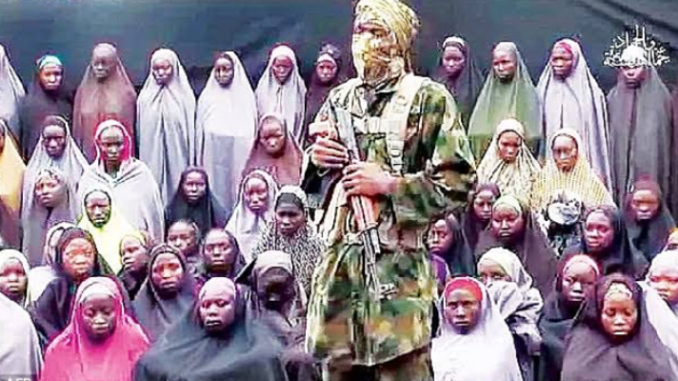
IT has been twelve years since the mass abduction that shocked Nigeria and the world, when Boko Haram insurgents stormed a secondary school in Chibok on April 14, 2014, and seized more than 200 schoolgirls in a single night. The incident not only redefined Nigeria’s security crisis but also ignited a global movement for justice and accountability.

More than a decade later, the scars remain deeply etched. Out of the girls taken that night, dozens are still in captivity, a grim reminder that the crisis remains unresolved. For many families, time has not healed wounds; it has only deepened uncertainty.

Twelve years on, what began as a singular tragedy has evolved into a disturbing pattern. Rather than ending, the tactic of targeting schools has expanded across northern Nigeria. Records compiled by News Point Nigeria show that at least 16 mass abductions of students from schools and hostels have occurred since Chibok, carried out by bandits and insurgent groups.

States such as Niger, Kaduna, Kebbi, and Katsina have become epicentres of these attacks. Girls’ schools, in particular, have been repeatedly targeted—fueling national outrage while exposing glaring gaps in security and state protection. In remote communities where government presence is limited, abduction has become a sustained and profitable strategy for armed groups.


For the people of Chibok itself, a community still vulnerable to attacks the anniversary is not merely symbolic. It is a painful reminder of loss, captivity, and the lingering question of whether such tragedies can ever truly be prevented.
Global rights organisation Amnesty International has warned that the scale of the crisis has grown significantly. According to the group, more than 2,500 Nigerian schoolchildren have been abducted by armed groups since the Chibok incident, underscoring what it described as the failure of authorities to adequately protect students.
In a statement released to mark the anniversary, the organisation noted that between December 2020 and October last year alone, 1,436 schoolchildren and 37 teachers were abducted from schools across the country.
“Since then, abductions have continued,” the statement read, highlighting how the surge in kidnappings has led to prolonged school closures, declining enrolment, and an increase in child marriage and teenage pregnancies among school-age girls.
The figures paint a troubling picture. Of the more than 1,500 students abducted in northern Nigeria since Chibok, at least 120 are still in captivity. Several high-profile cases remain unresolved: nine of the students kidnapped from Federal Government College in Birnin Yauri are still missing; one student abducted from Bethel Baptist High School remains unaccounted for; and Leah Sharibu, taken during the Dapchi abduction, is still in captivity.

Other tragedies have claimed lives. Five students abducted from Greenfield University were killed, as were victims in Kankara, Dapchi, and Tegina each incident adding to the growing toll of a crisis that shows little sign of abating.
Amid these grim realities, the voices of parents of the Chibok girls continue to resonate with urgency. Marking the 12th anniversary, they renewed calls for decisive international intervention to secure the return of those still missing.
In an open letter dated April 13, 2026, and signed by Yana Galang and Zanna Lawan on behalf of the parents, they described the continued captivity of their daughters as a painful reminder of unfulfilled promises.


“For the families, this is not a past tragedy but an ongoing reality,” the letter stated. “The passage of time has not lessened the uncertainty faced by those still waiting for answers.”
They called on the Federal Government to intensify rescue efforts and ensure accountability, while also appealing to the United Nations and other international partners to sustain global attention on the issue.
“This is not only a national issue but a test of global resolve,” they said. “The responsibility to act does not diminish with time.”
The parents stressed that justice and closure cannot be achieved until every missing girl is accounted for, warning against allowing the Chibok tragedy to fade into mere symbolism.
Echoing similar concerns, the Murtala Muhammed Foundation described the crisis as a reflection of diminishing global urgency. The foundation noted that while many of the girls have been rescued or have escaped, dozens remain unaccounted for, even as the years pass.
According to the foundation, 187 girls have either been freed or escaped since 2014, while more than 40 children have been born in captivity and later returned with their mothers, an indication of the long-term human consequences of the abduction.
Yet progress has slowed significantly, with no confirmed rescue of a Chibok girl in the past year.
“Chibok has become more than a place or a moment in time,” said Dr Aisha Muhammed Oyebode, Chief Executive Officer of the foundation. “It is now a metaphor for neglect of responsibility, of accountability, and of our collective empathy.”
For survivors, however, the story does not end with escape.
Accounts from some of the girls who returned paint a complex and deeply troubling picture of life after captivity. One survivor, identified as Lisu, described her experience in government rehabilitation as deeply distressing.
“I do regret coming back,” she said, expressing dissatisfaction with her treatment in state-run accommodation.
She alleged that basic provisions were inadequate, her movements were restricted, and she faced verbal abuse. “Sometimes I cry when I remember… I had more freedom at the Boko Haram camp than I do here,” she said.
Borno State has denied these claims, insisting that there are no restrictions on the movement of the women except for their safety, and that adequate provisions are being made.
Yet, similar sentiments have emerged from other survivors, suggesting a pattern of unmet expectations and broken promises in the years following their return.
One of the first girls to escape, Amina Ali, also expressed dissatisfaction. Returning to the rebuilt school in Chibok years later, she reflected on the night that changed her life forever.
“Wow, this school still exists,” she said quietly, recalling the fire and chaos of April 14, 2014.
Despite renovations and its reopening as a day school in 2021, the environment around Chibok remains largely unchanged. Insecurity persists, with continued attacks by insurgents, poor infrastructure, and a heavy military presence underscoring the fragility of peace.
For families still waiting, the pain is unrelenting.
The story of Helen Nglada, one of the girls still missing, captures this enduring anguish. Her parents, Saratu and Ibrahim, continue to live with the absence of their daughter.
“Any time you come to the house and I see you, my mind goes back to my daughter,” her mother said, breaking down in tears.
Her father’s plea is simple but profound: “I just want our government to do something and rescue our children.”
As Nigeria marks twelve years since Chibok, the anniversary is more than a moment of remembrance. It is a sobering reflection of a crisis that has not only persisted but evolved spreading across regions, deepening insecurity, and leaving families trapped in a cycle of hope and despair.
The world once rallied behind the hashtag #BringBackOurGirls. Today, the question remains whether that urgency still exists and whether the promises made then will ever be fully realised.