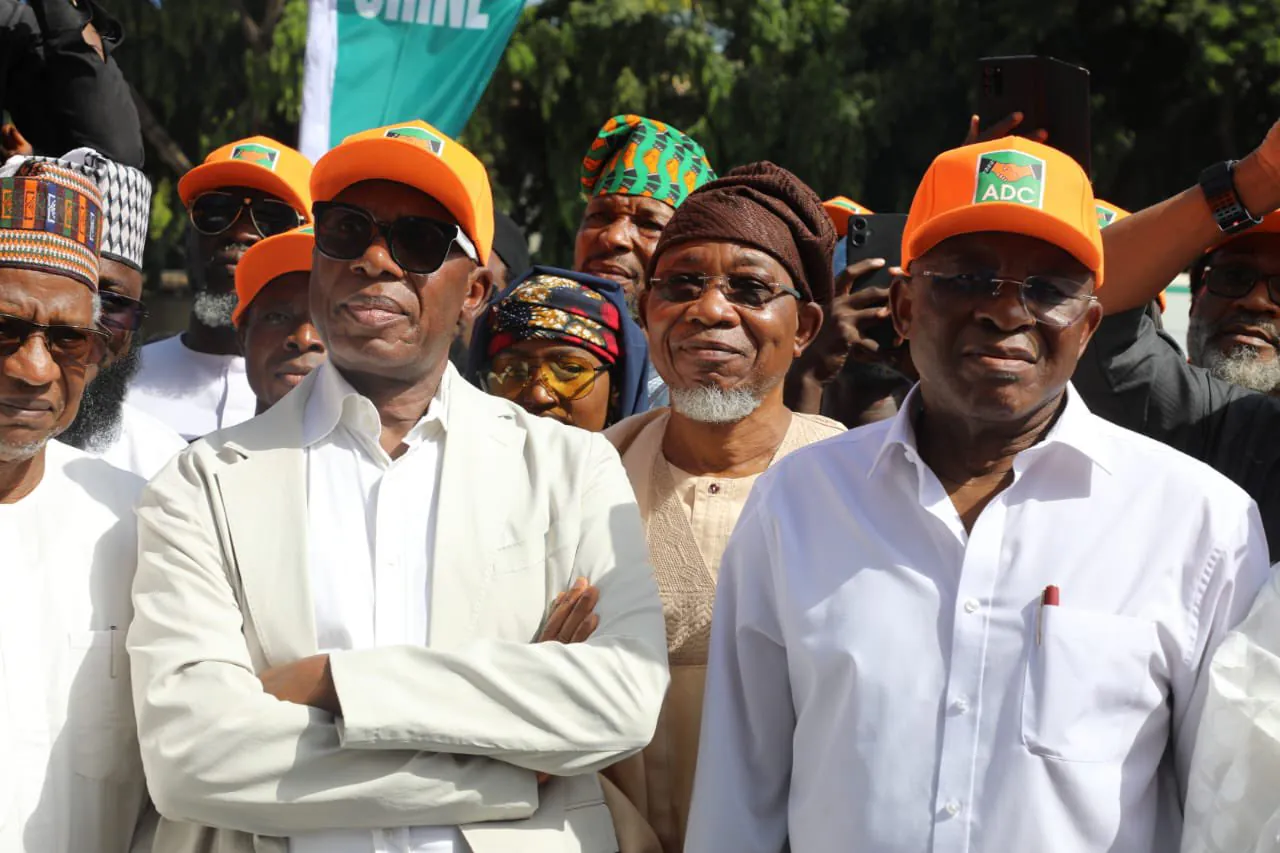

THE official emergence of Senator Sabo Muhammad Nakudu as the governorship candidate of the African Democratic Congress (ADC) in Jigawa State has been widely viewed as another strong indication that the party is steadily expanding its political footprint across Northern Nigeria ahead of the 2027 general elections.

Many believe the development signals a deliberate effort by the ADC to position itself as a serious contender in key northern states where issues of governance, economic hardship, insecurity and declining living conditions continue to dominate public discourse.

Read also: Cultism: Court Rejects Police Request To Remand 90-Year-Old Father Of Edo ADC Senatorial Candidate
Jigawa, regarded as one of the politically strategic states in Northern Nigeria, is seen as far more than a symbolic political territory. Analysts note that the state represents a critical battleground where electoral success is often determined by structure, credibility, grassroots engagement and long-term political organisation.

Against this backdrop, the emergence of a figure like Senator Nakudu is being interpreted as part of ADC’s broader strategy to present experienced and recognisable candidates capable of competing effectively in high-stakes political contests.
The development also reflects what many describe as a growing pattern within the party. Beyond merely announcing candidates, the ADC appears to be building a more organised political presence across the country through governorship races, legislative ambitions and its presidential campaign structure ahead of 2027.


In Jigawa State specifically, many residents are believed to be more focused on practical governance issues affecting daily life. Key concerns among voters include agriculture, rural development, education, healthcare delivery, youth empowerment, women’s economic inclusion, infrastructure, water access and job creation.
Political stakeholders note that these are not merely campaign slogans or abstract political promises, but pressing realities that directly affect survival and stability in communities across the state.
For the ADC, the challenge now lies in convincing voters that it possesses both the vision and capacity to engage these issues with seriousness, clarity and consistency.

Read also: Bauchi NDC Governorship Candidate Ibrahim Kashim Resigns From Party
As the party’s governorship candidate, Senator Nakudu is expected to play a central role in translating the ADC’s message into grassroots mobilisation and structured political engagement across all the local government areas of Jigawa State.
His emergence is also being seen as a rallying point for the party within the state. Political analysts say the success of the ADC’s governorship ambition will depend largely on how effectively it can strengthen ward structures, unify party stakeholders and build a coordinated campaign machinery capable of sustaining momentum ahead of the election.


According to observers, the true measure of the candidacy will not simply be media visibility or public statements, but the depth of organisation and grassroots penetration the party is able to achieve in the months ahead.
While rival political parties are expected to downplay the ADC’s growing presence and insist that established political structures still dominate the state, analysts argue that Nigerian politics has repeatedly shown that voter dissatisfaction and changing public sentiment can alter political calculations.
They note that emerging political platforms often gain traction when they succeed in connecting more directly with the everyday struggles and expectations of ordinary citizens.
For the ADC, maintaining internal discipline, avoiding factional crises and sustaining a people-focused message centred on accountability, governance and development are expected to be critical factors moving forward.
Read also: 2027: Yahaya Bello Boasts of ‘Massive Vote, Decisive Victory’ Against Senator Natasha
In Jigawa State, political observers insist that such messaging must remain practical, community-based and responsive to local realities if the party hopes to convert growing visibility into electoral strength.
Senator Sabo Muhammad Nakudu’s emergence, therefore, is being viewed as more than just a routine party announcement. Rather, it marks the beginning of what could evolve into a significant and structured political contest in Jigawa State ahead of the 2027 general elections, while also serving as an important test of the ADC’s ability to transform its expanding presence in Northern Nigeria into meaningful electoral success.