BudgIT has placed Kano State at the centre of a growing national conversation on transparency, after a new report revealed that the state publishes incomplete and outdated local government budget data, raising fresh concerns about accountability at the grassroots level.
The report obtained by News Point Nigeria, titled The Missing Tier: Mapping Local Government Budget Transparency in Nigeria, paints a troubling picture of Nigeria’s fiscal openness, particularly at the level closest to citizens.

Read also: Zamfara, Kano, Delta, Four Other States: INEC Raises Alarm Over Fake Governorship Candidates’ List

While some states are making progress, Kano and several others fall short offering only fragments of information that fail to provide a clear picture of how public funds are allocated and spent.


According to the report, just ten out of Nigeria’s 36 states currently make local government area (LGA) budget data publicly accessible in a meaningful way.
This leaves the finances of the tier of government closest to ordinary Nigerians largely hidden from public scrutiny.
Among the states that meet the transparency threshold are Ekiti State, Cross River State, Borno State, Kaduna State, Enugu State, Kogi State, Osun State, Kebbi State, Ebonyi State, and Yobe State.
However, even within this group, the depth and quality of disclosure vary widely.
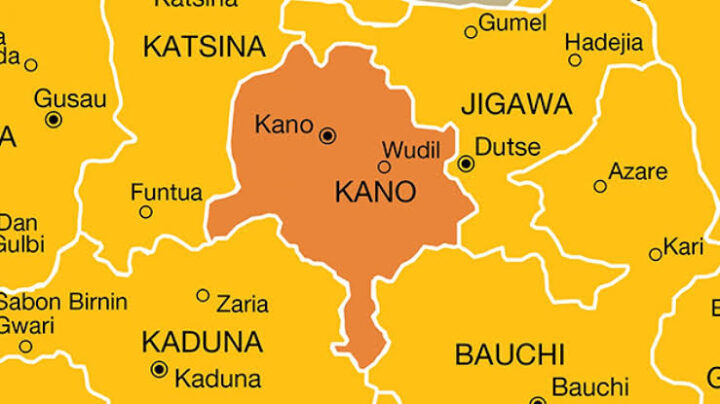
Kano is listed among six states—including Imo State, Ondo State, Anambra State, and Ogun State—that provide only partial or outdated information.

While Kano maintains a local government audit portal and publishes quarterly performance reports, the report notes a critical gap: the absence of full-year approved council budgets.
This, according to BudgIT, significantly limits the ability of citizens and stakeholders to understand the complete financial picture of local governments in the state.
In contrast, Imo reportedly has no published LGA budget at all, while Anambra provides an appropriation law without detailed breakdowns that would make it useful for public scrutiny.

Perhaps more striking is the finding that 20 states publish no local government budget data at all.
These include some of Nigeria’s most economically powerful and populous states, such as Lagos State, Rivers State, Delta State, Oyo State, Edo State, and Akwa Ibom State.
BudgIT describes this as a glaring contradiction, noting that many of these states already publish their own budgets online, demonstrating that the infrastructure for transparency exists.
At the heart of the report is a strong assertion: the lack of LGA budget transparency is not due to technical incapacity but a matter of political will.
“Where they are withheld, accountability stops at the state level, leaving the tier closest to citizens financially opaque,” the organisation stated.
Read also: Jigawa Allocates Over 15% of Annual Budget to Health Sector, Governor Namadi Says
BudgIT argues that since states already publish their own budgets, extending the same practice to local governments would neither be complex nor costly.
“It is a matter of institutional choice,” the report emphasised.
The report highlights several states as examples of best practice.
Ekiti stands out for publishing detailed budgets for all its LGAs and LCDAs, complete with signed documents, consultation records, and standardised templates.
Cross River goes further by including audited accounts and quarterly performance reports, while Borno provides a combination of consolidated budgets, improvement plans, and financial statements.
These examples, BudgIT notes, demonstrate that comprehensive transparency is achievable within Nigeria’s existing governance framework.
The implications of the transparency gap are significant.
Nigeria’s 774 local governments receive monthly allocations from the federation account and are responsible for delivering essential services to citizens.
Yet, in most cases, their budgets remain inaccessible—locked away in official files rather than shared with the public.
“When LGA budgets are made public, citizens can understand government priorities, scrutinise allocations, and hold officials accountable,” BudgIT stated.
For Kano, the findings raise important questions about the state’s commitment to fiscal openness at the grassroots level.
While the existence of an audit portal and quarterly reports suggests some effort toward transparency, the absence of comprehensive annual budgets undermines the effectiveness of these measures.
The situation reflects a broader national pattern in which partial disclosure is often mistaken for full transparency.
As the debate around governance and accountability intensifies, the report serves as a reminder that transparency at the local government level is critical to strengthening democracy.
BudgIT’s findings suggest that bridging the gap will require more than technical fixes—it will demand a shift in political priorities and a commitment to openness.
Read also: 2027: PDP Ready To Reclaim Kano, Muhammad Abacha Declares After INEC Clearance
The Missing Tier report underscores a fundamental challenge in Nigeria’s governance structure: the disconnect between citizens and the financial operations of local governments.
For states like Kano, the path forward is clear, move beyond partial disclosures and embrace full transparency.