

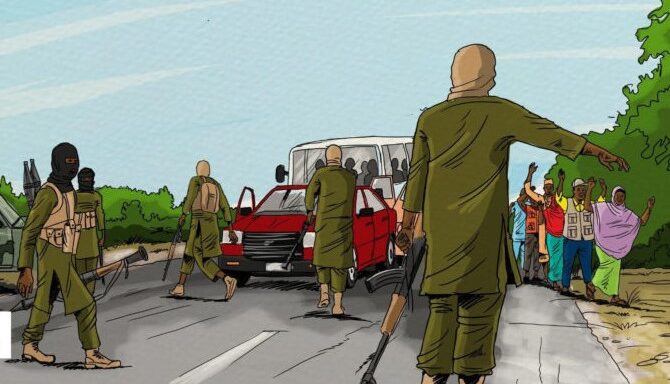
NO fewer than 279 persons were kidnapped across Nigeria in May 2026, while the country recorded 156 violent incidents that resulted in 842 deaths, according to new data released from Nextier’s Nigeria Violent Conflicts Database.
News Point Nigeria reports that the latest figures paint a troubling picture of the country’s security situation, coming amid growing concerns from lawmakers, security experts and development practitioners over rising violence, persistent kidnappings and the effectiveness of ongoing peacebuilding efforts.

The report comes as the Minority Caucus of the House of Representatives raised the alarm over what it described as the persistent poor implementation of the national budget, warning that inadequate funding of critical security agencies is worsening insecurity across the country.


Similarly, the President of the Nigeria Society for Criminology (NSC), Professor Oludayo Tade, has called on President Bola Tinubu to intensify efforts aimed at securing the country and protecting citizens from growing security threats.
According to the Nextier data, insecurity increased significantly during the review period, with violent incidents rising by 51.5 per cent, casualties increasing by 90.1 per cent and kidnap victims climbing by 19.7 per cent when compared to figures recorded in May 2025.
The findings have further heightened concerns that despite substantial investments by governments and development partners, peacebuilding efforts across the country may not be delivering measurable outcomes.
In a policy article titled “The Travails of Measuring Peacebuilding in Fragile Contexts,” development practitioner and research professional at Nextier and Visiting Lead for Research and Policy at the organisation, Jamilu Musa, alongside Political Science lecturer at Nnamdi Azikiwe University, Awka, Dr Chukwuma Okoli, warned that weak impact assessment frameworks are undermining the effectiveness of peacebuilding interventions.
According to the experts, governments, development partners and local communities continue to invest resources in peacebuilding programmes, but determining whether such interventions are actually reducing conflict remains a major challenge.
Musa and Okoli argued that at a time when international funding for peacebuilding initiatives is shrinking, accurately measuring outcomes has become more important than ever.

They maintained that simply counting activities and programmes is no longer sufficient, stressing that the real test is whether peacebuilding efforts are making communities safer, more inclusive and more resilient in the face of Nigeria’s evolving security challenges.
Meanwhile, the Minority Caucus of the House of Representatives disclosed that it would formally raise concerns about budget implementation upon the resumption of plenary.
The lawmakers insisted that the Federal Government must account for what they described as the failure to fully implement appropriations approved by the National Assembly since 2024.


The position formed part of resolutions reached during an emergency virtual meeting of the caucus held on June 19, during which members reviewed the country’s security situation and assessed the implementation status of major government programmes.
The spokesman of the caucus, Afam Victor Ogene, who briefed journalists on the outcome of the meeting, alleged that defence and security-related Ministries, Departments and Agencies (MDAs) had recorded less than 30 per cent budget implementation despite escalating security challenges nationwide.
“Available records indicate that budget implementation in key defence and security agencies remains below 30 per cent, a situation that is unacceptable given the scale of insecurity confronting the nation,” Ogene said.
According to the lawmakers, the low level of implementation has had serious implications for military operations, logistics and the overall campaign against insurgency, banditry, kidnapping and other forms of violent crime.
“The consequence of this poor funding is evident in the challenges faced by our security personnel in prosecuting the war against insurgency, banditry and kidnapping,” the caucus stated.
The opposition lawmakers further accused the executive arm of government of repeatedly failing to fulfil commitments made to Nigerians through budgets approved by parliament.
They stressed that ensuring accountability in budget implementation remains one of the core constitutional responsibilities of the National Assembly.