

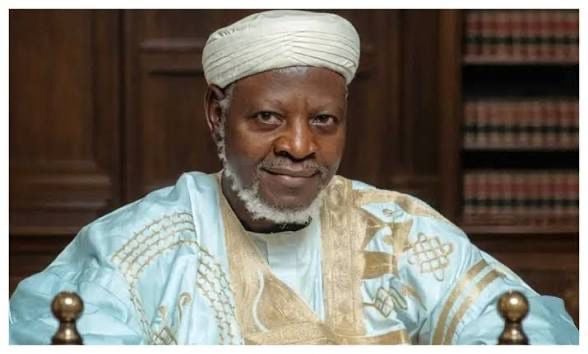
THE sixth defendant in the ongoing trial of alleged coup plotters accused of plotting against the government of President Bola Ahmed Tinubu, Sani Abdulkadir, has told the court that he warned the suspects their plan would ultimately fail.
According to a source who spoke to News Point Nigeria on condition of anonymity, Abdulkadir made the disclosure on Monday during the resumed hearing of the case before the Federal High Court in Abuja.

Abdulkadir, whose video-recorded statement was played in open court, admitted receiving money to pray for the success of the alleged operation but insisted that he warned the suspected plotters that the plan would be sabotaged from within.

In the recording, the Islamic cleric said he had known Maaji, the alleged ringleader of the group, for less than one year and was approached through an intermediary identified as Sanda to provide spiritual support for the operation.


According to Abdulkadir, Sanda informed him that his “Oga” intended to stage a coup and required prayers concerning whether the operation would succeed.
The cleric said after conducting the prayers, he informed them that the plan would fail because two individuals involved would eventually expose those behind the plot.
He further disclosed that the suspects later contacted him again requesting additional prayers to prevent the two individuals from speaking out.
The source said money was subsequently transferred to the cleric for prayers and charity, while names of alleged participants were also forwarded to him for inclusion during the prayers.
Abdulkadir stated that he first became aware of the arrests through media reports after Sanda informed him that Maaji had been unreachable for four days.

He maintained that the funds he received were strictly meant for prayers and not in support of any coup attempt.
The cleric also admitted understanding that a coup meant the military overthrow of a government but explained that he failed to report the alleged plot because he did not know whom to report it to.
According to him, he was eventually arrested after visiting the Economic and Financial Crimes Commission to resolve restrictions placed on his bank account.


He said he was invited to the commission’s office to explain the source of the funds traced to his account.
Abdulkadir denied making any coup-related confession while in EFCC custody and insisted that he was neither assaulted nor tortured during interrogation.
He added that all statements he made were given voluntarily.
Following the playback of the video recording, the prosecution applied to tender extrajudicial statements made by all six defendants before a special investigation panel and military police authorities.
However, lawyers representing the six defendants opposed the move, arguing that the statements were either obtained involuntarily or taken in violation of the Administration of Criminal Justice Act.
The defence objections included allegations that the defendants were not informed of their right to legal representation, claims of discrepancies between the video recordings and the corresponding written statements, allegations of coercion, inducement, and torture, as well as concerns that the recordings failed to adequately show the physical condition of the defendants during interrogation.
Counsel to the fifth defendant also argued that due to the number of accused persons involved, the court should conduct separate trial-within-trial proceedings for each disputed statement instead of a combined exercise.
In response, the prosecution urged the court to dismiss the objections, insisting that the law does not require separate proceedings for each defendant and that the trial judge possesses the discretion to determine how evidence should be received.
Ruling on the matter, Justice Joyce Abdulmalik ordered a single joint trial-within-trial to determine the voluntariness and admissibility of all the disputed statements.
The case was subsequently adjourned until May 12 for continuation of proceedings.