

THERE is a particular kind of Nigerian scarcity that does not announce itself as scarcity at first. It starts with a farmer saying he will wait one more week. Then another week. The rains come properly, and the fertiliser has still not arrived, or it has arrived at a price that changes the entire calculation of the season. A man who planned five hectares plants three whilst another farmer reduces what he will put under maize. Someone else borrows at a rate he knows makes no sense because the alternative is to miss the planting window entirely. By the time the rest of us notice, the problem has changed name. It is no longer fertiliser. It is food price, inflation, hunger, politics.
This is why I paid attention when President Donald Trump declared a fertiliser emergency in the United States on June 29, 2026, exactly a month ago. For up to eight months, America would suspend certain anti-dumping and countervailing duties on phosphate fertiliser from Morocco. The reason was straightforward: the United States needed a reliable fertiliser supply and its own production was not enough for what its agriculture required. It was a decisive response by President Trump. Trade protection mattered. Then food security came under pressure, and the obstacle moved.

The American action did not come from nowhere. For months, a crisis had been building around a place most people associate with oil, the Strait of Hormuz. When war broke out on February 28, and traffic through the strait was badly disrupted, the immediate conversation was predictable. Oil prices, tankers, energy security. All valid, but Hormuz carries something else. Before the war, roughly a third of global seaborne fertiliser trade was exposed to that corridor. Gulf producers accounted for about 35 per cent of global urea trade and nearly half of the world’s seaborne sulphur trade came from the region.

I had to sit with the sulphur number for a while. Sulphur is not the sort of thing that makes front pages because nobody campaigns on sulphur. Yet it is essential to sulphuric acid, which is essential to much of the world’s phosphate fertiliser production. So, a ship that fails to carry sulphur out of the Gulf can eventually affect what a farmer pays to feed soil on another continent. That sentence sounds absurd until you remember that this is how the world actually works. Urea shipments fell, sulphur cargoes stalled, ammonia supply was exposed, GAS markets were shaken, and fertiliser plants began worrying about feedstock. Yet, ships waited for passage in the straits.


Then China made its own decision, and this is the part of the story I find most revealing. China is a major fertiliser exporter. In 2025, it exported roughly 4.9 million tonnes of urea and more than $13 billion worth of fertiliser products overall. Ordinarily, when one source of supply is disrupted, buyers turn to another. But China has farmers, and no government, whatever its system, survives a food crisis without consequences. Prices, shortages and public anger have their own authority. So Beijing tightened restrictions across parts of its fertiliser export basket. Certain phosphate products. Nitrogen-potassium blends. Later, stricter customs checks as authorities tried to prevent restricted products leaving under creative descriptions. The world looked to China. China looked at China. I do not say that critically—quite the opposite. Countries have interests. Serious countries tend to remember them early.
Russia maintained controls around parts of its fertiliser trade. Turkey moved to protect sulphur. Other governments watched inventories. Buyers came into the market earlier. Traders became cautious about fresh commitments. Some people called it stockpiling. I am not sure that is always the right word because it was more untidy than that. One country was restricting exports, another advancing purchases, a government building a buffer, a trader holding back, a producer deciding that domestic demand came first. Nobody needed to coordinate. Fear did the coordination. And the market tightened.
Brazil, of all countries, began to feel the pressure. I say “of all countries” because Brazil is not a country one associates with agricultural weakness. Its farms help feed the world and produce soybeans, maize, sugar, and beef. Few countries combine land, science, logistics and commercial farming at that scale. But beneath that strength sits an old dependence on imported fertiliser. As the year progressed, Brazil was trying to secure supplies for its next crop cycle while shortages spread into phosphate fertilisers, sulphur and sulphuric acid. The sulphur problem was especially uncomfortable. Brazil imports almost all of what it needs, and some processing operations reportedly reduced or suspended activity. By early July, according to Brazil’s Confederation of Agriculture and Livestock, only around 40 to 45 per cent of the fertiliser required for the next crop season had been purchased. That is Brazil. An agricultural giant, still exposed. The lesson was becoming difficult to miss: having land is not enough, having farmers is not enough, and even having money is not enough if everybody arrives in the same market at the same time looking for the same tonnes.
By late June, cargoes had begun moving through Hormuz again after an interim deal announced on June 15. Hundreds of thousands of tonnes of sulphur and urea exited the strait. There was relief. There was not normality. Ships remained stranded, and infrastructure had been damaged. Some cargoes were simply old contracts finally moving. The market had also begun to split: urea prices, after the wartime spike, softened as seasonal demand eased and traders anticipated some return of Chinese exports. Phosphates remained more difficult. Sulphur had not magically reappeared because diplomats had made an announcement. This matters because real crises are rarely neat. One price rises while another falls. One cargo moves while another waits. A market can recover on paper while a factory is still short of what it needs.
It was into this confusion that President Trump issued his proclamation. Morocco was the obvious place to look. It sits at the heart of the global phosphate story. America needed supply, certain duties were in the way, and the duties moved. Two days later came another American announcement: $500 million to expand domestic fertiliser production. Buy what you need now. Build what you need later. There is nothing contradictory about that.

In fact, Nigeria had arrived at a version of the same conclusion ten years earlier.
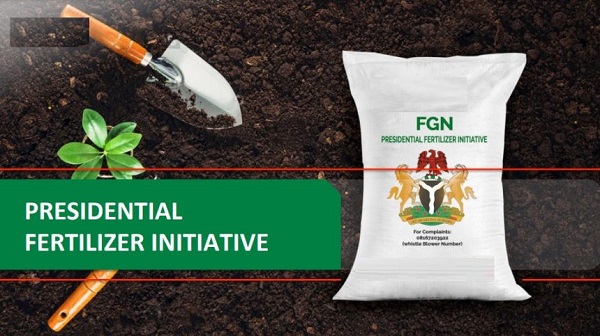
The Presidential Fertiliser Initiative did not begin under President Bola Ahmed Tinubu. It began under President Muhammadu Buhari in 2016. That needs to be said plainly because our politics has developed a tiresome habit of pretending every administration began the country again.
President Buhari inherited a fertiliser system that made very little sense. Nigeria produced urea. We had limestone. We had blending plants. Many were idle or badly underused. Yet we spent scarce foreign exchange importing finished NPK fertiliser at scale. We imported the product, exported the jobs, carried the subsidy, fed the middlemen, and the middlemen were still unhappy.


The PFI changed the arrangement. Bring in critical inputs Nigeria could not produce enough of, particularly phosphate and potash. Combine them with locally available urea and limestone. Blend here. That was the idea, and it worked. Today, Nigeria has 92 operational fertiliser blending plants. The wider ecosystem supports more than 100,000 direct and indirect jobs. Since inception, more than 128 million bags of fertiliser have been delivered through the system. The initiative helped eliminate an estimated ₦60 billion annual subsidy burden and conserved more than $200 million in foreign exchange. President Buhari deserves credit for that. Full credit. I do not understand why this should be controversial. Government is supposed to continue. A President should be able to inherit a good idea without first pretending he invented it.
President Tinubu did not invent the PFI. However, what he inherited was no longer the same programme President Buhari had launched in 2016. PFI had expanded and undergone restructuring. For years, the Nigeria Sovereign Investment Authority managed the initiative through PFI-NPK Limited, offering strategic leadership and fund management. The original framework was already commercially oriented: a revolving fund, bulk procurement, a no-credit policy, and contract blending through accredited private plants. That history is important. There is no need to create a new reform to recognise an existing one.
In August 2025, management of the PFI moved to the Ministry of Finance Incorporated. The significance was not that commercial discipline had suddenly been discovered. It had not. The task was to take an initiative built for one phase of Nigeria’s fertiliser problem and prepare it for another. By then, the challenge was changing. The domestic blending industry had been revived. Supply had been stabilised. The programme had scale. But scale brings its own problems: short-term commercial debt, working-capital pressure, procurement concentration, exposure to geopolitical shocks, freight surcharges and the familiar danger that any large intervention can become slower and more vulnerable to discretion as more interests gather around it.
Nigeria is very inventive in this area. A file can spend three weeks moving twenty metres. A payment can wait for a signature from a man who is waiting for a memo from another man who is waiting for someone to call him. Eventually, somebody discovers that the delay itself has value.
The President’s intervention has been to push the PFI into its next phase rather than throw it away. Under MOFI, the programme is being moved towards a more robust corporate structure, with plans for multi-year financing to replace short-term commercial debt. Supplier relationships are being diversified to reduce exposure to geopolitical shocks and freight surcharges. And under a Presidential Directive issued in February 2026, the PFI is beginning a phased liberalisation, moving gradually from direct procurement towards market facilitation as private-sector competition deepens. That is a more difficult reform than announcing a new programme. You are trying to preserve the buffer while reducing dependence on the buffer. Keep supply stable while opening the market further. Protect what works without allowing the intervention itself to become permanent simply because it exists.
And then 2026 arrived. In the whole of 2025, the programme imported 540,173 metric tonnes of critical fertiliser inputs through 12 discharged vessels. By May 31, 2026, Nigeria had already secured 449,304 metric tonnes. Ten vessels had discharged or were in transit. The full programme for the year was targeting 1.1 million metric tonnes through 26 vessels.
May. Before President Trump declared an emergency. Before the late-June debate over whether Hormuz was truly reopening. Before Brazil entered July still trying to secure much of what it needed for its next crop. Nigeria had already moved. Not because anyone in Abuja possessed supernatural knowledge of what would happen in the Gulf, but because you do not need to predict the exact date of a storm to know that leaving the roof open is unwise.
Strategic forward contracting for critical raw materials, including GAS, DAP and MOP, meant Nigeria was not starting from zero when frightened buyers entered the same market. In 2025, the programme’s procurement strategy recorded ₦61.58 billion in savings against prevailing global market rates. In 2026, early contracting secured DAP at roughly $50 per metric tonne below peak market prices. Those savings helped moderate costs and improve affordability for farmers. Government often congratulates itself for spending less. Sometimes the real saving comes from spending earlier. Wait long enough and the market will charge you for your hesitation.
But I think there is an even larger consequence here, and it has received too little attention. Nigeria can begin to think differently about when it farms. For generations, much of our agriculture has revolved around one great annual anxiety: the rains are coming, find seed, find fertiliser, find money, find a tractor, plant, quickly, miss the window and wait for another year. A country of more than 200 million people cannot continue organising its food system around one hurried conversation with the clouds.
Fertiliser alone does not create all-year agriculture. Water matters. Irrigation matters. Seed, mechanisation, extension, security, storage, finance. But reliable fertiliser availability removes one of the major constraints on multiple planting cycles where irrigation and the agronomy already permit them. A farmer with irrigation can plan another cycle if he knows inputs will be available. Dry-season rice can be expanded. Wheat. Vegetables. Maize. For years, we have spoken about dry-season farming as an intervention. It should become normal. The difference between one planting season and two is not merely another harvest. It is another income cycle for the farmer, another production cycle for the processor, more work for transporters, more throughput for mills, more food entering markets at different points in the year rather than everybody harvesting together and then waiting. Fertiliser availability does not achieve all of that by itself. But without reliable inputs, much of it remains PowerPoint agriculture.
And here is another shift underway. Having spent a decade largely solving for supply, the PFI is now turning towards adoption. Its next phase includes a three-year National Fertiliser Adoption and Productivity Enhancement Initiative intended to reach five million smallholder farmers across the six geopolitical zones, backed by a ₦6 billion seed fund and an 80 per cent private-sector, 20 per cent government execution model. That may prove just as important as the ships. Because availability is not adoption. A country can have fertiliser and still use too little of it, use the wrong blend, apply it badly or fail to get it to the farmer who could produce more with it. The next problem begins where the old one ends.
This is where the story from President Buhari to President Tinubu becomes more interesting than partisan accounting. One administration rebuilt domestic blending capacity. Another inherited a functioning intervention and is trying to move it into a more liberalised, better-financed and less geopolitically exposed phase. That is how government should work. Not every predecessor is an enemy. Not every inherited policy is a relic. Sometimes the best thing a President can do with a good idea is leave the name alone and make the thing work better.
There is still one place where I would keep both eyes open: distribution. Nigeria can procure intelligently and distribute inefficiently. We have managed stranger contradictions. Through the Renewed Hope Farm Input Support Programme implemented by the National Agricultural Development Fund, 515,720 bags of fertiliser are being distributed to 128,930 farmers across 25 states and the Federal Capital Territory. Four bags per farmer. Fine. Now follow the bags. Did the farmer receive them? Did four arrive as four? Did they arrive before planting? Did someone with no farm suddenly discover agriculture when the beneficiary list appeared? These questions matter because a clean international procurement can still be ruined by a dirty last mile. The farmer is the point. Not the vessel. Not the press release. Not even the savings. The farmer.
By the beginning of July, Brazil was still securing much of what it needed for its next crop cycle. China had spent months protecting domestic supply. The sulphur market remained tight. America had suspended certain duties on Moroccan phosphate fertiliser and announced $500 million for domestic production. Nigeria had secured 449,304 metric tonnes of critical inputs by May 31.
I keep returning to May. Perhaps because farmers understand timing better than most governments do. You can have the land, the seed, the labour and even the money. Miss the window and none of them will argue with the season on your behalf.
For once, Nigeria did not wait for the shortage before looking for the fertiliser.
And if we get the rest right, the water, the seed, the security, the distribution, the stubborn business of actually getting inputs to real farmers, perhaps more Nigerian farmers will stop thinking of harvest as the end of the year’s work.
Perhaps they will begin asking a different question.
What do I plant next?
- A seasoned strategic communications executive, O’tega Ogra is the Senior Special Assistant to President Bola Tinubu of Nigeria on Digital Communications, Engagement & New Media Strategy. Otega is also sits on the executive committee of the World Federation of Advertisers WFA.