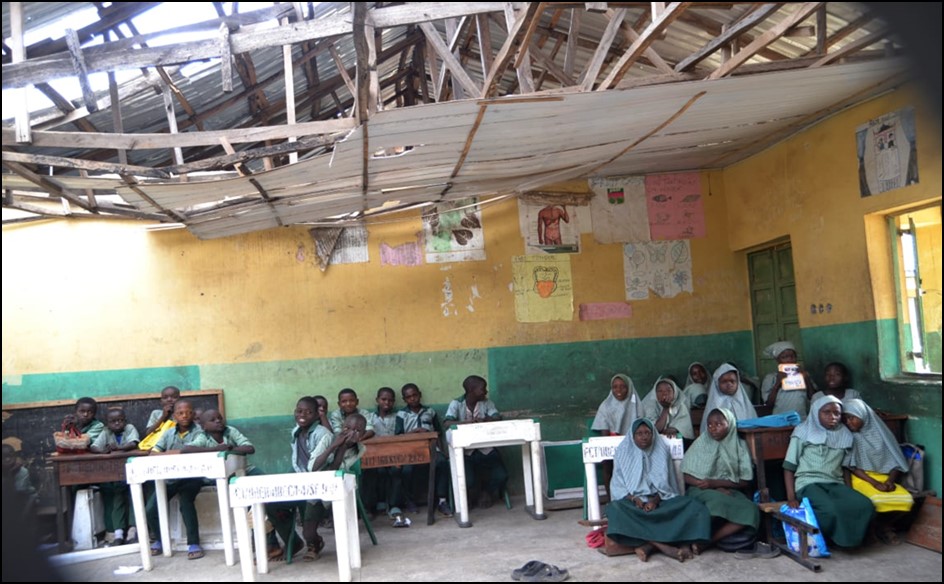
AFTER a damning report by News Point Nigeria exposed how billions of naira in Universal Basic Education Commission (UBEC) funds were left unutilised by state governments, Kaduna, Osun and nine other states have now moved to access the intervention funds, with the commission disbursing a total of N44.24 billion as matching grants.
The development, which followed sustained scrutiny triggered by the News Point Nigeria story on abandoned UBEC funds, signals a shift from inaction to partial compliance, as some state governments begin to tap into resources meant to address Nigeria’s deepening education crisis.

Read also: ACF Demands Full Details Of Nigeria-US Critical Minerals Agreement
According to the UBEC disbursement schedule documents obtained by News Point Nigeria, the benefiting states include Jigawa, Ondo, Taraba, Kogi, Kaduna, Plateau, Osun, Zamfara, Bauchi, Sokoto and Enugu.

The matching grant scheme is designed to support all states and the Federal Capital Territory on an equal basis in delivering critical infrastructure for Universal Basic Education (UBE), but it remains conditional, requiring states to provide counterpart funding before accessing the allocation.
Under the framework, each state’s share is calculated based on funds received by UBEC, with a requirement that states contribute at least 50 per cent of the total cost of any project as counterpart funding.


The funds disbursed between January and March this year cover allocations for the first to fourth quarters of 2025, reflecting varying levels of compliance among states.
Kaduna State, for instance, accessed funds spanning from the third quarter of 2024 through the fourth quarter of 2025, while Taraba State received allocations covering both 2024 and 2025.
Zamfara State, on its part, accessed funds covering the first to third quarters and part of the fourth quarter of 2025.

A breakdown of the disbursement shows that Jigawa, Ondo, Kogi, Plateau, Osun, Bauchi, Sokoto and Enugu states each received N3.55 billion.
Taraba received N7.10 billion, Kaduna got N5.33 billion, while Zamfara accessed N3.557 billion.
To access these funds, states and the Federal Capital Territory are required to provide an equal amount as counterpart contribution, in line with Section 11(2) of the Universal Basic Education Commission Act, 2004.

The law also stipulates that any state that accesses the funds but fails to utilise them within one year risks having the allocation recalled by the commission.
Despite these provisions, UBEC has consistently raised concerns that funds disbursed to states are often left idle in the coffers of State Universal Basic Education Boards and the Federal Capital Territory.
Last year, UBEC Executive Secretary, Aisha Garba, lamented that as much as N250 billion in intervention funds remained unutilised by states, underscoring a persistent pattern of underutilisation.
Earlier findings by News Point Nigeria had revealed that at a time Nigeria is grappling with a full-blown education emergency, a staggering ₦97,881,553,326.94 allocated for basic education remained unaccessed across several states.
The report showed that the funds, earmarked under UBEC’s intervention framework, were largely left untouched due to the failure of many state governments to meet the mandatory counterpart funding requirement.
Under the Universal Basic Education Act of 2004, the Federal Government provides annual matching grants to support primary and junior secondary education, but access is conditional on states contributing 50 per cent counterpart funding to ensure accountability and sustainability.
Read also: Why We Want To Establish Islamic Microfinance Bank Across Nigeria – Sultan
Documents obtained by News Point Nigeria through a Freedom of Information request further revealed that as of March 2026, at least 21 states and the Federal Capital Territory had failed to access their allocations.
The unaccessed funds had accumulated to nearly ₦98 billion, with 2025 alone recording the highest default in the history of the scheme, as ₦68.1 billion was left unused within a single year.
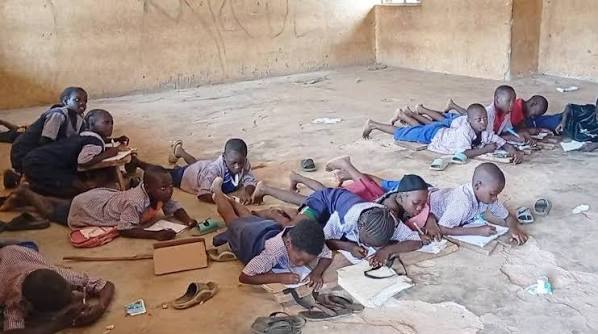
This is coming amid alarming data from UNICEF and Nigeria’s Federal Ministry of Education, which estimate that about 18.5 million children are out of school in Nigeria, the highest globally.
According to UNICEF, Nigeria accounts for nearly one in every five out-of-school children worldwide, with the crisis more severe in the northern region but increasingly spreading to southern states due to economic hardship, insecurity and infrastructure deficits.
In its 2025 Education Fact Sheet, the agency identified poverty, insecurity, cultural barriers, weak education financing and poor sub-national governance as key drivers of the crisis, warning of a potential “generational catastrophe” if urgent investments are not made.
Further analysis showed that some of the states with the highest unaccessed allocations were not necessarily the poorest, raising concerns about prioritisation rather than capacity.
Imo State led with ₦10.6 billion in unaccessed funds, followed by Ogun State with ₦9.7 billion and Rivers State with ₦7.8 billion.
Other major defaulters included Niger, Abia and Oyo states, each with over ₦7.1 billion left untouched.
The Federal Capital Territory also held ₦5.07 billion in idle funds, while Ekiti, Bayelsa and Adamawa states each accounted for more than ₦3.5 billion.
In total, the failure of 21 states and the FCT to access their allocations has been described by development experts as a “systemic failure of sub-national governance.”
In contrast, about 15 states have consistently accessed their UBEC funds in full, demonstrating that the counterpart funding requirement is not inherently unworkable.
These states include Bauchi, Borno, Jigawa, Kaduna, Katsina, Plateau, Sokoto, Taraba and Yobe in the North, as well as Delta, Enugu, Kogi, Ondo and Osun in other regions.
While the Federal Government continues to make funds available, the earlier reluctance or inability of some states to meet the requirements had stalled critical investments in classrooms, teachers, infrastructure and learning materials.
With millions of children still out of school and education outcomes declining, stakeholders warn that Nigeria cannot afford further delays, even as the recent move by some states to access the funds following the News Point Nigeria report signals a cautious but necessary step in the right direction.
As policy expert Fatima Hassan Ibrahim aptly noted, “The tragedy is not just that funds are unavailable, it is that they are available but unused.”
See the link below to News Point Nigeria’s report on how state governors are shunning the UBEC fund:
Read also: Gombe Governor Mourns Bauchi Health Agency Boss, Four Children Killed In Road Accident
Billions Wasted: How State Governments Abandoned UBEC’s N97bn Funds Amid Education Crisis