

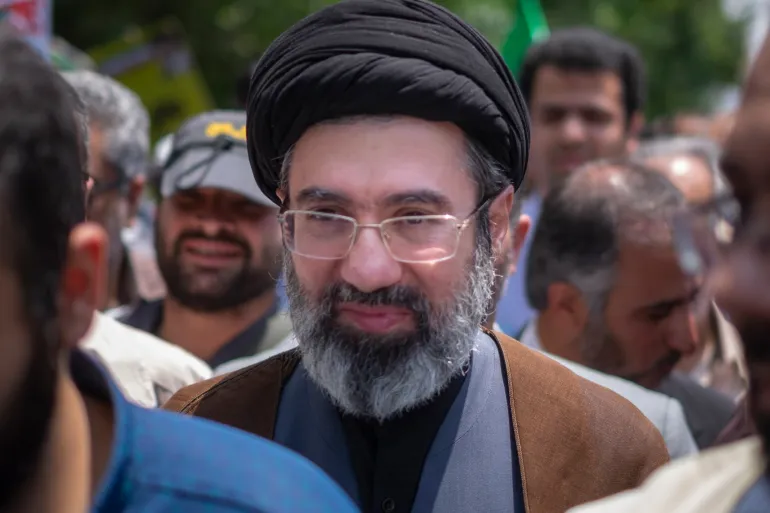
UNITED States Secretary of State, Marco Rubio, has disclosed that Iran’s Supreme Leader, Mojtaba Khamenei, appears to be assuming a more active role in the country’s affairs as negotiations between Tehran and Washington continue following the April 8 truce.
Rubio made the remarks on Tuesday while testifying before the US Senate Foreign Relations Committee, saying there are indications that Khamenei, who has not been seen publicly since US air strikes killed his father and predecessor on the first day of the war, is alive and increasingly involved in decision-making.
“I think there are indications out there that he is increasingly engaging at some level, although all of his communications have been in writing and through intermediaries,” the US Secretary of State told lawmakers.

Rubio’s comments came as Tehran continues to review the latest version of a US proposal aimed at ending the conflict, a proposal that US President Donald Trump is reported to have strengthened with tougher conditions in recent days.


Iran’s semi-official Mehr News Agency, citing a source close to the country’s negotiating team, reported that Tehran is still studying the proposal and has not communicated with the United States in several days.
According to the source, Iranian officials are maintaining a “stern” approach to the negotiations due to what they perceive as Washington’s failure to fully comply with the ceasefire agreement and a broader atmosphere of mistrust.
Trump has repeatedly stated that any agreement must include Iran’s commitment never to develop nuclear weapons and to reopen the Strait of Hormuz, through which approximately 20 per cent of the world’s oil and liquefied natural gas supplies passed before the outbreak of the war.
In a post on his Truth Social platform on Tuesday, Trump dismissed reports suggesting negotiations had stalled.
“Conversations between us have been going on continuously,” Trump wrote.

“Where they lead, one never knows, but as I told Iran, ‘It’s time, one way or another, for you to make a Deal’.”
Speaking further before the Senate committee, Rubio said ongoing discussions may now cover aspects of Iran’s nuclear programme that Tehran had previously refused to discuss only weeks ago.
However, he cautioned against assuming that the talks would automatically produce a successful outcome.


“That is not a guarantee it will ultimately lead to a deal that’s acceptable,” Rubio said.
“There is the prospect before us, which could happen today, it could happen tomorrow, it could happen next week.”
Rubio, who also serves as Trump’s National Security Adviser, explained that one of Washington’s key demands is the reopening of the Strait of Hormuz, alongside negotiations concerning Iran’s stockpile of highly enriched uranium.
When asked whether the United States would consider lifting sanctions in exchange for Iran reopening the strategic waterway, Rubio made it clear that such a concession would not be enough.
“That’s not been discussed. That’s not been offered,” he said.
According to Rubio, any sanctions relief would only come after significant concessions by Iran regarding its nuclear programme and enriched uranium reserves.