

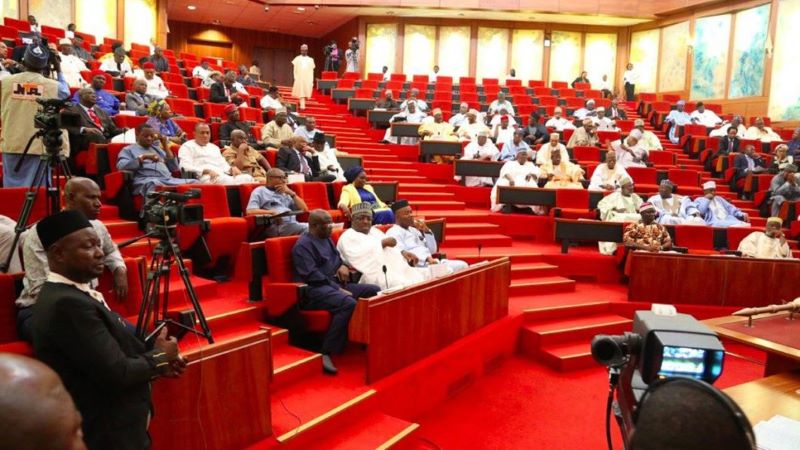
NIGERIA’s political landscape shifted dramatically on Monday as the All Progressives Congress (APC) concluded a wave of tense, controversial and high-stakes senatorial primaries that reshaped alliances, ended ambitions and reaffirmed the dominance of some of the country’s most influential political figures.

The primaries, monitored closely by News Point Nigeria, unfolded across several states amid protests, consensus arrangements, allegations of manipulation, withdrawals, disqualifications and fierce battles for political survival ahead of the 2027 general elections.
While several powerful figures within the ruling party secured their return tickets either through affirmation or overwhelming victories, others saw long-standing ambitions crumble in dramatic fashion.


At the centre of the exercise was a sweeping disqualification process that barred no fewer than 44 senatorial aspirants from participating in the primaries.
Among those affected were prominent Rivers politicians, including Tein Jack-Rich, Senator Ipalibo Banigo and former Rivers State Head of Service, Tammy Danagogo.
Yet, amid the controversy, the APC reversed one of its earlier decisions by reinstating former Bayelsa East senator, Ben Murray-Bruce, after initially listing him among aspirants not cleared for the exercise.
The revised list, released by APC National Publicity Secretary, Felix Morka, reflected the scale of internal tensions within the party. Rivers State emerged as one of the hardest-hit states in terms of disqualifications, while Zamfara recorded the largest bloc of barred aspirants nationwide.
For many within the APC, however, the day was also about consolidation of power.
Leading figures of the 10th Senate, including Senate President Godswill Akpabio, Deputy Senate President Barau Jibrin, Senate Leader Opeyemi Bamidele, former Senate Chief Whip Orji Uzor Kalu, former Edo governor Adams Oshiomhole, Senator Ede Dafinone and former Senate Leader Ali Ndume all secured tickets either through consensus arrangements or decisive victories.

Also emerging victorious were Hope Uzodimma for Imo West and former Senate President Ahmad Lawan for Yobe North.
But while some celebrated, others faced painful defeats.
In Kogi State, former governor Yahaya Bello recorded a commanding victory in Kogi Central, defeating challengers across the district’s five local government areas.


However, the atmosphere in Kogi East was far from peaceful.
Senator Jibrin Isah rejected the outcome of the primary after losing his return ticket, accusing allies of Governor Ahmed Ododo of hijacking electoral materials and frustrating his supporters.
“The battle line has been drawn,” the senator declared, vowing to confront Ododo politically in the future governorship contest.
In Delta State, political rivalries took centre stage as Senator Ede Dafinone defeated former Deputy Senate President Ovie Omo-Agege in Delta Central.
Omo-Agege, however, rejected the outcome and insisted he won the exercise.
Elsewhere in Delta North, former governor Ifeanyi Okowa overwhelmed incumbent senator Ned Nwoko in one of the most closely watched contests of the primaries.
In Delta South, Senator Joel-Onowakpo Thomas was reportedly leading in most of the local government areas at the time results were being collated.
Across northern Nigeria, consensus arrangements played a major role in shaping the outcome of the APC primaries.
In Kano State, Deputy Senate President Barau Jibrin emerged unopposed as the party’s candidate for Kano North during a massive affirmation exercise attended by thousands of supporters from across the district.
In Borno State, Ali Ndume returned unopposed after his major challenger, Abdullahi Askira, withdrew from the race.
Similarly, Aliyu Wamakko in Sokoto, Abdulaziz Yari in Zamfara, Sani Musa in Niger and Adamu Aliero in Kebbi all secured return tickets through consensus.
The APC leadership repeatedly projected these consensus arrangements as evidence of unity and internal cohesion, though critics argued they often sidelined genuine competition.
In Abia State, Senator Orji Uzor Kalu reinforced his dominance in Abia North with a landslide victory over challenger Philip Nto.
Meanwhile, Chief Erondu Uchenna Erondu, a former aide to ex-Governor Okezie Ikpeazu, emerged candidate for Abia South after defeating several contenders.
In Edo State, the primaries produced one of the biggest controversies of the exercise.
Former governor Adams Oshiomhole and Senator Joe Ikpea secured their tickets unopposed in Edo North and Edo Central respectively, but Edo South descended into confusion after conflicting results emerged.
Initially, Omoregie Ogbeide-Ihama was declared winner after defeating Senator Neda Imasuen and Pastor Osagie Ize-Iyamu.
Later, however, parallel results surfaced declaring Ize-Iyamu winner, deepening allegations of manipulation and factional control.
Senator Imasuen openly condemned the exercise, describing it as a sham designed to favour a preferred candidate.
“There is nothing satisfactory about this sham of election they did today,” he said while accusing party leaders of intimidating members and predetermining the outcome before voting began.
The controversies extended beyond Edo.
In Benue State, former chairman of the Governing Board of PRODA, Daniel Onjeh, withdrew from the Benue South primary, alleging that the process had been compromised by anti-democratic forces within the APC.
He claimed the results had effectively been “pre-written.”
In Rivers State, anger mounted among aspirants from the Kalabari riverine axis after multiple hopefuls were disqualified from contesting.
Senator Ipalibo Banigo criticised the APC screening committee, warning that the party’s actions undermined growing calls for greater female representation in Nigerian politics.
She reminded the party leadership that there were only four women in the current Senate and appealed for fairness, equity and gender sensitivity.
At the same time, political allies linked to Federal Capital Territory Minister Nyesom Wike, including Prince Felix Obua and Senator Allwell Onyesoh, were expected to scale through the screening process comfortably.
In Cross River State, the three serving senators — Asuquo Ekpenyong, Eteng Williams and Jarigbe Agom — all retained their tickets through affirmation.
The race in the northern district had initially attracted interest from former governor Ben Ayade before he reportedly withdrew following intervention by President Bola Tinubu.
In Ekiti State, Senate Leader Opeyemi Bamidele secured his third-term ticket unopposed, describing the development as evidence of the confidence the people of Ekiti Central had in his leadership.
Meanwhile, Senate spokesman Yemi Adaramodu expressed confidence in his own race for Ekiti South, insisting that his loyalty to progressive politics and grassroots engagement would secure victory.
One of the most symbolic moments of the primaries came from Gombe State, where former governor and long-serving senator Muhammad Danjuma Goje lost his bid for a fifth Senate term.
Retired Deputy Commissioner of Police, Mohammed Ahmed, backed by Governor Muhammadu Inuwa Yahaya’s political structure, defeated Goje convincingly in what many observers viewed as a changing of the guard in Gombe politics.
In Kwara State, Governor AbdulRahman AbdulRazaq squared off against incumbent senator Saliu Mustapha in a fierce political battle that drew massive support from party loyalists across the district.
The contest reflected growing tensions between established political camps within the APC as the race for influence ahead of 2027 intensifies.
Despite the complaints, protests and conflicting claims, APC leaders maintained that the primaries were largely peaceful, transparent and reflective of the party’s readiness for the next electoral cycle.
Yet beneath the official optimism lies a party grappling with internal rivalries, regional calculations, gender concerns, consensus politics and the difficult balance between loyalty and ambition.
For many aspirants, Monday’s primaries represented more than a battle for Senate tickets.
They marked the beginning of a larger struggle for relevance, survival and control of Nigeria’s political future ahead of 2027.