

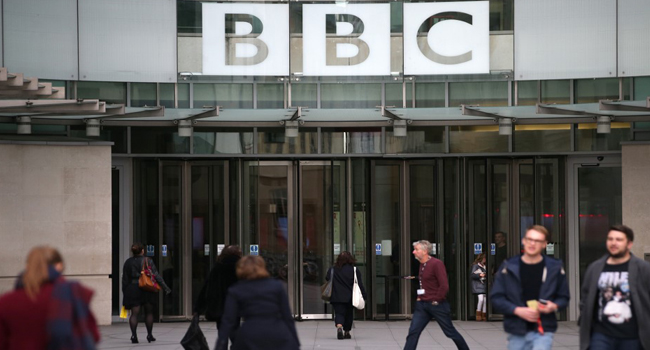
THE BBC has announced plans to cut up to 2,000 jobs globally, citing mounting financial pressures and a rapidly evolving media landscape, in what could become one of the corporation’s most significant restructuring exercises in nearly 15 years.
In a statement to staff on Wednesday, the broadcaster’s interim director-general, Rhodri Talfan Davies, said the organisation was still working through details but anticipated that “the overall number of jobs will fall by 1,800–2,000.” The BBC, which employs about 21,500 people, noted that the cuts would account for “almost one in 10” roles across its global operations.

The planned downsizing is expected to have a notable impact on Africa, where the BBC has significantly expanded in recent years. The corporation employs approximately 600 journalists and staff across the continent, with its largest hub located in Nairobi, hosting nearly 300 employees.

However, sources told News Point Nigeria that up to 350 of those positions could be affected. In Nigeria, the BBC Hausa Service, one of the broadcaster’s most influential outlets may see around 54 of its roughly 93 staff laid off.


The BBC said the move comes as it grapples with “significant financial pressures,” with Talfan Davies explaining that “the gap between our costs and our income is growing.”
He added that the organisation must cut £500 million from its £5 billion operating budget over the next two years, while also working toward reducing costs by 10 percent over the next three years.
The development has triggered concern among industry stakeholders, with media unions warning of the impact on journalism and public service broadcasting. Philippa Childs of the Bectu union described the cuts as “devastating,” while Laura Davison of the National Union of Journalists said the decision was “wrong, damaging and will cause uncertainty and distress for workers at the BBC.”
The corporation said the restructuring reflects broader challenges in the global media industry, including the rise of artificial intelligence and shifting consumer habits.
Funded largely through a public licence fee, the BBC noted that its income from the fee has fallen by 24 percent in real terms since 2017, intensifying the need for cost reductions. It warned that further savings could lead to cuts in content and services.

The job losses also come amid leadership changes and legal challenges. Former director-general Tim Davie stepped down earlier this month following a high-profile defamation lawsuit filed by Donald Trump over a documentary related to the 2021 US Capitol riot.
Meanwhile, former Google executive Matt Brittin is set to take over leadership of the organisation next month, with a mandate to steer the broadcaster through a period of transformation.
As the BBC prepares to implement the cuts, Talfan Davies acknowledged the difficulty of the decisions ahead, telling BBC radio that “there are going to be some big and some difficult choices,” underscoring the scale of the challenge facing one of the world’s most influential media institutions.

