THE World Health Organisation (WHO) has identified Nigeria and nine other countries as accounting for the majority of global hepatitis-related deaths in 2024, raising fresh concerns over the burden of the disease and the slow pace of progress toward elimination targets.



The WHO disclosed this in its 2026 Global Hepatitis Report released at the World Hepatitis Summit obtained by News Point Nigeria, where it revealed that hepatitis B and C responsible for 95 percent of hepatitis-related deaths claimed about 1.34 million lives globally in 2024, while new infections stood at approximately 1.8 million annually.

Read also: Nigeria Records 263 Lassa Fever Deaths, 1,115 Confirmed Cases – NCDC



According to the report, 10 countries, including Bangladesh, China, Ethiopia, Ghana, India, Indonesia, Nigeria, the Philippines, South Africa and Vietnam, accounted for 69 percent of hepatitis B-related deaths worldwide.


Nigeria also featured among the 10 countries responsible for 58 percent of global hepatitis C-related deaths.


Other countries listed in that category are China, India, Indonesia, Japan, Pakistan, Russia, South Africa, the United States and Vietnam.
The report further estimated that about 287 million people were living with chronic hepatitis B or C infections in 2024.


According to the WHO, about 0.9 million people were newly infected with hepatitis B during the year under review.
“That year, 0.9 million people were newly infected with hepatitis B. The WHO African Region accounted for 68% of new hepatitis B infections, yet only 17% of newborns in the region received the hepatitis B birth-dose vaccination,” the report stated.

The organisation added that another 0.9 million hepatitis C infections were recorded in 2024.
Read also: Macron To Visit Nigeria October 28, 29 For State Visit – Presidency Source
“People who inject drugs accounted for 44% of new infections, highlighting the urgent need for stronger harm reduction services and safe injection practices,” the report added.


Despite the troubling figures, the WHO said global efforts to combat viral hepatitis are beginning to produce measurable results.
According to the report, new hepatitis B infections have declined by 32 percent since 2015, while deaths linked to hepatitis C have dropped by 12 percent globally.
The prevalence of hepatitis B among children under the age of five has also fallen to 0.6 percent, with 85 countries already meeting or surpassing the 2030 elimination target.

The WHO attributed the gains to sustained global and national efforts since member states adopted hepatitis elimination targets in 2016.
However, the organisation warned that the current pace of progress remains too slow and uneven to achieve the 2030 goals.
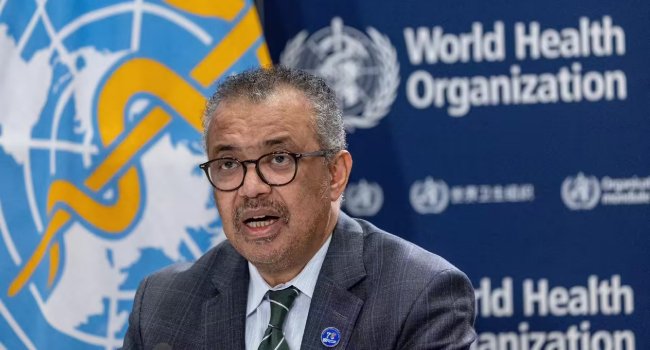
Speaking on the development, WHO Director-General, Dr. Tedros Ghebreyesus, said countries around the world are proving that eliminating hepatitis is achievable.
“At the same time, progress is too slow and uneven, and many people remain undiagnosed and untreated,” he said.
Read also: Wike Attacks Amaechi, Says ‘Bloody Thieves’, ‘Lunatics’ Cannot Become Nigeria’s President
The organisation also highlighted countries such as Egypt, Rwanda and the United Kingdom as examples that hepatitis elimination is possible with sustained political commitment, increased investment and effective public health policies.
WHO called on governments across the world to intensify efforts by scaling up vaccination campaigns, expanding access to testing and treatment, improving injection safety and integrating hepatitis services into primary healthcare systems.