

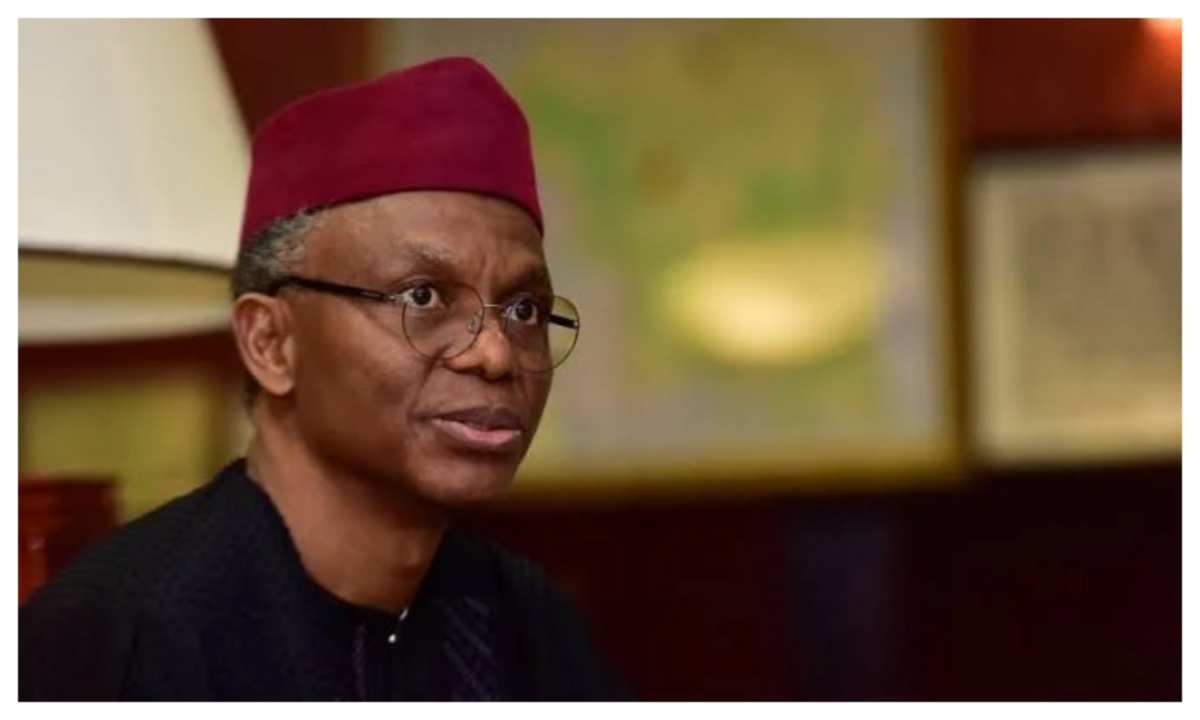
THE unfolding confrontation between the Independent Corrupt Practices Commission and the family of Nasir El-Rufai is gradually degenerating into something far more dangerous than a routine corruption investigation. It is becoming a test of whether Nigerian institutions can enforce the law without appearing vindictive, selective, or politically motivated.
No serious society can survive without strong anti-corruption institutions. Public officials who misuse public resources must face investigation and prosecution. Nigerians are exhausted by decades of impunity where powerful men enrich themselves while citizens suffer poverty, insecurity, and collapsing infrastructure. Therefore, no one, including Nasir El-Rufai, should be immune from scrutiny.
But anti-corruption agencies must understand a simple principle, the legitimacy of justice depends not only on punishment, but also on fairness, restraint, and respect for the law. Once an agency begins to look arbitrary, emotional, or politically weaponised, it weakens both itself and the broader democratic system.


According to family sources, the ICPC allegedly denied El-Rufai access to his personal doctor despite an existing court order permitting unrestricted medical access. The agency also reportedly stopped his wife from delivering food because she arrived after an internally imposed 6:30pm deadline.
Whether one admires or dislikes El-Rufai is irrelevant. Rights do not belong only to the popular or politically convenient. Constitutional protections exist precisely for moments when the state possesses overwhelming power over an individual.
If indeed a valid court order exists allowing medical access, then any obstruction by officials is indefensible.
Agencies cannot selectively obey judicial directives. The rule of law is not a buffet where institutions choose which orders to honour and which to ignore. The moment security or anti-corruption agencies begin to treat court orders as optional suggestions, Nigeria moves dangerously close to institutional lawlessness.
This is particularly sensitive because El-Rufai is not an ordinary political figure. As former governor of Kaduna State and one of the most controversial political actors of the Fourth Republic, he commands both fierce loyalty and deep opposition. Every move against him will inevitably be interpreted through a political lens. That reality places an even heavier burden on the ICPC to act with transparency and procedural discipline.
Unfortunately, Nigerian anti-corruption agencies have historically struggled with public credibility. From the Economic and Financial Crimes Commission to the ICPC itself, accusations of selective prosecution have persisted across administrations. Political opponents are often aggressively pursued while allies of those in power appear untouchable. Cases are loudly announced before television cameras, only to quietly collapse years later in court.

This pattern has created public cynicism. Many Nigerians now see anti-corruption not as a principled institutional mission but as a political weapon deployed against enemies and discarded when inconvenient.
That perception becomes even stronger when investigations are accompanied by dramatic displays that appear designed to humiliate rather than prosecute. Denying family access to food or restricting medical consultations creates the impression of punishment before conviction. It shifts the focus from alleged corruption to alleged persecution.
The ICPC must be careful not to turn El-Rufai into a political martyr. Nigeria has witnessed this cycle repeatedly. Public officials under investigation often gain sympathy not because citizens suddenly believe they are innocent, but because the conduct of the state appears excessive. In many cases, heavy-handed treatment allows politically exposed persons to rebrand themselves as victims of oppression rather than subjects of legitimate inquiry.


Ironically, this can damage anti-corruption efforts more than outright inaction. Once the public loses confidence in the neutrality of institutions, every prosecution becomes politically contaminated.
There is another deeper danger in this unfolding drama: the erosion of institutional maturity.
Democracy is not sustained merely by elections. It survives through institutional restraint. Agencies must understand the limits of their power. Courts must be respected. Detainees must retain basic human rights. Procedures must be consistent and transparent. Without these safeguards, democratic institutions slowly acquire authoritarian habits.
Nigeria’s democratic journey is already fragile. Public trust in institutions is dangerously low. Citizens see widespread insecurity, economic hardship, elite impunity, and selective justice. In such an environment, state agencies cannot afford conduct that reinforces fears of arbitrariness.
This does not mean El-Rufai should be shielded from accountability. Far from it. If there is evidence of corruption, abuse of office, financial misconduct, or violation of procurement laws, the ICPC should pursue the case rigorously and professionally. Nigerians deserve accountability from all public officials, past and present.
But professionalism matters.
The strongest anti-corruption cases are built not through media warfare or institutional intimidation but through evidence, due process, and credible prosecution. Courts, not emotional press statements, must determine guilt or innocence.
The ICPC must therefore answer critical questions openly. Was there truly a court order guaranteeing unrestricted medical access? If yes, why was the doctor allegedly denied entry? What legal basis exists for restricting food delivery? Were these actions standard detention procedures or targeted measures? Silence or evasiveness will only deepen suspicion.
Nigeria does not need another institutional war between powerful political actors and state agencies. What the country desperately needs is credibility. Citizens want to see anti-corruption institutions that are firm but fair, strong but lawful, aggressive but restrained.
That balance is what separates justice from vendetta.
The tragedy of Nigeria’s anti-corruption history is not merely that corruption persists. It is that institutions fighting corruption often undermine themselves through inconsistency, political interference, media sensationalism, and procedural recklessness.
If the ICPC truly wants public confidence, it must demonstrate that even its enemies retain constitutional protections. Respect for rights is not weakness. It is the foundation of lawful authority.
In the end, the question before Nigerians is larger than Nasir El-Rufai himself. It is whether anti-corruption institutions can rise above politics and conduct themselves in a manner worthy of public trust.
If they fail that test, then the fight against corruption risks becoming yet another arena for political score-settling, where institutions lose credibility, democracy weakens further, and justice becomes indistinguishable from power.
- Toro, a veteran journalist, lives in Bauchi.