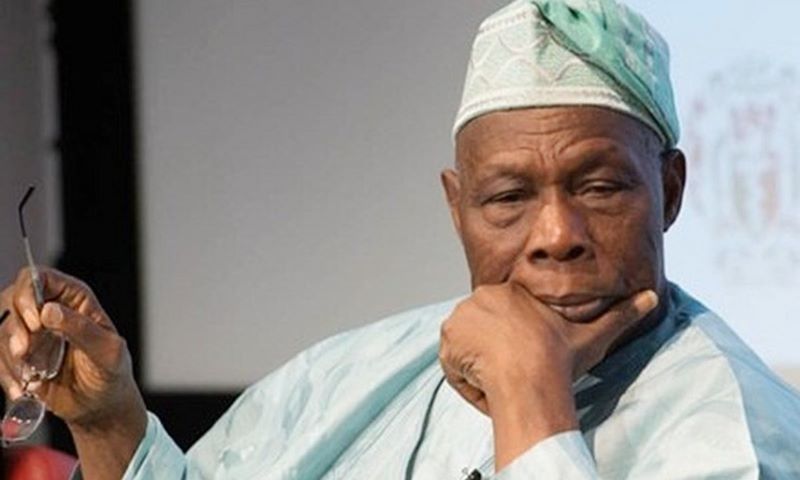
PETER Obi means well. I will give him that much. The Labour Party presidential candidate turned Nigerian Democratic Congress ( NDC) likely flagbearer has been consistent on at least one thing since he entered the 2027 race ,he wants to be a one-term president. “I would not stay a day longer than four years, even with a gun to my head,” he told News Central TV.

Those are strong words. The kind of conviction you rarely hear from politicians in this country, where staying in power is treated like a hereditary right and term limits are just suggestions for other people. But here is my problem. And it is a serious one.

Read also: The Ondo Air Crash: Mourning Is Not Enough – By Jonathan Nda-Isaiah

Like I have said previously on this page, Nigeria cannot be fixed in four years. Not even close. The country has been damaged so thoroughly from the power sector to education, from healthcare to security that it would take at least two full terms of focused, disciplined governance to begin to see meaningful structural change. You need eight years to plant a tree and watch it take root. Four years? You will barely have finished identifying the problem, let alone solving it.


Think about it. Our power crisis has been with us since before many of our young voters were born. NEPA became PHCN, PHCN became the successor DisCos, and Nigerians are still buying diesel at N1,500 per litre to run generators at home and at work.
Our healthcare system has become a travel agency ,every president, every governor, every senator boards a flight to London or India at the first sign of a headache, while the hospitals they are supposed to fix remain glorified consulting rooms without drugs or equipment.
Our security situation in the North East, the North West and the Middle Belt is not a four-year problem. It is a generational wound with roots going back decades. And education? Nigeria has more than 20 million out-of-school children, according to UNICEF. You don’t fix that in 48 months.
So when Obi says one term is enough to make a mark, I want to believe him. But wanting to believe someone and actually believing them are two very different things.
Now to be fair to Obi, he has grounded his one-term pledge in something that at least sounds principled ,the zoning arrangement. His argument is that if a southerner wins in 2027, that president must be ready to step down in 2031 to keep the unwritten power-rotation compact alive.

On paper, that is statesmanlike. In practice, it is a political landmine he is walking toward with his eyes wide open.Here is why.The South East has never produced a civilian president in the history of this republic. Not once. From 1999 till today, we have had Olusegun Obasanjo from the South West, Umaru Yar’Adua and Muhammadu Buhari from the North West, Goodluck Jonathan from the South South.
The South East has been the one region sitting outside the door, knocking, watching, waiting. So if Peter Obi becomes the first Igbo civilian president in Nigeria’s post-military democratic history, the question nobody in his camp wants to answer is this ,why should the South East settle for just four years?
Read also: Rule Of Law, Nigeria’s Only Hope Of Survival (1) – By Dr Hassan Gimba

The constitution gives any president the right to run for two terms of four years each. Eight years. Every other region that has held the presidency has used that full constitutional window. Obasanjo served eight years. Buhari served eight years. Even Jonathan, who completed Yar’Adua’s term and then won his own election, was on course for a combined stretch that no South East candidate has ever come close to.
So what Obi is essentially proposing is that the first Igbo civilian president should agree, before he even wins, to half of what every other region enjoyed. That is not just zoning. That is something else entirely, and the South East deserves a more honest conversation about what it means. There is a clear difference between respecting democratic norms and pre-emptively surrendering your constitutional rights before you have won a single vote.
And this is where the pledge ,however well-intentioned begins to unravel. Because it is not just about Peter Obi the individual. The moment he wins, the South East as a region enters Aso Rock for the first time in civilian democratic history. From that day, you are not managing one man’s ambition. You are managing the collective expectation of an entire region that has waited since 1999. Those are two fundamentally different political problems, and conflating them is naive.
Two years into his tenure, mark my words, the groups will come. Youth associations, Ohanaeze factions, town union federations, political entrepreneurs in agbada all of them printing T-shirts and issuing press releases with one message: the South East must complete its eight years. That is not speculation. That is how Nigerian politics has always worked. The hangers-on arrive without invitation. They wrap regional sentiment around the presidency so tightly that a principled one-term pledge starts to look, from the inside, like a betrayal of an entire people.
Obi cannot control that narrative from State House. No president ever has managed to. Obasanjo in 2006 swore the third-term agenda was not his idea. Whether you believe him or not is beside the point. The pressure around a presidency has its own gravitational pull. It warps everything around it, including the best intentions.
History has also not been kind to pre-election one-term pledges. Goodluck Jonathan once positioned himself as a reluctant president who would govern briefly and go home quietly. His supporters had other plans entirely. The pledge is always sincere at the microphone. It is the office that changes the mathematics. The combination of power, party pressure, regional expectation and the sheer institutional weight of the presidency has a way of making a man reconsider positions he held with total certainty before he sat in the chair.
Now, many people have genuine respect for what Peter Obi represents in our political conversation. According to his supporters, he has brought fiscal discipline, attention to numbers and a genuine questioning of the waste that has defined our governance for decades. After years of politicians who could not differentiate between a national budget and a personal shopping list, that matters. But sincerity and strategic thinking are not the same commodity, and you cannot run a country on sincerity alone.
What Obi should be telling Nigerians right now is not how long he plans to stay. What we need to hear is what exactly he will do with the time. What is his specific plan for electricity? What is his blueprint for the 20 million out-of-school children? What is his counter-insurgency strategy for Borno, Zamfara and Plateau? What will he do about an economy where more than 133 million Nigerians live in multidimensional poverty, according to the National Bureau of Statistics? These are the questions that matter. Not dramatic declarations about guns to heads.
Because here is the hard truth no one in our political space wants to say plainly: a bad president for four years can inflict more lasting damage than a decent president serving eight. We do not need shorter tenures. We need better leaders with the right competence, the right team and the institutional will to govern without stealing. The one-term pledge is a campaign device, not a governance strategy. And Nigerian voters deserve better than campaign devices dressed up as constitutional philosophy.
Read also: When Will Nigerian Leaders Build Worthy Stadiums? – By Martins Oloja
So can Nigeria be fixed in four years? No. Not by Obi, not by any political Houdini that this system eventually produces. The problems are too structural, too layered, too generational. What four years of the right leadership can do is begin to change direction not arrive at the destination.Let us demand direction. Let us demand competence. Let us demand a plan.These are the issues.
- Nda-Isaiah is a political analyst based in Abuja and can be reached on jonesdryx@gmail.com. His syndicated column appears on News Point Nigeria newspaper on Saturday.