

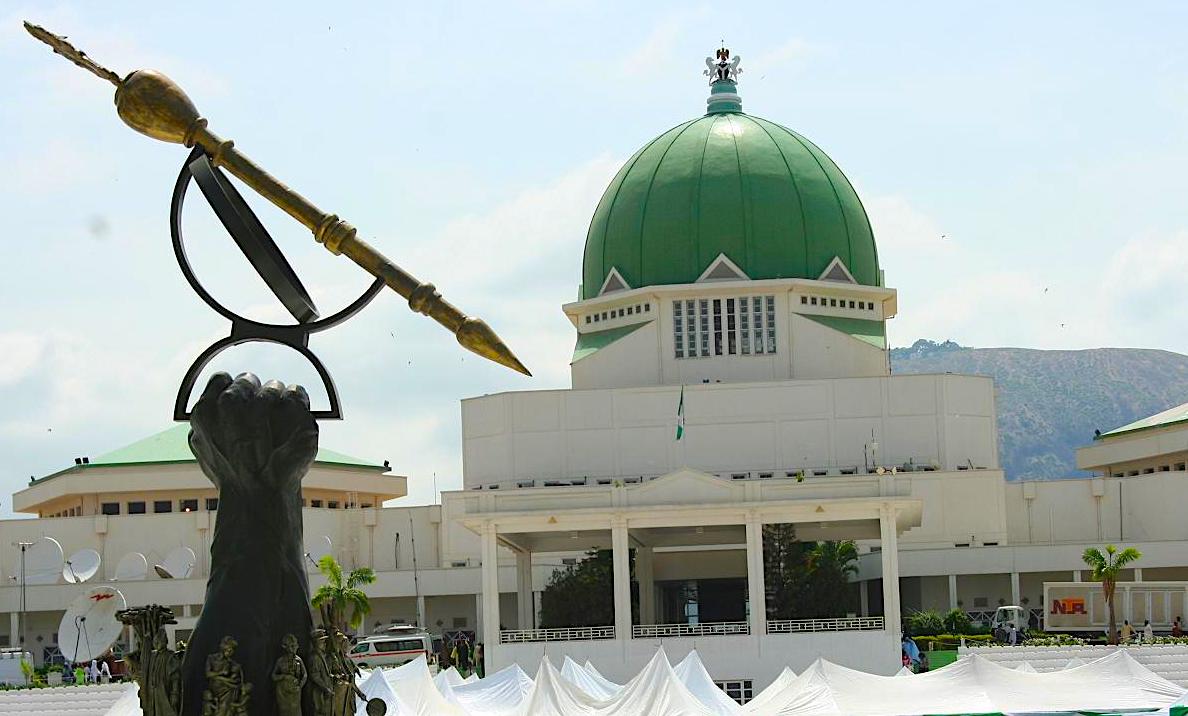
AS the National Assembly resumes plenary on Tuesday (today) following its Easter recess, lawmakers are returning to a politically charged and forward-looking legislative calendar, with constitutional amendments, a growing wave of defections, and worsening insecurity expected to shape proceedings in the coming weeks.

News Point Nigeria reports that the resumption comes amid mounting pressure on the legislature to go beyond routine lawmaking and deliver reforms capable of redefining governance ahead of the 2027 general elections.

At the top of the agenda is the amendment of the Constitution of the Federal Republic of Nigeria, a process that has lingered despite its far-reaching implications for the country’s political and institutional framework.

Both chambers had earlier progressed several alteration bills to the second reading stage, with proposals now at different phases within their respective Constitution Review Committees.


Key issues under consideration include devolution of powers, fiscal federalism, state policing, local government autonomy, judicial reforms, electoral adjustments, and the introduction of reserved seats for women.
With plenary resuming, lawmakers are expected to revive the process, including harmonisation of bills and continuation of public hearings across the geopolitical zones.
The consultations are expected to attract contributions from citizens, civil society organisations, and political stakeholders, which will help shape the final structure of the proposed amendments.
However, beyond legislative procedures, a more complex challenge lies ahead.
Constitutional amendments require approval by at least two-thirds of state Houses of Assembly—a threshold that has historically slowed progress and necessitated political compromise.

In the months ahead, the success of the process will likely depend on alignment between federal lawmakers, state governments, and party structures.
Particular focus is expected to be placed on state policing, which has gained renewed urgency amid worsening insecurity nationwide.
From banditry in the North-West to killings in the North-Central and insurgent attacks in the North-East, pressure is mounting on lawmakers to support decentralised security frameworks.


President Bola Ahmed Tinubu has repeatedly called for legislative backing for state police, urging the National Assembly to review existing laws to enable sub-national policing structures.
Within the legislature, proposals are already being developed to decentralise policing while embedding safeguards to prevent political misuse. The Nigeria Police Force has also submitted a framework to lawmakers, signalling growing institutional backing for reform.
Speaking on the issue, Senate Leader Opeyemi Bamidele said the National Assembly is prioritising a decentralised policing model designed to promote accountability and protect fundamental rights.
He explained that the proposed framework seeks to devolve powers while incorporating safeguards against abuse and aligning with global best practices.
While constitutional reform is expected to dominate proceedings, it is unfolding against a backdrop of shifting political loyalties within the legislature.
Another major issue likely to shape deliberations is the continued wave of defections across both chambers, driven by early political realignments ahead of the 2027 general elections.
In the Senate, the opposition Peoples Democratic Party (PDP) is projected to lose further ground as lawmakers reposition politically.
Among the most notable developments is the defection of Aliyu Wadada from the Social Democratic Party, a move that carries additional weight following his endorsement by Abdullahi Sule as a preferred successor.
His dual positioning within the legislature and state politics reflects a broader trend in which lawmakers are increasingly aligning their legislative roles with future electoral ambitions.
In the House of Representatives, the scale of defections is expected to be even more significant. The Green Chamber adjourned before the Easter break on a dramatic note, with about 27 lawmakers announcing their defection—one of the largest waves of cross-carpeting in the 10th Assembly.
Speaker Tajudeen Abbas had hinted that more defections were imminent, noting that several letters could not be read due to the absence of affected lawmakers, suggesting that further realignments may unfold as plenary resumes.
Among notable developments is the defection of Philip Agbese, Deputy Spokesperson of the House, from the ruling All Progressives Congress (APC) to the minority Labour Party (LP), a move expected to trigger internal contestation and possibly encourage further defections.
Recent coalition talks involving platforms such as the African Democratic Congress (ADC) have also intensified speculation of additional high-profile crossovers. Analysts warn that the trend could weaken opposition oversight and tilt the balance of power further in favour of the ruling party.
Beyond political manoeuvring, lawmakers are resuming at a time of heightened national security concerns.
From kidnappings and bandit attacks to communal violence, insecurity remains a dominant challenge, increasing pressure on the legislature to move beyond routine motions towards more concrete interventions.
At the same time, economic realities including inflation, fiscal pressures, and ongoing reforms are expected to demand legislative attention, particularly in areas requiring oversight and policy backing.
As plenary resumes, the interplay between constitutional reform, political realignment, and pressing national challenges is expected to define the tone of legislative business.
While the amendment of the constitution presents an opportunity for far-reaching institutional change, the undercurrent of defections and strategic positioning ahead of 2027 may ultimately shape how much progress lawmakers can achieve in the months ahead.